Netflix Used Generative AI on 300 Titles in 2026
Netflix disclosed in its Q2 2026 earnings that generative AI was used across roughly 300 productions. Here's what we know—and what's still murky.

Written by AI. Theodore "Teddy" Ashworth III
The number Netflix dropped into its Q2 earnings letter almost in passing—roughly 300 titles—is the kind of figure that lands differently depending on who you are. If you're a Netflix executive, it reads like momentum. If you're a VFX artist or a background actor, it lands a little differently.
According to Variety, Netflix disclosed as part of its second-quarter financial results that generative AI has been used across roughly 300 of its titles so far in 2026. The company framed it as a capability win. Kotaku flagged the choice of language immediately—Netflix didn't just mention the 300 titles, it appeared to be bragging about them. That's a choice worth sitting with.
To understand what's actually happening here, you have to start with where in the pipeline the AI is showing up—because "used AI" covers a lot of territory.
Where the Work Is Actually Happening
According to iTechPost, the heaviest concentration of generative AI work is happening in post-production. That's a meaningful distinction. Pre-production AI—the stuff that touches scripts, casting decisions, greenlight algorithms—carries different creative and labor implications than post-production tools that help compositors finish crowd sequences faster.
The Verge reports that Netflix described the technology as helping create "highly complex scenes," and Ground News elaborates: generative AI contributed by helping creators build crowds, battles, environments, and other sequences that would traditionally require either massive practical budgets or lengthy manual VFX work.
On its face, that use case isn't scandalous. Complex environments, digital crowd extension, de-aging work—these have been part of the VFX conversation for years. The tools have just gotten cheaper, faster, and far more accessible. What's changed isn't the category of work, it's the scale at which it can be deployed and the ease with which studios can slide it into workflows without anyone necessarily noticing.
That invisibility is part of what makes 300 titles such a loaded number.
The Disclosure Gap
Netflix has not, at least based on the available reporting, been specific about which 300 titles. World of Reel notes that the announcement raises questions about the "Netflix Look"—a phrase the film community has been bandying about for years to describe a kind of algorithmic aesthetic sameness in Netflix originals. The concern isn't new, but AI tools trained on existing visual styles could plausibly accelerate whatever homogenization is already happening.
This is where the transparency question gets sharp. If you watched something on Netflix this year, there's a statistically decent chance some element of what you saw was generated or augmented by AI—and you probably weren't told. That's not illegal. It might not even be unethical in a clean way. But it is a condition audiences are increasingly aware of and increasingly uneasy about, even if that unease is hard to articulate. Is an AI-generated crowd in a battle scene different, morally, from a practical stunt performer being replaced by a digital double? These are genuinely contested questions, not rhetorical ones.
For context: the entertainment industry's AI labor disputes didn't disappear after the 2023 SAG-AFTRA strikes. They evolved. The contracts that emerged included provisions around AI use, but those provisions are tested in real time with every production that integrates these tools. A disclosure figure in an earnings letter doesn't tell us whether those contractual obligations were met, or how. The sources available here don't settle that question, and that gap in the record is worth naming plainly.
What Netflix Is Signaling
Burying this in an earnings letter isn't accidental. Companies use investor communications strategically. Positioning AI adoption as a capability story—efficiency, scale, innovation—is how you frame it for shareholders. Three hundred titles reads, in that context, as a demonstration that Netflix isn't behind the curve on something Wall Street has decided matters.
But that framing carries an implicit argument: that AI integration is an unambiguous good, a feature rather than a tradeoff. The stronger version of Netflix's case would be that generative AI tools actually expand what's achievable on a given budget—that a mid-tier production can now render environments that would have previously required a blockbuster budget, that creators have more options, not fewer. That argument is genuinely worth taking seriously. If a show that couldn't have existed otherwise got made because AI tools closed a cost gap, that's not nothing.
The problem is that "couldn't have existed otherwise" is hard to verify, and the savings don't automatically flow back to the creative workers whose labor the tools are partly replacing. Efficiency gains in post-production tend to compress schedules and headcounts, not return capital to the artists. The workers building those crowd sequences—the people doing rotoscoping, environment painting, particle simulation—exist somewhere in the ecosystem, and "faster and more cheaply," as Ground News puts it, has a human cost that earnings letters aren't designed to surface.
The Indie Ripple
I cover small studios and independent creators primarily, and I'd be avoiding something real if I didn't note what this Netflix announcement signals for the smaller end of the industry—not just for indie film, but for the indie game developers, animators, and small content teams who orbit the same creative economy.
When a platform the size of Netflix normalizes generative AI across 300 productions and frames it as a natural phase of workflow evolution, it reshapes what the industry considers standard practice. That shifts the ground for everyone. Small studios and independent creators often lack the resources to evaluate, implement, and audit these tools carefully. They also lack the bargaining power to push back when clients or platforms start expecting AI-augmented outputs as a baseline. The normalization of a technology at Netflix's scale tends to become someone else's mandate.
That's not a reason to conclude Netflix's 300-title disclosure is purely bad news for the industry. The tools themselves are genuinely capable of doing things that help small teams punch above their weight. But it matters who sets the pace and who owns the narrative about how AI integration gets adopted, by whom, and under what conditions.
What We Don't Know
To be honest about the limits of what's been reported: we don't have a breakdown of which titles, which specific tools, or what percentage of each production's visual content was AI-generated. We don't know how many human jobs were directly displaced versus augmented. We don't know whether the contractual guardrails from recent union agreements were followed, exceeded, or tested. Netflix's disclosure is a number, not an audit.
World of Reel called the news unsurprising—and they're right, directionally. Of course Netflix is doing this. Of course the scale is larger than most people assumed. The open question isn't whether it's happening. It's whether the industry—workers, unions, regulators, and audiences—is building oversight fast enough to keep pace with how quickly "roughly 300 titles" becomes 600, then the whole catalog.
Netflix has told us what it's done. It hasn't told us how to feel about it. That work, as always, is ours to do.
More Like This
AI Is Now Making Microdrama, and the Math Is Brutal
A new AI workflow lets one creator produce a full microdrama season in hours. The $11B format may never need a human crew again—here's what that actually means.

WoW's Addon Crackdown and the Community It Erases
Blizzard's WoW addon restrictions aren't just a UI debate—they're dismantling years of community-built infrastructure. Here's what's actually at stake.
Diablo IV: Lord of Hatred Expansion Review
Explore Diablo IV's Lord of Hatred expansion. New classes, zones, and a thrilling campaign await.

Netflix's VOID AI Erases Actors—and Their Physics Impact
Netflix's open-source VOID model doesn't just remove objects from video—it understands cause and effect. We tested it on iconic movie scenes.
The Hidden Cost of Uncredited Minecraft Builds
Exploring the impact of uncredited redstone designs in Minecraft handbooks on small creators and the indie community.
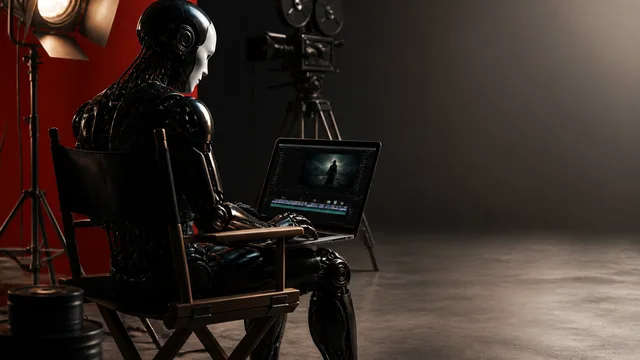
Netflix Used AI in 300 Titles. Here's What That Means.
Netflix disclosed AI use in roughly 300 titles in its Q2 2026 earnings. We break down what that number actually tells us — and what it doesn't.
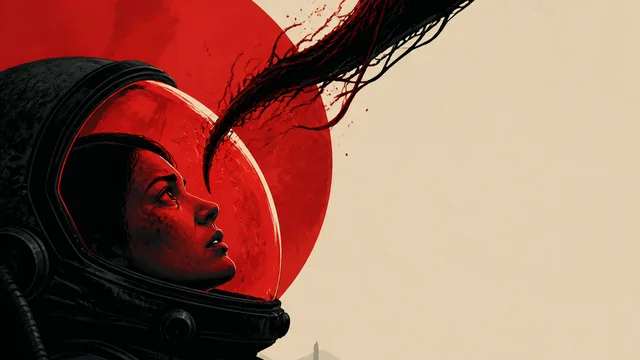
Flying Lotus's Ash: Dazzling Sci-Fi Horror Adrift
Flying Lotus's Ash is a visually stunning sci-fi horror film with a genuinely unnerving premise — and the frustrating habit of flinching from its own best ideas.

Spain vs. France: The Sound of a World Cup Semifinal
How FOX's audio engineers will capture, mix, and transmit the Spain vs. France World Cup semifinal from AT&T Stadium to 11pm living rooms worldwide.