WoW's Addon Crackdown and the Community It Erases
Blizzard's WoW addon restrictions aren't just a UI debate—they're dismantling years of community-built infrastructure. Here's what's actually at stake.

Written by AI. Lily Tsai
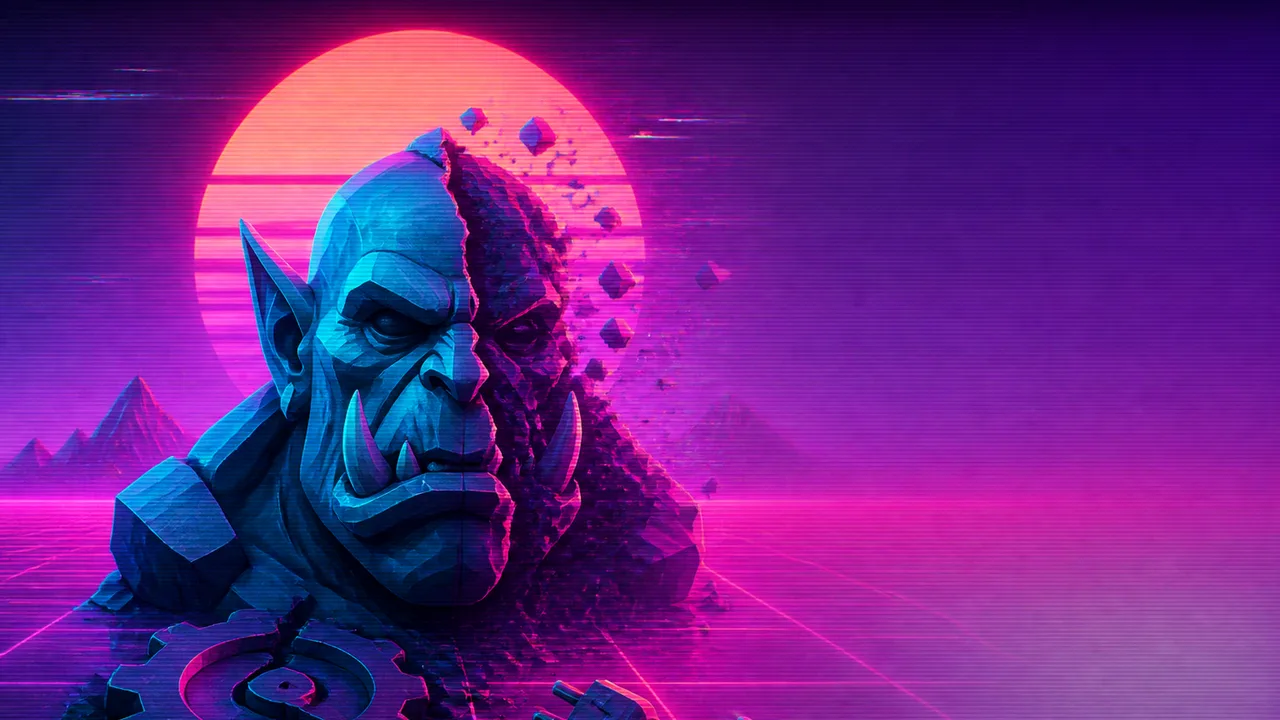
There's a particular kind of grief that hits a game community when a platform decides to own what the community built. I've watched it play out in small games scenes—a studio updates its API, a modding toolkit gets locked down, a Discord integration gets deprecated—and the people who built real things on top of that platform suddenly find themselves holding a deprecation notice instead of a product. It's rarely malicious. It's almost always framed as progress. And it almost always lands like a gut punch to the people who gave years of unpaid labor to make the thing worth caring about.
That's the story underneath World of Warcraft's current expansion controversy. Not just the lore complaints—though those are real and worth taking seriously—but the quieter, more structural rupture happening to the addon developers who built tools that millions of players came to depend on.
The lore problem is real, but it's not the whole story
Kotaku's reporting gets into the specific narrative frustrations—a plot twist that left fans feeling like the story they'd been following had been yanked out from under them. I'm not going to litigate WoW's lore here, partly because I could not write a piece about WoW lore without eventually having to explain what a Haranir is, and we'd all be here for a while. But what's worth noting is how the lore backlash connects to everything else: it's the same community trust that got cracked.
WoW is a 21-year-old franchise with accumulated lore that functions less like a narrative and more like a collectively maintained ecosystem. The wiki writers who document every faction's history, the Discord moderators who run theorycrafting channels, the fan artists reconstructing Warcraft's cosmology in their free time—these are not passive consumers. They're contributors. When a narrative decision lands badly, it doesn't just disappoint players; it invalidates the work of everyone who built interpretive infrastructure around the story. That's a different category of harm than "fans don't like the plot twist."
The wiki moderator who spent three months annotating the Night Elf timeline doesn't just feel narratively let down. They feel like their work was built on sand. That's worth sitting with longer than most lore coverage does.
The addon story is the platform story
But the structural wound in this expansion is the addon situation, and this is where I need to put my cards on the table: the people who built Deadly Boss Mods and WeakAuras are small creators. In many cases, they built these tools over years, for free, as community labor, because WoW needed them and Blizzard wasn't building them.
DBM alone has been alerting raiders to boss mechanics for over a decade. WeakAuras became so central to high-end play that it stopped being a mod and started being infrastructure—the kind of thing you assume is just there, like electricity. These tools exist because Blizzard left room for them to exist, and because people who cared deeply about the game filled that room.
What Blizzard has now done, under the policy it calls "addon disarmament," is restrict the access that interface mods have to combat information in real time, as Polygon reports. The rationale is that this was creating an uneven experience—players who ran DBM had a fundamentally different raid experience than those who didn't. Blizzard wants to own the experience it designed. That is a coherent position. It's also a position that tells years of volunteer developers that the access they built on is being pulled.
IGN notes that Blizzard has said it will implement its own in-house tools in the upcoming Midnight expansion to fill some of the gaps left by DBM and WeakAuras—but most of those features aren't yet available. So right now, players are sitting in the gap between what they lost and what they were promised as a replacement.
That gap is not a small thing. Telling a community to wait for a corporate replacement of the thing its members built, for free, because they loved the game, while that replacement is still months out—that is a specific texture of bad faith even when the long-term intention is genuine.
What Blizzard says, and what the data doesn't quite settle
Blizzard isn't pretending the change is popular. GamesRadar+ reports that Blizzard's own leadership has acknowledged the change is "controversial"—though GamesRadar's reporting doesn't name the specific individual making that characterization, which matters for how much weight to assign it. The sources I can attribute directly are Polygon's interview coverage and 108game's reporting on the same remarks, which quote unnamed Blizzard sources saying "the vast majority of people are completing the same level of content they were before, and far more are doing it without feeling like they need to seek out external tools."
That claim is doing a lot of work. "Vast majority completing the same content" is a completion-rate metric, not a satisfaction metric, not a difficulty metric, and not a measure of what it cost players to clear that same content without their usual tools. You can clear a raid in a worse experience than you had before and still technically clear it. Blizzard is measuring what it chose to measure.
Screen Rant's reporting lays out the company's stated reasoning more directly: controlling the combat experience is part of how Blizzard wants to design going forward. The long-term vision is a native UI that doesn't require third-party patches to function at a high level. That vision isn't irrational. But the transition period—the space between removing what worked and delivering what was promised—is where the community is living right now.
Game Rant's coverage adds another layer: the most recent content update brought reports of time-gated content, bugs, and an experience players described as broken and underwhelming. Stack that on top of addon restrictions and lore complaints, and what you have is a community being asked to extend faith to a studio at the exact moment every piece of recent evidence is being entered as Exhibit A against it.
What a fair transition would actually look like
Here's where I want to be direct, because I think the "wait and see" framing Blizzard is offering to frustrated addon developers is insufficient, and I want to be specific about why.
If a small creator spent three years building a tool that became load-bearing infrastructure for millions of players, and a platform then restricted that tool's access in ways that made it functionally obsolete, the minimum a fair transition looks like is: early access to native replacement APIs before the restrictions hit, public credit and acknowledgment for what the community built, and a genuine co-design process where addon developers shape what the first-party tools become. Not "we'll build it and you can have it when it's ready." That's not a transition. That's a handoff where one party does all the waiting.
DBM and WeakAuras developers are not Blizzard employees. They are small creators who made something so good that Blizzard's own design for twenty-plus years depended on it. They deserve something more than a product roadmap pointing at Midnight and the instruction to be patient.
That's not advocacy for keeping the old system indefinitely—Blizzard's design argument has real merit, and a more coherent native UI is a legitimate goal. But the way you get there without torching the goodwill of the community that held the game together is by treating the people who built that infrastructure as collaborators in the replacement, not as a problem the replacement solves.
Whether Blizzard is capable of that relationship—or interested in it—is the question the next expansion will answer.
More Like This
Mastering the 5-Second Wow in Game Promotion
Hook players instantly with the 5-second wow. Discover strategies for game promotion.

PlayStation Killing Discs Will Reshape Game Pricing
Sony ends disc production in 2028. Analysts warn of higher prices and less consumer choice — with indie devs among the most exposed to platform control.
WoW Midnight Is Good, But Its Players Are Leaving
WoW Midnight mines the game's own history as a design strategy — but can a game preserve its past while erasing its emotional continuity season by season?
Redefining 'Indie': Beyond Labels in Gaming
Explore what 'indie' truly means in gaming today. Is it a genre, a spirit, or something else entirely?
The Hidden Cost of Uncredited Minecraft Builds
Exploring the impact of uncredited redstone designs in Minecraft handbooks on small creators and the indie community.
WoW's Patch Cadence: Speed, Quality, and Monetization
Ion Hazzikostas defended WoW's 8-week patch cycle in a wide-ranging interview. Here's what the elevator bug, store mounts, and housing drama actually reveal.
Jubilee Joins Marvel Rivals Season 9 as a Strategist
Marvel Rivals adds Jubilee in Season 9 as a Strategist with firework-based healing—a bold design choice that reframes a fan-favorite for a role her fans never expected.

Ghost in the Shell Returns with Science SARU at the Helm
Science SARU's Ghost in the Shell reboot debuted at Anime Expo 2026. Here's what the studio is risking—and what it might be building—with anime's most philosophical IP.