PlayStation Killing Discs Will Reshape Game Pricing
Sony ends disc production in 2028. Analysts warn of higher prices and less consumer choice — with indie devs among the most exposed to platform control.

Written by AI. Lily Tsai

Sony announced this week that it will stop producing physical game discs for PlayStation consoles starting in January 2028, according to Eurogamer. The company cited "consumer preferences" as its rationale. That framing landed about as well as you'd expect.
The internet reacted with what Kotaku described as very, very negative energy — and not just from the physical-media faithful who've been bracing for this for years. The response cut across player types, and the anger wasn't really about nostalgia for plastic cases. It was sharper than that. One widely-circulated sentiment captured in Kotaku's community roundup put it plainly: Internet down? Fuck you. Server issues? Fuck you. Finished a game and want to sell or trade it in? Fuck you. You will own nothing.
That's not a grief response. That's a structural complaint — and it's correct.
The pricing concern is the one analysts are flagging most loudly. Kotaku's reporting on industry analysis includes this quote that deserves to be read carefully: "This move is all about profitability and control for PlayStation, at the expense of consumer choice." Physical retail created competitive price pressure that digital storefronts have always been insulated from. GameStop putting a six-month-old title on sale wasn't altruism — it was the market working. Without it, publishers hold the lever. And publishers have already shown us, with $70 base prices and premium editions starting at $100+, exactly which direction they point that lever.
GamesRadar argues that this hurts everyone, regardless of how you personally prefer to buy games. The logic holds: even players who buy everything digitally have benefited from the pricing competition that physical retail forced. Remove the floor, and digital prices float upward.
The resale question layers on top of this. If you buy a disc, you own the disc. You can sell it, lend it, display it on a shelf in your apartment like a person who has made certain choices about interior design. Digital licenses grant none of that. And the stakes of that distinction grow as platforms age out — as they will. Game Informer reported that PlayStation Stores on PS3 and Vita are shutting down. As The Verge frames it, starting in 2028, every PlayStation game comes with an expiration date — because as soon as the PS5's digital store closes, a massive library effectively disappears.
Microsoft is moving differently, and it's worth clocking what that difference actually is. Dexerto reports that Xbox is testing a feature that converts physical game collections to digital licenses — a bridge between formats rather than a cliff. Whether that difference produces meaningfully better outcomes for consumers, or whether it's a softer path to the same destination, will be answered by the choices Microsoft makes around pricing and storefront fees over the next several years. The architecture is more flexible; the incentives are still the same.
Here's where I want to put on my actual hat, because the consumer story and the developer story are not as separate as they look.
Indie studios already live almost entirely in digital storefronts. They always have — physical retail shelf space for small games has been effectively fictional for most of the past decade. In that sense, disc elimination changes nothing for a two-person studio releasing their first game on Steam or the PlayStation Store. They were never going to have a Walmart endcap. That fight was over before it started.
But here's what does change: when physical media disappears entirely, the platform becomes the only distribution channel with no alternative pressure. Storefronts currently take 30% of every sale. That number hasn't moved meaningfully despite years of developer frustration, the Epic Games Store's lower-cut experiment, and significant public pressure. The reason it hasn't moved is that platforms have leverage. Disc elimination doesn't just affect the theoretical pricing of GTA VI — it concentrates that leverage further, in ways that hit smaller developers harder than anyone, because they have less negotiating power to begin with and thinner margins to absorb any change.
For indie studios, a physical release isn't primarily a distribution strategy — it's a milestone. A Limited Run Games cartridge or collector's edition is proof of concept, a thing that exists in the world, something a developer can hold. It's also a second revenue window that operates outside storefront fee structures. Ask any small studio that's gotten one how they talk about it, and you'll hear the same mix of pride and practical relief. That window is narrowing. Not closed yet — physical games exist beyond PlayStation — but the momentum is clear, and Push Square's community reaction signals that even hardware-loyal players see where this leads: "I guess I knew it would go this way in the end."
The indie-developer relationship to digital storefronts has always been complicated by the fact that the platforms that host your game are also the platforms that set the rules, take the cut, control discovery, and decide when your game goes on sale during their promotional events whether you like it or not. Physical media, for all its logistical inconveniences, was a check on that dynamic. Not a powerful one — but a check. Sony removing it from PlayStation's ecosystem doesn't just affect players. It affects every small studio whose entire commercial existence runs through that storefront.
Geography compounds all of this. In regions where internet infrastructure is inconsistent or expensive, physical media isn't a preference — it's the only practical option. A digital-only future isn't "convenient" there; it's exclusionary. Sony framing disc elimination as a response to consumer preferences papers over the fact that those preferences are deeply shaped by what infrastructure people have access to. Not everyone's preference looks the same.
What strikes me about the anger — and it is genuinely striking — is that it comes from people who understood this trade years ago and accepted the terms anyway. They built digital libraries. They bought into subscription services. They made their peace with not owning things, because the convenience felt like a fair exchange. Sony announcing disc elimination in 2028 doesn't represent a sudden change; it represents the moment when "digital is an option" formally became "digital is the only option." The convenience didn't change. The choice did. And people noticed the difference immediately, because one of those things is a feature and the other is a wall.
The question I keep returning to, especially for the developers I cover: when the wall goes up and the platform is the only door, who decides what it costs to walk through it — and who gets left outside?
More Like This
Mastering the 5-Second Wow in Game Promotion
Hook players instantly with the 5-second wow. Discover strategies for game promotion.
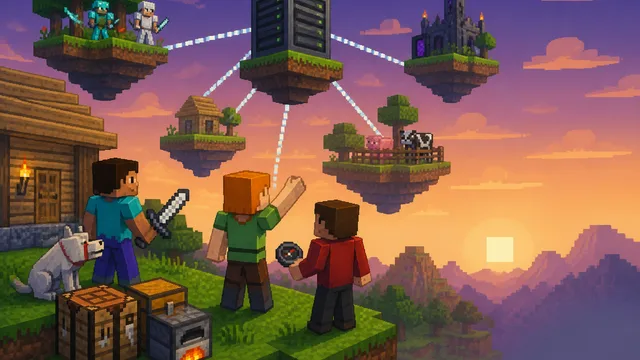
Minecraft Java Multiplayer in 2026: Who Pays the Price?
Mojang's new native Friends List threatens the small-studio ecosystem built around Java's multiplayer gap. Here's what that means for how you play.
Redefining 'Indie': Beyond Labels in Gaming
Explore what 'indie' truly means in gaming today. Is it a genre, a spirit, or something else entirely?
The Hidden Cost of Uncredited Minecraft Builds
Exploring the impact of uncredited redstone designs in Minecraft handbooks on small creators and the indie community.
Do You Need a Game Design Document? A History Weighs In
Imphenzia says a one-page GDD is all you need. The history of game documentation—and what gets lost without it—says the stakes are higher than that.
YouTube Creators Are Reshaping Hollywood's Talent Pipeline
Backrooms, Obsession, and The Amazing Digital Circus prove YouTubers can open movies. But Hollywood is already preparing to misunderstand why it worked.
Kojima's OD Survives Xbox's Sweeping Reset
Xbox is cutting projects and studios in a major reset, but Kojima's horror game OD stays safe. What does that tell us about where the platform is heading?
Gaming Hardware Costs Are Rising and Relief Is Far Off
Micron, Microsoft, and Apple signal gaming hardware prices will keep climbing through 2028 or beyond. Here's what's driving the squeeze and what it means.