Double Fine Lays Off 23 After Leaving Xbox Game Studios
Double Fine cut 23 staff just weeks after Xbox divested the studio. What the layoffs reveal about independence, infrastructure costs, and Xbox's shrinking empire.

Written by AI. Lily Tsai
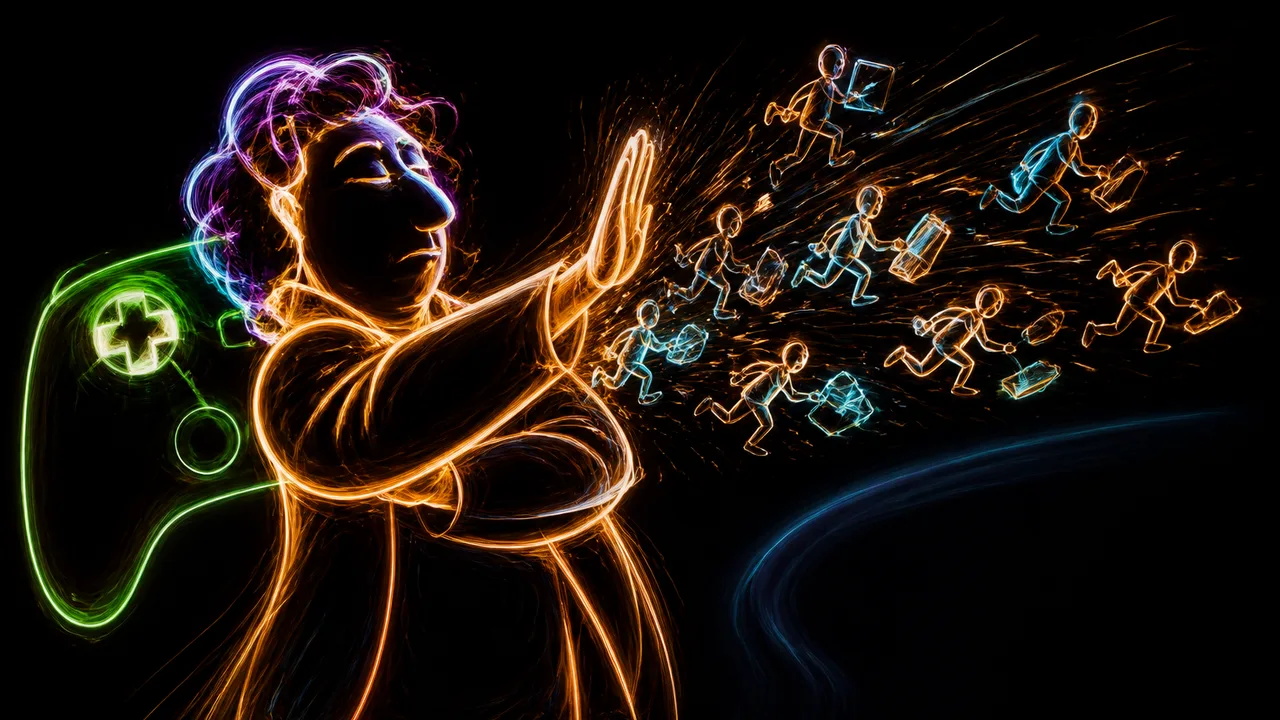
Three weeks. That's how long it took for the freedom to get expensive.
Double Fine Productions announced on July 28th that it's laying off 23 staff members — roughly a quarter of the studio — following its separation from Xbox Game Studios. Studio head Tim Schafer shared the news on social media, writing: "As a small, tightly-knit team, these actions are not taken lightly," per Game Informer. The full studio statement, reported by Kotaku, went further: "Only the survival of our studio would ever make us consider such a painful action."
That framing — survival, not strategy — matters. Schafer didn't announce a pivot. He didn't spin this as a rightsizing or a "refocusing on core competencies." He named what it was. That kind of directness is rare and, for the people losing their jobs, probably the least they deserve.
What Independence Actually Costs
The timing sheds light on something the gaming industry doesn't like to talk about clearly: being inside a large publisher isn't just about funding your game. It's about funding your operations.
When a studio sits under a corporate umbrella, the parent absorbs enormous background costs that disappear from the studio's books entirely — HR, legal, IT infrastructure, marketing infrastructure, compliance, benefits administration. None of that is glamorous, none of it ships a single frame of gameplay, and all of it is brutally expensive the moment you have to start paying for it yourself.
Double Fine, the studio behind Psychonauts 2, Keeper, and Kiln, according to Polygon, is now responsible for all of it. The 23 roles being cut almost certainly include some of that overhead — positions that made perfect sense when Microsoft's infrastructure was underneath them and make no fiscal sense without it. That's not a failure of those individuals. It's a structural reality that the separation exposed immediately and brutally.
Push Square put it plainly in their headline: the layoffs were done to "ensure survival of the studio." That's the operating condition now. Not growth. Survival.
The Xbox Picture
Double Fine's acquisition by Microsoft was announced at E3 2019, according to Xbox Game Studios' Wikipedia entry, as part of a wave of studio acquisitions that would eventually balloon into the $69 billion Activision Blizzard deal. The logic at the time was about Game Pass content density — acquire creative studios, fund ambitious games, load the subscription library, and hope the flywheel spins.
It's worth noting that Double Fine wasn't alone in being divested. GamesIndustry.biz reports that Double Fine and Compulsion Games were both separated from Xbox as part of a broader restructuring that will see 3,200 positions eliminated across Xbox Game Studios total. Rock Paper Shotgun notes that the South of Midnight developer Compulsion Games was swept up in the same wave.
So what's Xbox actually doing here? I've seen takes ranging from "strategic portfolio pruning" to "cultural pivot toward service games" to "they're freeing creative studios to find better homes." My read is simpler and less flattering: this is a balance sheet problem that never fully recovered from a $69 billion acquisition. The Activision Blizzard deal loaded Microsoft Gaming with debt obligations and a catalog that demanded attention and investment at scale. Smaller, weirder, character-driven studios — the ones that don't produce franchise sequels or Battle Pass revenue — became liabilities in that math, regardless of their creative merit. Divesting Double Fine isn't a bet on their independence. It's a cost that got easier to eliminate once the separation could be framed as an opportunity.
IGN reports that Xbox spoke out following the layoff announcement, though the public-facing language around these separations has consistently leaned into the "independence" framing. The Xbox Wire gamescom post from the same date doesn't exactly mourn the departures. That's not cynicism — that's just how these things get packaged. The studios that get divested are always described as being "freed."
What Double Fine Is Walking Back Into
Here's the part that doesn't get said enough: Double Fine has done independence before, and it was hard then too.
Before the Microsoft acquisition, Double Fine had an uneven commercial history cushioned by critical affection and a genuinely devoted fanbase. They pioneered crowdfunding for games — the Broken Age Kickstarter campaign in 2012 was a landmark moment for the whole industry. They released games across a wide tonal range, from Costume Quest to Brutal Legend, that found audiences but rarely found the kind of breakout sales that make a studio feel financially invulnerable.
The Microsoft acquisition, whatever its constraints, provided stability. It let Schafer and the team ship Psychonauts 2 — Eurogamer describes it as Double Fine's best-selling game — without the existential financial pressure that had defined so much of the studio's earlier independent life. Keeper and Kiln, the more recent titles cited by Polygon, suggest the studio has been building new IP with Microsoft backing. What those games mean for Double Fine's revenue picture as an independent studio — whether they can carry the overhead without a corporate parent — is the central unknown of this chapter.
PC Gamer notes that the layoffs came just three weeks after Xbox cut the studio loose, which suggests Double Fine moved quickly once they had visibility into what independence actually looked like on a balance sheet. That speed reads, to me, as responsible. Studios that wait too long to make hard structural cuts often end up closing instead of restructuring.
The 23 People
It would be easy to zoom all the way out to the industry analysis and stay there — the Xbox strategy, the business model questions, the romantic narrative of independence. But 23 people who built games at a studio they cared about no longer have jobs. GamesRadar and Rock Paper Shotgun both covered that number without losing it in the structural story, and that's the right instinct.
The game industry has laid off tens of thousands of workers over the past two years. Each round gets covered, each round gets contextualized, and each round gets a little easier to read as an abstraction. Twenty-three people is still twenty-three people. At a small studio, that's the person who sat next to you, the one who fixed the build when it broke on a Friday, the designer whose name is in the credits of something you love.
Schafer's language — tightly-knit, painful, survival — is doing the work of honoring that even in a public statement. It's not corporate. It's someone who knows exactly who he's talking about.
Game Rant framed this as Double Fine being "hit with" layoffs, passive voice doing its usual work of obscuring agency. The truth is messier: Double Fine made this call, probably had to make it, and made it quickly rather than slowly. Whether that buys them the runway they need depends on projects we haven't seen yet, a funding landscape that remains brutal for mid-sized independents, and whether Tim Schafer can do in 2026 what he's always done — convince an audience that his studio's particular kind of weird is worth paying for.
He's done it before. The circumstances are harder now. The people who just lost their jobs didn't get to vote on any of it.
Lily Tsai is Buzzrag's indie games correspondent.
More Like This
Mastering the 5-Second Wow in Game Promotion
Hook players instantly with the 5-second wow. Discover strategies for game promotion.
Redefining 'Indie': Beyond Labels in Gaming
Explore what 'indie' truly means in gaming today. Is it a genre, a spirit, or something else entirely?
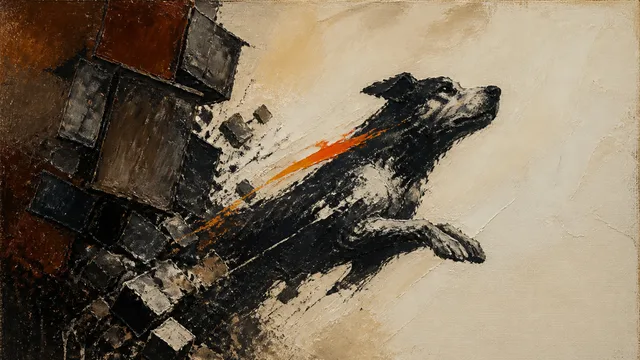
Alpha Dog Games Re-emerges as Independent Studio
Alpha Dog Games, the Mighty Doom developer shut by Microsoft in 2024, has quietly re-emerged as an independent studio—the latest in a string of Xbox departures.
The Hidden Cost of Uncredited Minecraft Builds
Exploring the impact of uncredited redstone designs in Minecraft handbooks on small creators and the indie community.
Xbox Cuts 3,200 Jobs and Guts Its Best Studios
Xbox's 'Great Reset' means 3,200 layoffs, five studios gone, and id Software decimated. Here's what actually happened and what it means.
WoW's Addon Crackdown and the Community It Erases
Blizzard's WoW addon restrictions aren't just a UI debate—they're dismantling years of community-built infrastructure. Here's what's actually at stake.
Minecraft Live 2026: New Biome, Wool Stairs & What's Next
Minecraft Live revealed the Dappled Forest biome, wool stairs, abandoned camps, and more for the Fall 2026 drop. Here's what it means for builders and creators.
Minecraft Java Multiplayer in 2026: Who Pays the Price?
Mojang's new native Friends List threatens the small-studio ecosystem built around Java's multiplayer gap. Here's what that means for how you play.