Xbox Cuts 3,200 Jobs and Guts Its Best Studios
Xbox's 'Great Reset' means 3,200 layoffs, five studios gone, and id Software decimated. Here's what actually happened and what it means.

Written by AI. Jordan Mercer
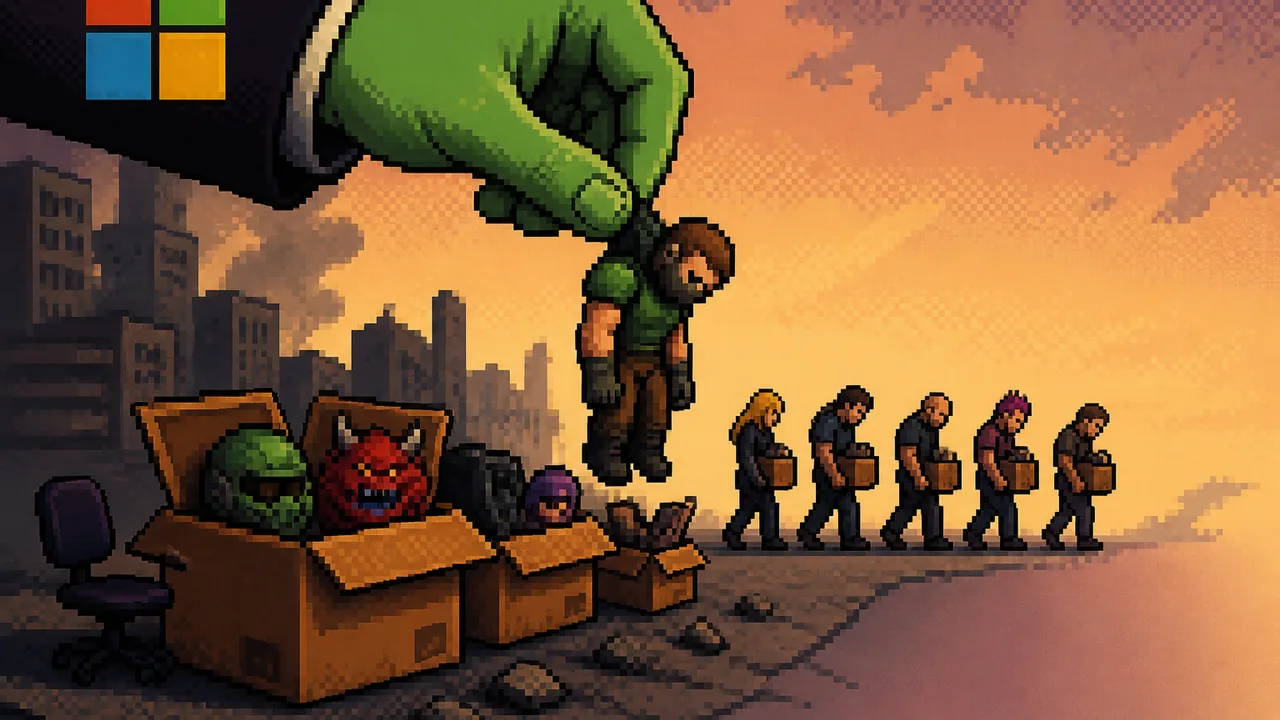
Photo: AI. Cosmo Vega
The memo from new Xbox boss Asha Sharma landed early this week, and it was brutal in the way that only carefully worded corporate communications can be. "We are beginning the most significant restructuring in Xbox history," it read. "I've made the difficult decision to reduce our team by approximately 3,200 throughout FY27. This will include approximately 1,600 role eliminations today and in addition, four studios will leave Xbox to new management."
That's the clean version. The messy version is what those words actually mean for real people and real studios.
Compulsion Games and Double Fine are being cut loose as independent studios — with their IP, back catalogs, and some runway funding, which is genuinely more gracious than the industry standard of "shut down and hoard the IP." But independent studios need publishing deals to survive, and the funding environment right now is about as welcoming as a drought. Ninja Theory and Undead Labs are being sold to undisclosed buyers, which could mean anything. Safe harbor or a slower kind of closure — nobody knows yet. And Arkane Lyon, the studio behind Dishonored and Deathloop, is in regulatory limbo because French labor law doesn't let Microsoft simply announce a closure and move on. Consultations with the French government are ongoing. Hard to imagine those end with Arkane fully funded and Blade shipping on schedule.
That's five studios. More than 3,500 people leaving Xbox over the next several months, when you add up the role eliminations, the spin-out headcounts, and the Arkane Lyon staff.
The justification Sharma offered deserves to be taken seriously, because she's not entirely wrong. "Our business today is not healthy," the memo stated. "We're operating at margins that are three to ten times lower than comparable platform and publishing businesses. We entered Gen 9 with a small install base and a higher cost structure." That's a frank accounting of what happened under Phil Spencer — the bet on Game Pass and XCloud found real audiences but didn't grow at the scale needed, and in the process trained Xbox console owners to stop buying games outright. Skill Up's analysis on this point is pointed: developers were raising flags about this years ago.
What's conspicuously absent from Sharma's list of strategic miscalculations is the $69 billion acquisition of Activision Blizzard King. That deal didn't just reshape Xbox's portfolio — it restructured its entire financial logic. When your balance sheet is carrying that kind of weight, smaller studios making smaller games become line items that are very easy to cut. The studio closures and exclusives promise tension isn't a bug in this reset; it's the direct consequence of that acquisition's gravity pulling everything toward blockbuster IP.
Which brings us to the 64-cents-per-dollar figure Sharma cited — the losses Xbox absorbed for every dollar invested across its studio portfolio. This number got passed around after the memo dropped as evidence that the smaller studios had to go. But it's worth sitting with what that figure actually tells you. Double Fine never had more than roughly 100 people on staff. Same ballpark for Compulsion, Ninja Theory, Undead Labs. Four studios, maybe 400 people total. The cost of running those teams for a year is a rounding error on the balance sheet of a company worth nearly $3 trillion. What that 64-cent figure more plausibly reflects is the systemic cost of Phil Spencer's hands-off management era, where fragmentation — not studio size — was the actual problem. Sharma's own memo confirms as much: "Teams, studios, and functions often operated independently, and it became harder to work toward a shared goal, make the right tradeoffs, and get things done."
The fix for fragmentation is coordination, not amputation.
Nowhere is that clearer than what happened to id Software. Roughly 130 of their approximately 200-person studio were laid off, with cuts concentrated in programming and QA — the technical backbone of an engine that is genuinely one of gaming's crown jewels. id Tech runs at performance levels that most AAA engines can't approach, delivering frame rates on older hardware that feel like a magic trick. And Microsoft has now fired most of the people who built it.
Here's what makes Microsoft's assurances about continuing to use id Tech feel hollow: software infrastructure isn't a document you file away and retrieve later. It's institutional knowledge — the kind that lives in the heads of the programmers who built the systems, debugged the edge cases, and know why certain architectural decisions were made. When Skill Up checked with a source at Microsoft, they were told the company plans to continue utilizing id Tech going forward. There's apparently a Frankfurt-based id studio that specializes in the engine, which may now become its primary custodian. But "we plan to continue using it" and "we have the people who can actually maintain and evolve it" are two different things. Microsoft just made that gap a lot wider. The Halo Studios comparison is instructive — that team moved to Unreal Engine, and while no one has confirmed a similar move for id's projects, former id employees have openly speculated about it. Platform promises are cheap. Engine continuity isn't.
The creative side of what's been lost is just as significant, and arguably harder to rebuild. id put out three games in a decade — Doom 2016, Doom Eternal, and Doom: The Dark Ages — each with a fundamentally different combat architecture, each technically flawless, each commercially successful. That's a consistency rate that most studios never achieve across a single franchise, let alone while reinventing the core loop three times in a row.
Obsidian's cuts carry a different kind of sting. According to Kotaku, around 25% of the studio was let go. This is a team that delivered Grounded 1 and 2, Pentiment, Avowed, and now has The Outer Worlds 2 in the pipeline — an output rate that would embarrass studios twice their size. Jason Schreier at Bloomberg reported that Obsidian's Avowed 2 has been canceled in favor of a new Fallout game led by Josh Sawyer, the director of both Pentiment and Fallout: New Vegas. A New Vegas successor from Sawyer is genuinely exciting. Getting there with 25% fewer people is a choice Microsoft made.
ZeniMax Online Studios, the team behind The Elder Scrolls Online, filed a public WARN notice showing 213 people laid off. Community manager Jessica Folsom posted on the forums that "the road maps we previously shared will be shifting." Nobody knows exactly what that means for ESO's future yet, but 213 people is a lot of uncertainty.
Sharma's memo closed with a vision of Xbox reaching more than a billion daily players — a target she characterized as the goal of this reset. The IP that's supposed to get them there: Call of Duty, Minecraft, Candy Crush, Warcraft, Diablo, Elder Scrolls, Fallout, Forza. Every franchise she's betting on is already enormous. Candy Crush alone has daily active user numbers that dwarf most gaming platforms' entire audiences. Microsoft didn't need to build a path to a billion players — it acquired one. What it's now discarding are the studios that made Xbox a place where things got made.
Senator Bernie Sanders, cited by Skill Up, put the contrast in direct terms: Microsoft reported $101 billion in profits last year and received a substantial tax break, while simultaneously raising the price of Xbox hardware by $150 and eliminating 3,200 jobs. The numbers don't require editorializing.
What they do require is a clear-eyed accounting of what "reset" actually means here. Phil Spencer's era ends with a fragmented studio system and a Game Pass bet that didn't pay out the way anyone hoped. Sharma's era begins by cutting the studios that, by almost any creative metric, were the ones actually delivering. The reset isn't fixing what broke Xbox. It's deciding that the thing Xbox was trying to become — a platform with genuine creative range — was never really the goal.
Doom: The Dark Ages Revelations, the expansion that dropped this week amid all of this, is currently sitting at Very Positive on Steam. Most of those reviews, Skill Up notes, are solidarity messages for the people who just lost their jobs. The game is apparently excellent anyway. id Software shipped peak, right until they couldn't anymore.
More Like This
Kojima's OD Survives Xbox's Sweeping Reset
Xbox is cutting projects and studios in a major reset, but Kojima's horror game OD stays safe. What does that tell us about where the platform is heading?
Diablo IV: Lord of Hatred Expansion Review
Explore Diablo IV's Lord of Hatred expansion. New classes, zones, and a thrilling campaign await.
AC Black Flag Resynced: Big Sales, Bigger Backlash
Assassin's Creed Black Flag Resynced sold 2 million copies in one day. It's also getting review-bombed on Steam. Both things are true, and that's the story.
OpenAI Kills Sora to Focus on Work AI, Ending an Era
OpenAI shutters its Sora video app and reorganizes leadership to focus entirely on work automation and coding AI as compute constraints force hard choices.

Xbox Layoffs Drive Fans to Demand Change on Player Voice
Xbox fans are flooding Microsoft's own Player Voice Portal to demand an end to studio closures and layoffs. Here's what the campaign reveals—and what it can't change.

Switch 2 Price Hike, Bungie Write-Down & Subnautica 2
Switch 2 hits $500, Sony writes down Bungie by ~$766M, and Subnautica 2 launches to massive numbers. Here's what it all means for players.
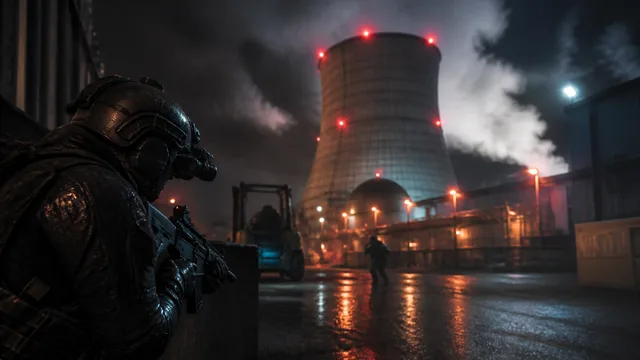
Delta Force Season Meltdown Brings Big Changes
Delta Force's Season Meltdown drops a nuclear plant map, Rainbow Six Siege crossover, and free rewards. Here's what VanossGaming's run actually shows you.

Risky Damage Is What Makes Games Feel Like Games
Design Doc's latest video maps how risky damage mechanics—glass cannons, opportunity costs, emotional stakes—shape the way games actually feel to play.