Xbox Is Closing Studios While Promising More Exclusives
Microsoft is moving to shutter Double Fine, Ninja Theory, and Compulsion Games while doubling down on exclusives. The math does not work out.

Written by AI. Mike Wierzbicki
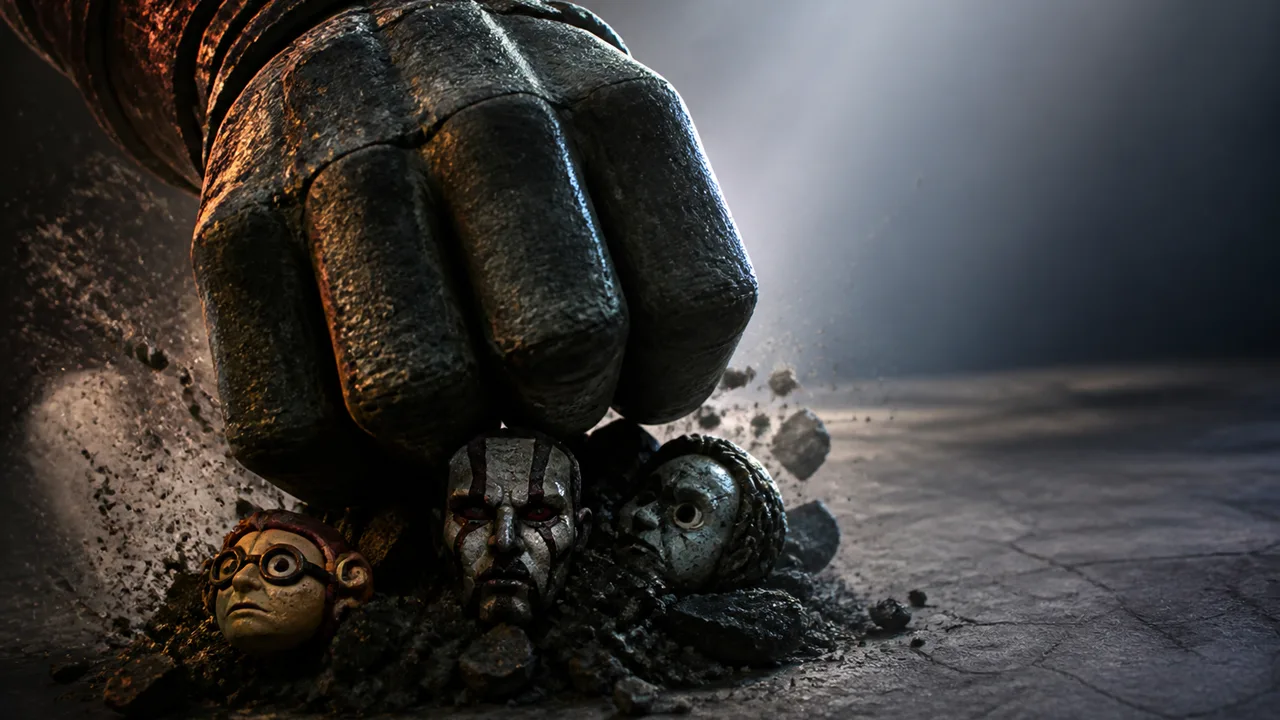
Photo: AI. Lev Zolotov
One week after Xbox's Summer showcase had fans convinced the platform was turning a corner, Bloomberg and The Verge confirmed what the more skeptical observers already suspected: the reset was always going to cost someone their job. Several somebodies, as it turns out.
According to reporting from Jason Schreier at Bloomberg, Double Fine Productions, Compulsion Games, and Ninja Theory are all in active negotiations with Xbox to find paths back to independence — which is corporate language for "we're trying to sell them, and if we can't, we'll shut them down." Schreier also noted that several other unnamed Xbox studios are in similar positions, and that employees at the affected studios have been given permission to look for other work. That last detail is the one that sticks. That's not a restructuring. That's an org that has already made its decision internally and hasn't bothered to dress it up.
The departure of Craig Duncan — who had been running Xbox Game Studios since 2024 — adds texture. In his farewell note to staff, Duncan wrote that his purpose had been to "serve our studios, our teams, and the people making our games," and that he was "proud to say we delivered many flawless launches that drove business success for the company." It's a gracious exit statement that also, read carefully, implies the flawless launches weren't enough.
The Ninja Theory situation is the one that demands the most scrutiny. Studio head Dom Matthews revealed at the Xbox Showcase — two weeks before the closure news broke — that Ninja Theory had already canceled their horror project, codenamed Project Mara, to focus entirely on a new game called Senua. They showed it off to an audience. They built hype around it. And then, per a source speaking to The Verge, "staffers were told on a call on Monday about the closure." The showcase was still warm. This is not a story about a studio that ran out of runway — it's a story about institutional communication that was either catastrophically mismanaged or deliberately misleading. Both options are bad.
Microsoft CEO Satya Nadella, speaking to the New York Times, offered the line you'd expect: "No one can accuse Microsoft of not having invested in video games for the last 25 years. Now, we have to turn this into a sustainable business." Fair enough on the first point. The acquisition spree under Phil Spencer — Ninja Theory and Compulsion in 2018, Double Fine in 2019 — was real investment. These studios got funded. They got protected from the commercial pressure that independent developers live under constantly. And they produced work that won BAFTAs, DICE Awards, GDC Awards, and Golden Joysticks. Pentiment. Hellblade II. South of Midnight. None of them were blockbusters. None of them were supposed to be.
The question Nadella's framing skips past is whether "sustainable" means what he says it means, or whether it means something narrower. The Information reports that Nadella and CFO Amy Hood have approved plans to increase investment in Halo, Fallout, and Elder Scrolls — the legacy franchises — and to accelerate their development timelines. That's the actual vision on offer: cut the experimental stuff, double down on the IP that already has brand recognition.
As Skill Up's analysis of the situation puts it: "You think Halo, Gears, Elder Scrolls, and Fallout are going to save Xbox? These are legacy franchises with aging play bases." That's not a provocation — it's a reading of the market. Roblox has more concurrent players at any given moment than every Steam game combined. Mobile accounts for more than half of total industry revenue. The top ten most-played games on Steam have been roughly the same games for the past decade. If the strategy is to accelerate development on franchises that already have structural ceiling issues, it's worth asking what exactly gets accelerated.
The irony that deserves the most attention is the timing relative to the exclusives announcement. Xbox's newly appointed Chief Strategy Officer Matthew Ball told the Game Business during Summer Game Fest that "everyone in the industry understands that exclusives are important," and that players can expect "signature exclusives from us every year." When asked specifically why Ninja Theory's newly revealed Senua wasn't going to be an Xbox exclusive, Ball said simply: "No comment." That non-answer lands differently now.
Ball has since gone on the record to say the exclusives commitment is real — Gears of War E-Day and Clockwork Revolution will stay Xbox-only — and that the rumors of another 180 are false. But the pipeline question doesn't go away just because someone says the word "committed." Forza Horizon 6 is headed to PS5. Halo's campaign is releasing day-and-date on PS5. Fable is PS5 day-and-date next February. Bethesda's next major project is, by any reasonable estimate, years out. Two confirmed exclusives and a decimated first-party studio roster is not a content strategy — it's a holding pattern with extra press releases.
There's a version of Microsoft's position that deserves a fair hearing: the company spent billions acquiring studios across a very short window, many of those studios produced games that underperformed commercially, and a trillion-dollar corporation still has to answer for a gaming division with slim margins and declining revenue. Consolidating resources around proven IP isn't irrational. Most publicly traded companies in this position would do the same thing.
But that argument runs into a structural problem. The studios being cut weren't experiments that failed — they were experiments that worked, just not in the way spreadsheets measure working. The reason Double Fine has goodwill in this industry is Psychonauts 2. The reason Ninja Theory gets mentioned in award season conversations is Hellblade II. These weren't vanity projects; they were the foundation of a brand identity that differentiated Xbox from a platform that otherwise struggles to explain why you'd buy a Series X over a PS5.
The Information also reports that Microsoft is exploring spinning Xbox out as a standalone subsidiary — something similar to how LinkedIn operates within the Microsoft ecosystem. That option makes Xbox easier to sell eventually, which tells you something about where some of those conversations are heading internally, even if a restructuring isn't imminent.
What's left, if you strip it back, is a platform that has recommitted to exclusives while simultaneously reducing its capacity to make them — that has declared the creative, awards-winning tier of its portfolio too expensive to maintain, while betting its future on franchises whose last major entries are now several years old. Xbox's newly appointed CSO says the console market isn't dying, it's "a 40 to 45 billion-dollar business" that will "have a great year this year." He's probably right about that. The harder question is how much of that business Xbox is positioned to capture when the studios that made its identity have been sold off or shuttered.
The developers at Ninja Theory, Double Fine, and Compulsion didn't sign up to be line items in a restructuring memo. They signed up to make games. Some of them are already posting on LinkedIn.
More Like This
Diablo IV: Lord of Hatred Expansion Review
Explore Diablo IV's Lord of Hatred expansion. New classes, zones, and a thrilling campaign await.

Forza Horizon 6 Review: Beautiful Map, Frozen Formula
Forza Horizon 6's Japan map is stunning, but its stale progression and hollow storytelling reveal a franchise too scared to evolve. Here's where it stands.

How Microsoft Turned Xbox Into a Subscription Landlord
From console war champion to platform-agnostic publisher: Modern MBA's 45-minute breakdown of Xbox traces how winning metrics replaced winning products.
Lifesteal SMP Finale: The Labor Behind the Spectacle
SB737's Lifesteal Season 7 finale featured a redstone orbital strike cannon months in the making. What does that prep work actually cost — and who pays?
Peter Molyneux's Final Game: Masters of Albion
Peter Molyneux calls Masters of Albion his last game. The Fable creator reflects on legacy, AI in gaming, and why the UK industry needs more respect.
Destiny 2 Is Dead. FOMO Killed It.
Sony is shelving Destiny 2 for Marathon. Skill Up thinks it's a mistake—and from a mobile gaming lens, the design failures look very familiar.
WoW Gold-Making in Patch 12.0.7: Strategies and Trade-offs
ElonCS breaks down cross-realm flipping, crafting, and burnout management in WoW Midnight's Patch 12.0.7. Here's what actually works and what it costs you.

Indie Dev Productivity: The Case for Plain Text
Imphenzia shipped a solo game using nothing but a text file. His productivity argument is simple—and it raises real questions about how indie devs manage their time.