Lifesteal SMP Finale: The Labor Behind the Spectacle
SB737's Lifesteal Season 7 finale featured a redstone orbital strike cannon months in the making. What does that prep work actually cost — and who pays?

Written by AI. Mike Wierzbicki
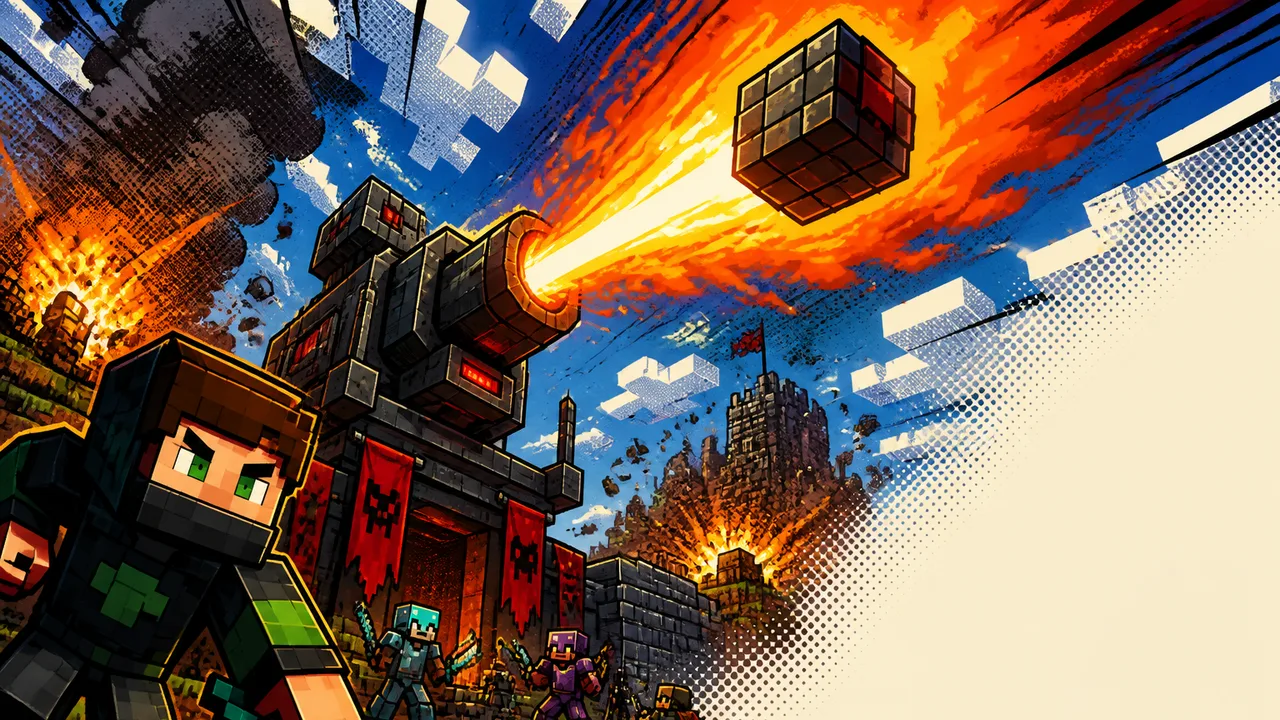
Photo: AI. Marco Velez
There's a moment in SB737's Lifesteal Season 7 finale video where he's standing in front of his accumulated inventory — stacks of rare items, enchanted gear, resources gathered across months of a competitive Minecraft season — and he says: "It's like dying in real life, you know? You get all these riches and then you look at it and you're like, 'Well, what was the point?'"
He laughs it off. Clown Pierce suggests scattering the mob heads around the FFA arena for aesthetics. The moment dissolves into finale chaos.
I've been in enough end-of-project postmortems — rooms full of people who just shipped something enormous and don't quite know what to do with themselves — to recognize that feeling. SB737 wasn't doing philosophy. He was doing the thing developers do when the work is over and the work was the point all along.
That question deserves a more structural answer than it gets.
The Cannon Is Not a Side Quest
SB737 describes building the orbital strike cannon as "just a side quest" in his finale video. And to be fair, he means it tonally — it's one set piece among many in a 25-minute video. But that framing obscures the actual scope of what went into it.
The cannon itself is based on a design by creator cubicmetre, with SB737 describing it as a version modified for Lifesteal's specific needs: the music disc firing system was removed, the auto-fire mechanism was changed to require manual input, and the build was configured to store and release eight simultaneous payloads. A creator named Willerhide helped with the modifications. A teammate called Dtowncat gathered materials and excavated the underground installation area. A mod called TechUtils was essential for inventory management during construction — because without it, tracking what goes in which barrel and dropper across a build this size is the kind of tedious systems problem that doesn't make the video.
None of that is "a side quest." That's pre-production. That's a technical team. That's the unglamorous infrastructure work that makes the 30-second nuke sequence possible.
The video credits these contributors — cubicmetre in the description with a link to the original cannon video, Willerhide and Dtowncat by name — and that transparency is worth noting. But crediting contributors in a YouTube description and compensating them are two different questions, and SMP content formats like Lifesteal sit in a genuinely ambiguous space between collaborative creative project, competitive game, and monetized content pipeline.
How SMPs Extract Creative Work
Lifesteal as a format is fairly specific: a persistent multiplayer server where players can gain and lose health hearts by killing each other, creating a high-stakes PvP environment that also rewards long-term planning, alliance-building, and — this is the part that matters for our purposes — elaborate technical construction.
The result is a content ecosystem where individual creators are simultaneously participants in a shared world and independent video producers. When SB737 builds an orbital strike cannon, he's not just playing a game. He's producing a narrative asset. The cannon needs to be visually impressive, mechanically legible to an audience that may not understand redstone, and dramatically timed for maximum payoff across multiple videos — because every player on the server is filming their own perspective.
That coordination overhead is real labor. Pangi runs a fake awards ceremony to corral players into position. SB737 loses his voice and has to arrange proxy narration mid-recording. The cannon misfires prematurely, obliterating the stage and abandoning the original set piece. Someone — based on SB737's account, a player who flew over the cannon's position — triggered the system before the planned moment, burning eight prepared nukes on an empty arena.
That's not a funny blooper. In production terms, it's a months-of-prep asset firing into nothing because the staging broke down. The finale video still works — the chaos actually produces more authentic content than the planned version would have — but the gap between planned spectacle and what actually happened is revealing. SMPs are collaborative productions operating without the infrastructure that actual productions have. No shot list, no locked set, no one whose job is making sure the cannon doesn't go off during the dress rehearsal.
The Question of Minitech
The finale's most quietly interesting moment is when Minitech — who, per SB737's account, had survived the entire season without being killed by another player — offers SB737 the privilege of being his only death. According to SB737, Minitech acknowledged he'd been largely inactive for half the season, which complicates the "immortal player" narrative somewhat. Whether that record holds up as a clean absolute across the full documented Season 7 timeline, I can't independently verify — SMP seasons are long, multi-participant, and not always exhaustively archived.
But take the gesture at face value. A player who survived an entire competitive season as the last unkilled participant is voluntarily gifting his death record to a teammate, in private, before the final fight, because he doesn't want the record broken by a random in a chaotic FFA. That's a creator making a deliberate editorial choice about the shape of his own season's narrative. He's not just playing a game. He's authoring a story.
This is what makes SMPs different from conventional competitive games, and it's also what makes their labor economics murky. The "content" is inseparable from the "play." Every alliance, every betrayal, every dragon egg handed over as a trust token — Jojo's in this case, who aligned with Team Apocalypse in the finale after considerable reflection — is simultaneously a gameplay decision and a production decision. The distinction between player and content creator collapses entirely.
What the Finale Actually Produces
SB737 gets killed by his own cannon. He frames this as irony, which it is. Clown Pierce — who was taken out by the cannon — lands the final shot on SB737 before going down. Minitech wins the FFA and, per the video, Team Apocalypse claims the season finale victory. The limited-edition Team Apocalypse poster is available at the merch store, signed by all four members.
The merch link lands in the outro the way it always does. Which is not a criticism — creators have to monetize, and merch is a cleaner business model than most — but it does crystallize what this whole elaborate structure produces at the end. The orbital strike cannon, the months of materials gathering, the alliance negotiations, the deliberately gifted death, the ironic self-destruction: it all flows into a 25-minute video and a poster you can buy.
Team Bing's departure from the server — SB737 describes them as having suddenly "banned themselves," though the exact mechanism isn't clear — deflates one of the season's major conflict threads before the finale even reaches its climax. The server is, as one player puts it in the video, "in a bit of an irreversible state." The FFA ending isn't the planned finale; it's the improvised one, arrived at because the planned one fell apart.
And yet the video works. The chaos is legible, the emotional beats land, and the irony of the cannon killing its own architect is the kind of ending you couldn't script. That improvisational resilience is probably Lifesteal's most underappreciated production value — the format is structurally robust to things going wrong, because "things going wrong" is content.
The labor question isn't whether this is worth making. It clearly is, for everyone involved. The question is whether the people whose work goes into it — the Dtowncats gathering materials, the Willerhides solving technical problems, the cubicmetres whose original designs get modified and deployed — have relationships with this content ecosystem that reflect the value of their contributions. YouTube description credits are a start. They're also the minimum.
More Like This
Matt Wolfe's YouTube Playbook: Money, AI & Workflow
Matt Wolfe opens the books on his YouTube AdSense, AI video workflow, and why he thinks faceless AI channels are mostly a losing bet.
Diablo IV: Lord of Hatred Expansion Review
Explore Diablo IV's Lord of Hatred expansion. New classes, zones, and a thrilling campaign await.
Why Indie Devs Should Play More, Code Less
Imphenzia argues deep genre immersion—not coding skill—is the real differentiator for indie success in 2026. Here's what that argument gets right, and where it gets complicated.
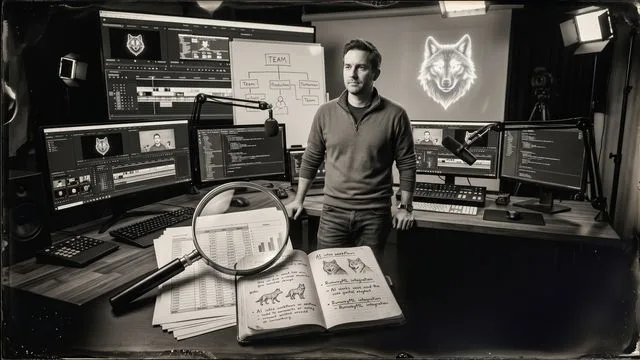
Inside Matt Wolfe's AI Creator Operation
Matt Wolfe breaks down the real costs, team structure, and AI workflows behind one of YouTube's biggest AI channels. The numbers are surprising.
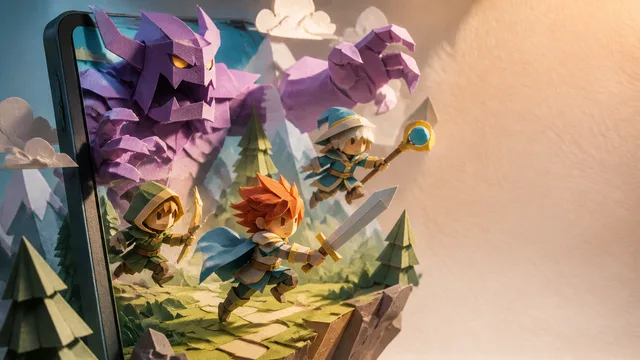
Sword x Staff: The Mobile RPG That Ate VanossGaming
VanossGaming and crew went down a Sword x Staff rabbit hole for 2+ hours. Here's what that actually tells us about mobile RPG design in 2025.
Exploring Minecraft Capes and Player Engagement
A deep dive into Minecraft capes, their history, and how they shape player engagement and community culture.
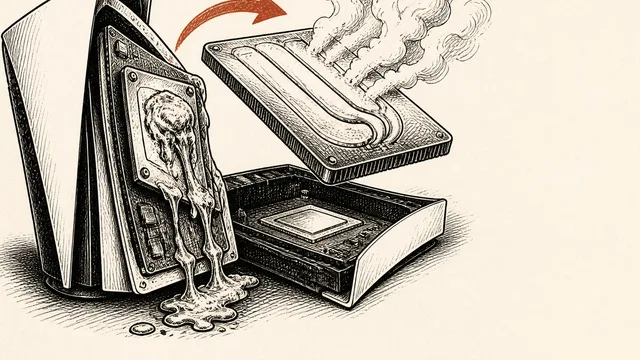
PS6 May Ditch PS5's Liquid Metal Cooling System
A Sony patent points to vapor-based cooling for the PS6, signaling a possible retreat from the liquid metal system that dogged the PS5 at launch.

Epic Games Built Lore, a Version Control System for Games
Epic Games released Lore, an open-source version control system built in Rust for large binary assets. Here's how it compares to Git and Perforce.