Destiny 2 Is Dead. FOMO Killed It.
Sony is shelving Destiny 2 for Marathon. Skill Up thinks it's a mistake—and from a mobile gaming lens, the design failures look very familiar.

Written by AI. Jordan Mercer

Photo: AI. Marco Velez
If you grew up gaming on your phone—and a lot of you reading this did—then the story of how Destiny 2 died is going to feel uncomfortably familiar. Not because you played it. A lot of you didn't. Destiny 2 launched in 2017. If you were 14 then, you're 22 now, and your formative gaming years were Genshin, PUBG Mobile, Brawl Stars, maybe some Pokémon GO. You came up in a world where live service design was already ruthless and already mobile-native. The console and PC crowd figured out FOMO monetization later. They were not better at it.
That's the angle that's been bugging me all week while watching Skill Up's latest video, a 40-minute breakdown of why Bungie is shutting down active development on Destiny 2 and what Sony's decision to throw everything behind Marathon instead might cost them. Skill Up makes a sharp, frustrated argument. Bungie mismanaged Destiny, Sony doubled down on the wrong game, and now a franchise with genuine staying power is going into the freezer.
He's probably right about most of it. But there's a layer of this story that only makes sense if you spend time in the space I cover — and it's the layer that explains why this wasn't just bad luck or bad leadership. It was a design philosophy that has been eating live service games alive for years, on every platform.
The FOMO Playbook Doesn't Care What Platform You're On
Here's what Skill Up nails: Bungie's real sin wasn't the Eververse store or even content vaulting (though that was genuinely awful and anti-consumer). It was the FOMO engine.
"With content actively being cycled out of the game regularly, and with seasonal events and weapon drops only available in limited windows, playing Destiny felt like all the work of a nine-to-five job crossed with all the deadlines of a school assignment."
I read that and immediately thought of three mobile games I've covered in the last two years that are now dead or on life support for exactly the same reason. When you use scarcity as your primary retention tool, you're not building loyalty — you're building anxiety. Players stay not because they love the game, but because they're afraid of what they'll miss if they don't. That's a fundamentally fragile relationship. The moment something else grabs their attention, or the moment the anxiety stops feeling worth it, they're gone. And they don't come back.
Mobile gaming had this reckoning early. Games like the older generation of gacha titles burned out entire player bases by making the game feel like homework. The ones that survived — and the ones that grew new audiences — figured out that you can have seasonal content and time-limited events without making non-participation feel like punishment. There's a difference between "this cool thing is available now" and "if you don't play this week you'll permanently miss something essential." Bungie kept building the second version. So, for the record, has Bungie with Marathon.
Skill Up points out that Marathon shipped with the same structural problems: no real onboarding, aggressive FOMO seasonal model, and a game that's nearly impossible to enter mid-season when everyone else is already geared up and leveled. If that sounds like picking up a gacha RPG in month four of a season when the meta has calcified around units you don't have — yeah, it's the same wall, different coat of paint.
The Closed Loop Problem
The thing about a closed loop — a live service that stops growing and just recirculates its existing base — is that it feels stable right up until it collapses. Destiny 2 had this problem for years before anyone official admitted it. Bungie's content vaulting decision is the clearest symptom: when you remove old content to make room for new content, you're explicitly building a game for people who are already there. The door isn't just hard to open for new players. It's locked.
Marathon has the same door and it might be even heavier. Skill Up notes that Marathon's average player count is currently lower than Destiny 2's, a game that's functionally already in end-of-life status, pending a final content update Bungie has confirmed for June 9, 2026 per their official announcement. Certain regions are dealing with extended queue times. The endgame is so demanding that even dedicated players are complaining it's too sweaty for casual engagement.
Skill Up's framing on why Marathon struggled is worth sitting with: he argues the game was built for a niche audience — hardcore extraction shooter fans — but was given a budget and expectations that only make sense if it was going to reach a mass audience. He puts the development cost at an estimated $250 million, a figure he cites without tying to a specific primary report, so treat that number as directional rather than confirmed. But even if the real number is meaningfully lower, the gap between "niche extraction shooter" and "needs to financially justify a giant studio" is enormous and obvious, and someone at Bungie or Sony should have caught it before launch.
The comparison to Arc Raiders is instructive but also needs a caveat. Skill Up argues Arc Raiders found broader appeal because it's built around PvE cooperation rather than pure PvP extraction — making it accessible to players who want to fight together rather than against each other. Arc Raiders did have a strong launch window and positive reception, but calling it a validation of the PvE-inclusive model requires looking at actual sustained player numbers over time, not just launch buzz. The point stands directionally: a game designed to cooperate with its audience's existing instincts will have an easier time finding that audience. But the comparison shouldn't be treated as a clean data point.
What This Means If You Didn't Grow Up With Destiny
Here's the thing I want my readers to actually hold onto, because most of you didn't grow up waiting for Destiny raids or grieving the content vault.
The reason the Destiny story matters isn't nostalgia. It's a live case study in what happens when a studio builds a game that makes you feel like a subscriber to a service you can never cancel — and then the service cancels you.
"Destiny 2 immediately became a game intended only for those already playing it. Everybody else, bad luck."
That's a design failure that crosses every platform. You've seen it in mobile. You've seen it in PC MMOs. The games that grow generationally — the ones that stick around long enough to actually matter — are the games that figure out how to let someone walk in on day one and feel like they belong there, even if they're behind. Fortnite has done this reasonably well. Genshin has done it well enough. Destiny never cracked it, and that's a large part of why, by the time The Final Shape arrived as a genuine sendoff, the audience had already shrunk to the diehards.
Skill Up's core argument is that Sony is making a mistake by walking away from Destiny 2 rather than investing in it — that the game still has life, the player base still has affection for it, and all it needed was a credible signal that the future was bright:
"It was those layoffs that killed the franchise's momentum, because we saw in that moment a declaration that Destiny's best days were behind it."
He might be right. He might also be right that a Destiny 3 isn't the answer — the development timeline alone (five to six years minimum, hundreds of millions of dollars) makes it a hard sell even before you factor in how much the franchise audience will have moved on by then. The case he makes for investing in Destiny 2 as a living platform rather than starting over is genuinely interesting, and it maps onto something mobile developers have known for a while: the hardest thing to build is an audience that trusts you, and the easiest thing to destroy is exactly that.
Jason Schreier's Bloomberg reporting confirmed that Destiny 3 is not in active development — there are pitches floating around Bungie, but nothing greenlit. Paul Tassi's Forbes reporting revealed that almost no one at Bungie knew the shutdown announcement was coming; according to that reporting (not confirmed directly by Bungie), staff were actively working on a major expansion that leadership apparently knew would never ship. If that's accurate, it's the kind of internal dysfunction that doesn't fix itself by pivoting to a different game.
Sony bet $3.6 billion on Bungie. They're now consolidating around Marathon, a game that hasn't found its audience, built on a studio that may have spent years making decisions that destroyed the audience they had.
The mobile gaming world learned a hard lesson about what happens when you optimize for extraction instead of engagement. Turns out it's not a platform-specific problem.
More Like This
Diablo IV: Lord of Hatred Expansion Review
Explore Diablo IV's Lord of Hatred expansion. New classes, zones, and a thrilling campaign await.
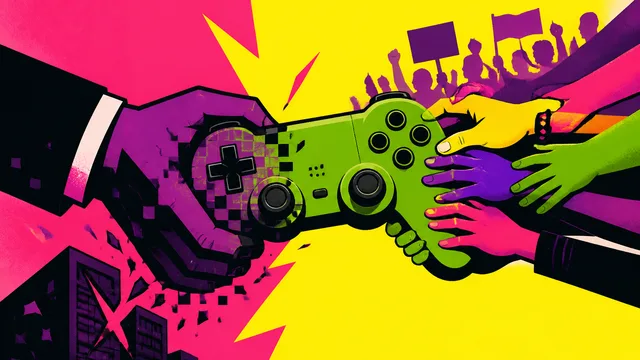
Gamers Are Fighting the EU Over Digital Ownership
The Stop Killing Games movement reached 1.25M signatures and an EU hearing. Here's what's actually at stake—and why it's bigger than gaming.

Tim Dillon on Meta's Slow Death and Facebook Boomers
Tim Dillon's latest episode covers Meta's decline, Facebook-brained Boomers, and the Selling Sunset audience that's done pretending they can own a house.

Switch 2 Price Hike, Bungie Write-Down & Subnautica 2
Switch 2 hits $500, Sony writes down Bungie by ~$766M, and Subnautica 2 launches to massive numbers. Here's what it all means for players.

Forza Horizon 6 Review: Beautiful Map, Frozen Formula
Forza Horizon 6's Japan map is stunning, but its stale progression and hollow storytelling reveal a franchise too scared to evolve. Here's where it stands.

AC Black Flag Resynced Is Ambitious—But Is It Worth $70?
Skill Up went hands-on with AC Black Flag Resynced in Singapore. Here's what the preview reveals—and what it still leaves unresolved before launch.
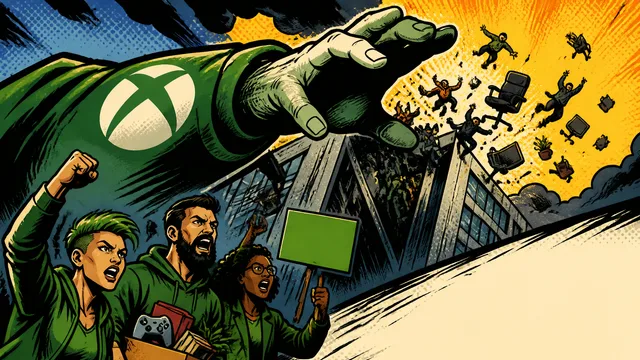
Xbox Workers Push Back as 1,600 More Jobs Loom
Xbox workers are organizing across six studio locations as 1,600 more jobs hang in the balance. Here's what the unions are demanding—and what it means for gaming.
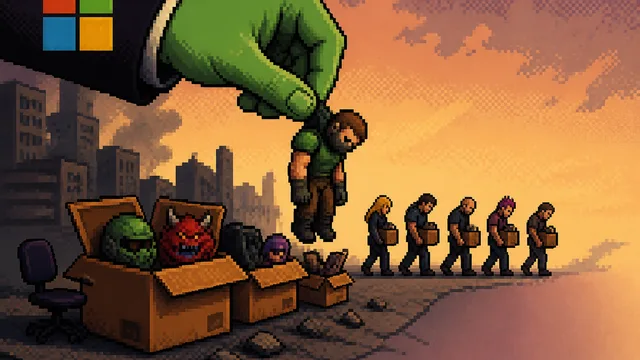
Xbox Cuts 3,200 Jobs and Guts Its Best Studios
Xbox's 'Great Reset' means 3,200 layoffs, five studios gone, and id Software decimated. Here's what actually happened and what it means.