AC Black Flag Resynced Is Ambitious—But Is It Worth $70?
Skill Up went hands-on with AC Black Flag Resynced in Singapore. Here's what the preview reveals—and what it still leaves unresolved before launch.

Written by AI. Jordan Mercer

Photo: AI. Phaedra Lin
Here's my conflict of interest, front and center: I came to Assassin's Creed through a phone screen.
AC: Pirates. Assassin's Creed Identity. AC: Rebellion. These are the games that introduced me — and millions of other players in Southeast Asia, Latin America, and sub-Saharan Africa — to Edward Kenway and the franchise's pirate mythology. Not a PS3. Not an Xbox 360. A phone. Those mobile entries ranged from genuinely good (Identity held up) to gacha-adjacent grindfests (Rebellion had its moments before the monetization ate you alive), but they all did something important: they seeded the IP globally among people who couldn't afford $60 console hardware. A lot of us fell in love with the Caribbean setting through a 5-inch touchscreen before we ever touched a controller.
I say that because it changes how I read the question Skill Up's Ralph (known online as Skill Up) is raising in his hands-on preview of Assassin's Creed Black Flag Resynced. For players like Ralph — who replayed the original 4K PC version in preparation and calls Black Flag "one of my favorite games, full stop" — the question is: can a remake do justice to something beloved? For players like me, and for the global audience that met this franchise on mobile, the question is different and more transactional: is this finally worth buying into, and at what price?
Those are not the same question. How you answer one doesn't answer the other.
What Ralph saw in Singapore
Ralph spent a full day at Ubisoft's Singapore studio — notable because the Singapore team reportedly contributed to the original game's development, with a particular focus on naval systems (studio credits from 2013 aren't always cleanly documented, so treat that with appropriate skepticism). He paid his own way, which matters: Ubisoft offered to cover flights and accommodation, and he declined.
The scope of what Ubisoft is building is the first thing worth sitting with. According to figures from either Paul Fu (the game director) or Ubisoft's briefing materials — Ralph's preview doesn't pin which, and I'm not going to launder an unverified number into a clean fact — Resynced is adding approximately six hours of new content. That includes new islands, side quests, a naval officer system with three recruitable officers and ten associated missions, an expanded hideout with two new characters, and an entirely new endgame chapter called A World Without Gold, which functions as an epilogue to Kenway's story. System-level overhauls touch mission structure, naval combat, melee combat, stealth, collectibles, and the weather system. The whole thing has been rebuilt in the latest Anvil engine — the same one behind Assassin's Creed Shadows.
The visuals, by Ralph's account, are extraordinary. He describes the effect as "they brought the CG cutscene from the original game to life and made it playable." The weather system is the most gameplay-meaningful upgrade: storms now limit visibility in ways the original never attempted, puddles persist after rainfall, and a new "rogue wind" mechanic physically buffs your ship off course, requiring active correction. Game director Paul Fu explained the design tension directly: "There's always this slight struggle of should we make the weather visualization block the view of the player. You have to provide a balance of chaos versus gameplay. So I think we struck a good balance in Reync. We amped up the visualization, and we accepted the fact that sometimes you can't see, and that's going to be okay."
The sound overhaul is significant too. Ship combat in the original anchored everything spatially to the center mast. Resynced uses Dolby Atmos-powered object audio, so every element has its own sound physics — a cannonball flying over your head now actually sounds like it came from where it came from. Music dynamically syncs to chain takedowns during combat, which Ralph says required substantial engineering work to pull off. And there are new shanties, some of which apparently sing of Kenway's own growing legend. That last part I actually care about: the original's shanties were one of the few times a AAA open-world game used music as genuine narrative texture rather than ambient filler. If the new ones continue that — crew singing the story you're living — that's the franchise's mobile lineage paying off too, because AC: Pirates understood that the sea shanty was the emotional hook. It knew what it had.
Where the preview gets complicated
Ralph has three hesitations, and they're worth separating because they're not equally weighted.
Parkour he describes as "different, not necessarily worse." That's fine. Parkour feel is a matter of muscle memory and community expectation more than objective quality. The hardcore crowd will have opinions. I don't have strong ones.
Combat is murkier. Ralph doesn't love what he played, but he's careful to note that how combat was presented in the demo context may have been unrepresentative of what it actually is. Crucially, it's not modern AC combat transplanted wholesale — Fu confirmed it's a distinct system built from the original's combat logic rather than replacing it. The writing concern I have here is about new players: if you're coming to Resynced as your entry point to Black Flag — which a lot of mobile AC players will be — a combat system that even sympathetic previewers describe cautiously is a legitimate friction point. Not a dealbreaker. A friction point. There's a difference, and I'm not going to sand it smooth.
The modern-day removal is the real loss, and Ralph doesn't minimize it. In the original, the conceit was that you were navigating a program called the Helix system, reliving Kenway's memories while Abstergo — a corporation secretly run by the Templars — mined them for intelligence. The metatextual layer meant you were always playing two games at once: the pirate adventure on the surface, and the contemporary conspiracy thriller underneath. It gave the Templar threat a present-tense weight. You weren't just watching history; you were caught inside its long shadow right now.
Ubisoft is replacing those sequences with what they're calling "modern-day riffs" — reflective segments that go deeper into Kenway's internal psychology. Ralph puts it plainly: "I don't see how it could [make up for the loss] because the two have completely different objectives." I agree with him, and I'd add a layer he doesn't have: for players who entered this franchise through mobile, the modern-day framing was often stripped out of those games already — Identity had almost none of it, Rebellion reduced it to lore text. So in a sense, Resynced is bringing the console experience closer to what mobile players already knew: just the historical story, nothing underneath. Whether that's a concession to new audiences or a genuine creative decision, the effect is the same. A version of Black Flag that has never asked you to think about what Abstergo is actually doing while you're having fun pirating is a smaller game, philosophically, than the one that did.
The $70 question
This is where my angle as a mobile reporter stops being background and starts being the whole point.
A significant chunk of the audience that knows and loves the Black Flag setting came to it through free-to-play or sub-$10 mobile entries. For those players, Resynced at full console price isn't just a purchase decision about a remake — it's a first major financial commitment to an IP they've only ever experienced at low or no cost. The question isn't "is this faithful to the original?" It's "is this $70 of game?"
Based on what Ralph saw: probably not day one, unless you have strong nostalgia for the 2013 original specifically. If you're a returning fan who replayed it recently and loved every minute, the visual and audio uplift alone might justify the price, and the new content is a genuine bonus. But if you're a mobile player or a newcomer coming in cold — the people Ubisoft is ostensibly also trying to reach — the combat hesitation and the writing concerns Ralph flags in the new content are real enough to warrant waiting for review scores. Not a hard pass. A deliberate wait.
The bones are genuinely strong. Ralph's overall read after four hours is positive, and he went in skeptical. Fu's design philosophy — "protect what was already there, and after that improve it or add to it where it made sense" — is the right instinct for a game that doesn't actually need fixing. But "right instinct" and "executed well" are two different verdicts, and we won't have the second one until launch.
Wait for reviews. Then decide. If the scores are strong and the writing concerns turn out to be preview-build rough edges, buy it. If reviewers confirm that the new content feels tonally off compared to the original, wait for a price drop. Sixty-plus dollars is real money, and for the audience that found this franchise on a phone, it's been real money this whole time.
More Like This
Claude Opus 4.7's Hidden Cost: When AI Gets Smarter and Pricier
Anthropic's Opus 4.7 fixes major bugs but ships with a tokenizer that costs 35% more. AI researcher Nate Jones tests whether the upgrade justifies the price.
Diablo IV: Lord of Hatred Expansion Review
Explore Diablo IV's Lord of Hatred expansion. New classes, zones, and a thrilling campaign await.
Can Unreal Engine 5 Run on a $500 MacBook? Sort Of.
Testing Unreal Engine 5.7 on the MacBook Neo reveals what happens when professional software meets budget hardware—and why friction matters.

Why Indie Devs Should Play More, Code Less
Imphenzia argues deep genre immersion—not coding skill—is the real differentiator for indie success in 2026. Here's what that argument gets right, and where it gets complicated.

Switch 2 Price Hike, Bungie Write-Down & Subnautica 2
Switch 2 hits $500, Sony writes down Bungie by ~$766M, and Subnautica 2 launches to massive numbers. Here's what it all means for players.
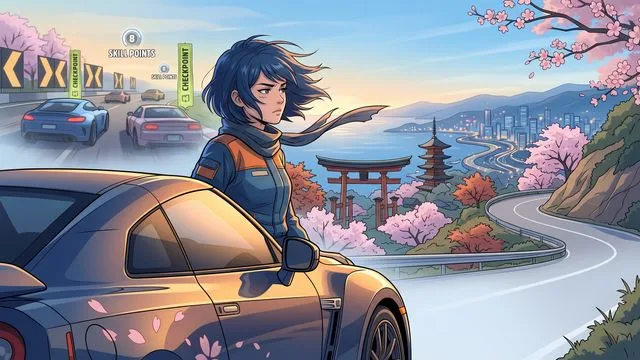
Forza Horizon 6 Review: Beautiful Map, Frozen Formula
Forza Horizon 6's Japan map is stunning, but its stale progression and hollow storytelling reveal a franchise too scared to evolve. Here's where it stands.
Xbox Workers Push Back as 1,600 More Jobs Loom
Xbox workers are organizing across six studio locations as 1,600 more jobs hang in the balance. Here's what the unions are demanding—and what it means for gaming.
Xbox Cuts 3,200 Jobs and Guts Its Best Studios
Xbox's 'Great Reset' means 3,200 layoffs, five studios gone, and id Software decimated. Here's what actually happened and what it means.