July 2026 Game Releases: Remakes and New IP
Halo remade again, Black Flag re-engineered, and a packed July of new releases arriving in GTA 6's shadow. What this month reveals about how the industry treats its catalog.

Written by AI. Sarah O'Brien
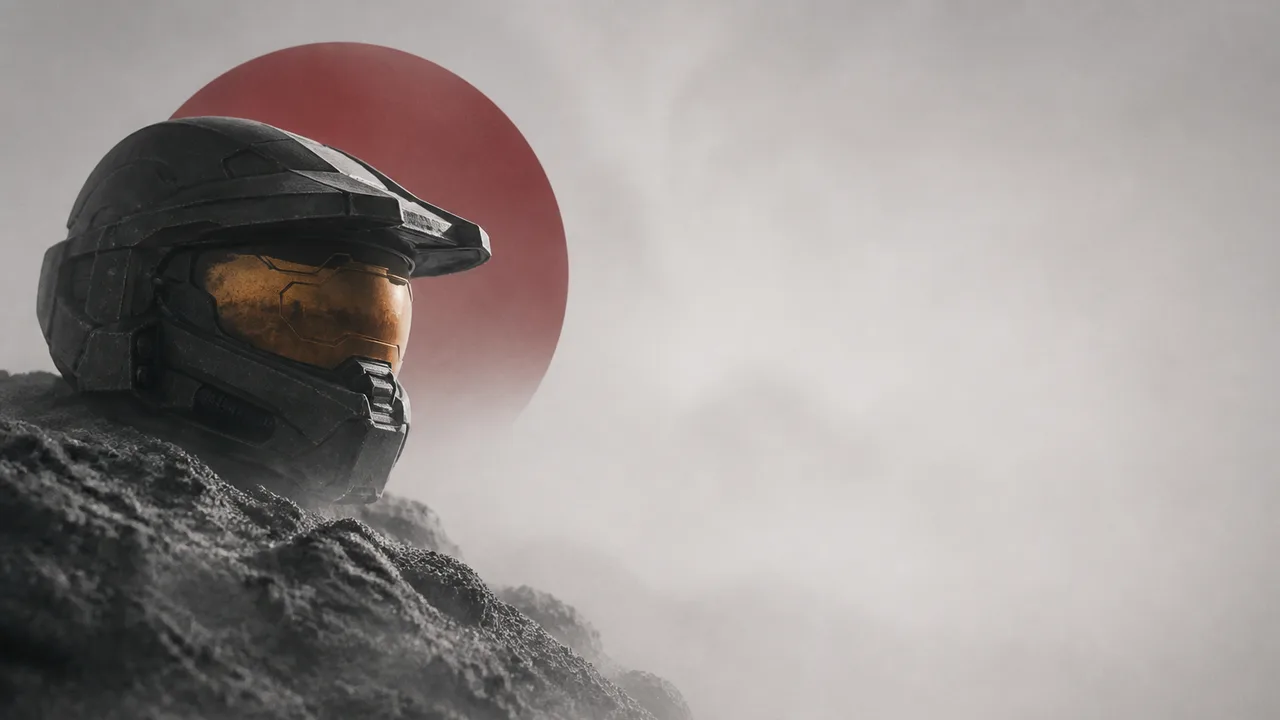
Photo: AI. Tomoko Hayashi
Every few years the industry enters a strange gravitational state where one unreleased game bends everything else around it. Right now that game is GTA 6. Gameranx host Falcon put it plainly in his July 2026 preview: "The next few months are going to be people rushing to get their games out before Grand Theft Auto 6 absolutely steamrolls everything else." The result is a July that's genuinely dense — ten notable releases plus a substantial expansion, spanning a Soulslike where you're a sword-wielding Spinosaurus, a Lovecraftian extraction horror, and a Splatoon spin-off that strips out the competitive multiplayer entirely. But two entries anchor the month in ways that go beyond hype, and both of them are remakes. That's where I want to spend most of my time here.
Halo, Remade Again
Halo Campaign Evolved lands July 28th on PC, PS5, and Xbox Series, and it is — by my count — the second remake of Halo: Combat Evolved, a game that originally shipped in 2001. The first was Halo: Combat Evolved Anniversary, released in 2011, which let you toggle between the original engine and a new visual layer in real time. That version is still accessible through The Master Chief Collection, which remains on storefronts. The original game, in its unadulterated 2001 form, is not — not commercially, not easily, not without hardware most people no longer own.
So here we are in 2026, with a third version of the same opening chapter. Falcon notes it's "described as a faithful but modernized remake with updated visuals, new gameplay additions, and extra surprises," and adds that it "looks a lot more faithful than the original remake." I want to hold that phrase carefully, because it's doing a lot of work. The 2011 Anniversary edition was notoriously divisive among preservation-minded players: the new art layer didn't just sharpen the geometry, it relit the environments in ways that changed mood and spatial readability. Some players felt the remake aesthetically misread what made the original feel alien and lonely. Whether the 2026 version corrects that, or simply makes a different set of interpretive choices, isn't something that can be assessed from marketing materials — that requires direct comparison that hasn't been published yet.
What I can say is that the structural pattern here is worth naming. Each time we remake a game, the previous remake doesn't become the archive — it becomes the predecessor. The 2001 original recedes further. The 2011 Anniversary edition, which itself was a particular interpretation of the source, is now being superseded by a version that adds three new prequel missions and "extra surprises." These aren't restorations. They're new editions, each one asserting its own version of the text. The original's commercial unavailability means players increasingly have no choice but to engage with one of the remakes, and the remakes are not neutral. That's not a reason to skip Halo Campaign Evolved — the new prequel missions sound genuinely interesting, and the crossplay support (across PC, PS5, and Xbox Series) reflects a hardware reality that the 2001 design obviously couldn't anticipate. It's a reason to be clear-eyed about what "faithful remake" means and what it doesn't.
On the corporate geometry: Sony acquired Bungie in 2022, but Falcon correctly notes that Halo's PS5 release is not a product of that relationship — Microsoft owns the Halo IP outright, and the multiplatform release reflects Microsoft's broader platform strategy shift rather than any Sony-Bungie arrangement. Whether Bungie retains the same organizational independence within Sony by mid-2026 as it held at acquisition is worth verifying before drawing structural conclusions from it.
Black Flag, Re-Engineered
Assassin's Creed Black Flag Resynched arrives July 9th and presents a more complicated preservation question than Halo does. The original Black Flag shipped in 2013 — it's a 13-year-old game, not an artifact from before most current players were gaming. Ubisoft has ported it to the current Anvil engine, involved the original development team, and is claiming it's more than a resolution bump. Falcon describes updated combat, stealth, parkour, and naval systems alongside unspecified new content, and admits the situation around the "modern day" storyline elements is genuinely opaque: "I just don't know what they're doing with the modern stuff. I have no idea."
The original-team involvement is the detail I keep turning over. It has a genuinely mixed track record across the industry. Sometimes original developers returning to their own work produces something that restores authorial intent — Nightdive's work with original teams on certain preservation projects has gone this way. Sometimes it produces retroactive revision: a creator who has grown, changed their mind, or simply wants to fix something they've regretted for a decade. Neither outcome is automatically better or worse, but they're meaningfully different from each other, and they're different from what a preservation effort would look like. An engine port by original developers is a living document being revised by its authors, not an archive being maintained. That's fine — just be precise about what it is.
The original Black Flag is still on storefronts in its 2013 form, which puts it in a different position than Halo CE. Players have a choice. Resynched will need to make its case as an improvement, not as the only available version. Whether updated system parity on modern hardware constitutes meaningful improvement over a 2013 game that mostly runs fine already is a question individual players will answer differently based on what they're looking for.
The Rest of July
The new IP this month is actually stronger than a remake-heavy July might suggest. Dinoblade — a Soulslike where you play as an actual dinosaur, sword gripped in actual dinosaur mouth — has a publicly available demo that Falcon describes as faster than genre standard and visually coherent in ways the premise doesn't promise. PC, July 23rd.
The Mound: Omen of Cthulhu (July 15th, PC/PS5/Xbox Series) comes from Ace Team, the Chilean studio behind the Zeno Clash series and Rock of Ages, and applies that studio's taste for formally strange design to a four-player co-op extraction setup with Lovecraftian horror mechanics. Supernatural forces reportedly distort players' perception mid-run, which in a co-op context creates a fascinating design problem: how do you build trust mechanics around teammates who may be hallucinating? Hands-on coverage has drawn comparisons to extraction survival with 16th-century weapons. It's the most formally interesting premise on the list.
Splatoon Raiders (July 23rd, Nintendo Switch 2 exclusive) is Splatoon stripped of its competitive identity — a single-player and co-op adventure that uses the series' world without using its core mode. Falcon frames this as Nintendo asking "what if we made the side dish into the main meal?" The franchise has always had campaigns, but campaigns were never the point. This one will live or die on whether the world and characters carry weight without ranked matches to anchor player investment.
Avatar Legends: The Fighting Game (July 23rd, PC/PS5/Xbox Series) is a $30 1v1 2D fighter set in the Last Airbender universe, with hand-drawn animation. Falcon's read: "I really want to be good and I wouldn't be shocked by it being good to be frank, but I also wouldn't be shocked if it isn't." At $30, the ask is calibrated correctly for the uncertainty. The Avatar property has warranted a dedicated fighting game for years; the execution is the variable.
Mistfall Hunter (July 29th, PC/PS5/Xbox Series) is an extraction ARPG from Bellering Games and Skystone that hands-on coverage is describing as more Soulslike than shooter — an unusual combination for the genre. Echoes of Aincrad (July 10th, PC/PS5/Xbox Series) is a Sword Art Online action RPG that lets you build your own character rather than play as Kirito, which is the single best design decision any SAO game has made. Early impressions cited combat flow issues, but those were from pre-release builds months old.
The Ranchers enters PC early access July 30th — an open-world farming sim with co-op and, inexplicably, cave monsters to fight. The Alters: Last Variable, a 20-hour expansion to the 2025 sci-fi survival game (release date consistent with the game's known announcement window, though exact date should be confirmed independently), adds four specialist character variants and a new story campaign and lands July 13th. Falcon notes the base game could feel aimless; a focused narrative expansion might be exactly the structure that property needed.
The industry's relationship with its own catalog has always been extractive rather than archival. Games get remade when they're marketable, not when they're at risk of being lost; they get preserved when they're profitable and neglected when they're not. A month like July 2026 — shaped by the looming pressure of one enormous release, anchored by two remakes of titles that are, by any reasonable measure, not old enough to be endangered — tells you something about which games the industry considers worth maintaining and on whose terms. Neither Halo Campaign Evolved nor Black Flag Resynched is a preservation effort. They're commercial products, and there's nothing wrong with that, as long as we don't confuse the two. The games actually at risk of disappearing permanently aren't getting Anvil engine ports and prequel missions. They're getting nothing.
More Like This
Minecraft's Amazon Mod and the Survival Overhaul Lineage
Eeel's Amazon Rainforest Minecraft map builds real ecological pressure—but also reveals what modding communities have preserved, lost, and reinvented over two decades.
AC Black Flag Resynced Is Ambitious—But Is It Worth $70?
Skill Up went hands-on with AC Black Flag Resynced in Singapore. Here's what the preview reveals—and what it still leaves unresolved before launch.
Do You Need a Game Design Document? A History Weighs In
Imphenzia says a one-page GDD is all you need. The history of game documentation—and what gets lost without it—says the stakes are higher than that.
The Cherno Is Building a 3D Game Engine With AI
The Cherno announced a new AI-assisted 3D game engine series. Here's what it means for gamedev education and the junior dev debate.
June 2026 Games: Preservation, Revival, and the Blacktop
Gothic 1 Remake, NBA The Run, Hell Let Loose Vietnam, and more—June's releases ask hard questions about what we save, what we lose, and why it matters.
Destiny 2 Ends: A Community Bungie Built and Switched Off
Bungie ends Destiny 2 content updates in June. Three creators reflect on careers, community, and what happens when a corporation owns your third place.
What Minecraft 26.2 Removes and What You Can Keep
Minecraft 26.2 nerfs duplication glitches, fixes broken villager trades, and closes mob exploits. Here's what changes and what carries over.
WoW Midnight's Economy and the Memory Stored in Icons
A WoW streamer's gold-making stream revealed something unexpected: twenty years of item iconography living as folk knowledge inside a player community.