WoW GM Cheating Scandal Puts Blizzard Under Scrutiny
A Blizzard game master allegedly death-touched bosses for friends, tainting WoW's competitive record. What this scandal reveals about a 20-year compact between devs and players.

Written by AI. Sarah O'Brien
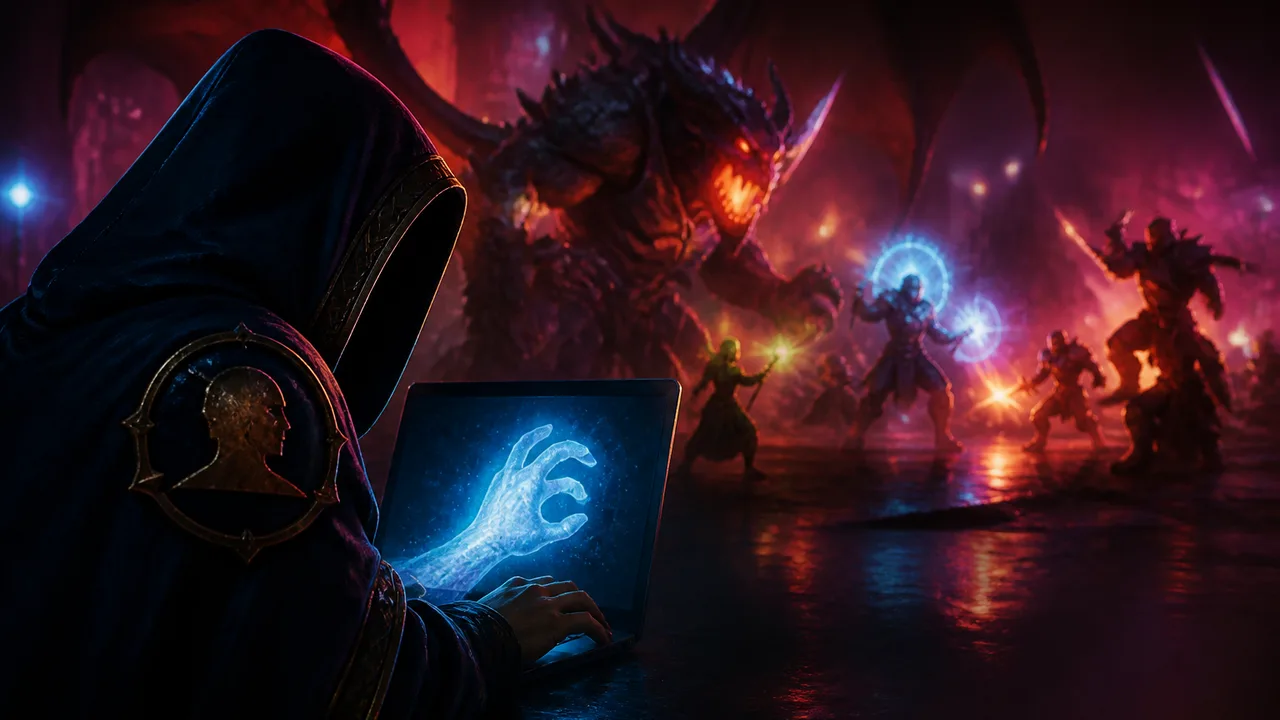
There's a particular kind of dread that arrives when the referee turns out to be a player.
In 1997, a GM running the Ultima Online beta — the player-made character Lord British, actually developer Richard Garriott — was assassinated by another player because someone had accidentally left his invincibility flag off. It became one of the most famous moments in MMO history, not because a character died, but because it revealed, in one catastrophic instant, that the people managing the game world were not separate from it. They had buttons. They had flags. And sometimes, it turned out, they had friends.
That history is why the current World of Warcraft scandal lands the way it does.
What happened
Kotaku reports that the WoW community is "watching very, very closely" as Blizzard investigates what players suspect may be a game master — a Blizzard employee responsible for overseeing the live game — giving an unfair advantage to a player during competitive content. The specifics, as reported by PC Gamer and GamesRadar+, are striking: the GM allegedly "death-touched" bosses — using in-game administrative tools to instantly kill enemies — to assist a Twitch streamer's Mythic team. The crucial detail is that the GM apparently didn't realize they were being recorded at the time.
According to PC Gamer, GMs are not supposed to observe live player runs casually; the publication reports that such access is normally reserved for PTR raid testing and world first races, where Blizzard developers monitor and fix bugs to keep things moving. Whether that describes formal policy or general practice, PC Gamer is the only sourced basis for that characterization, and Blizzard has not publicly confirmed the specifics of its internal GM deployment rules. What has been confirmed: Blizzard is investigating. GamesRadar+ notes that one player involved in the dungeon has admitted to requesting GM assistance.
Massively Overpowered reports that a Reddit megathread has formed around the story — which is not a joke, exactly, but it is a reliable indicator that a WoW controversy has moved from forum murmur to full community conflagration. Dexerto confirms Blizzard has acknowledged the situation and is conducting a formal internal investigation.
The GM compact, and how it was built
To understand why this particular allegation cuts so deep, you have to understand what the GM role was supposed to represent — and what it represented culturally to everyone who played MMORPGs in the early 2000s.
When World of Warcraft launched in 2004, GMs were quasi-mythological presences. You could petition one if your quest was broken, your character was stuck, or someone was harassing you in Stormwind. They appeared in a distinctive blue text. They had power you didn't. Occasionally they'd appear in-world as anonymous characters, watching. For most players, that was the entire relationship: the GM as distant administrator, accessible only under duress, operating from behind a curtain that was never supposed to be pulled back.
That mystique wasn't accidental. It was the inheritance of an older MMORPG tradition that stretched back through EverQuest and Ultima Online — a tradition that treated GM authority as sacred precisely because it had to compensate for having no other legitimacy. GMs couldn't point to a rulebook players had signed. They couldn't appeal to an external governing body. Their authority rested entirely on the community's perception that they were impartial. Break that perception, and you don't just have a cheating scandal. You have a legitimacy crisis.
EverQuest had its own GM controversies in the early 2000s, with players alleging that administrators had gifted items to friends and guild leaders. Those incidents are largely forgotten now — not because they were resolved cleanly, but because the games moved on and the records are sparse. Which is itself a preservation problem I'll return to.
The recording changes everything
What makes this WoW case different from most historical GM controversies is the recording. The alleged death-touch wasn't reported by a suspicious player who noticed something anomalous in the logs. It was captured. The evidence — if it holds up — isn't inferential. It's a timestamp on an act.
That changes the evidentiary calculus, but it also changes something more archival. The recording means there is now a documented moment of intervention in what would otherwise be a competitive run's official record. WoW's competitive Mythic and Mythic+ rankings function as something close to a historical ledger — runs tracked, times logged, guild standings preserved — the kind of record that future historians of the game will actually use when they try to understand this era of competitive MMO play. A tampered run isn't just a cheating scandal in the sporting sense. It's a doctored box score. The difference between a verified record and a corrupted one isn't merely competitive; it's archival.
When we talk about game preservation, we usually mean preserving the software — keeping the code runnable, the servers alive, the content accessible. But the other half of preservation is the integrity of the historical record within the game. Speedrun records, world-first kills, competitive rankings: these are the primary sources that future researchers will excavate. If those records can be silently compromised by administrative intervention, the entire edifice of competitive history becomes suspect — not just the runs we know were tampered with, but all the ones we don't.
That's not a hypothetical. It's exactly what happened to competitive cycling when doping scandals retroactively destabilized a generation of Tour de France results. You can't un-taint a corrupted era; you can only try to be more rigorous going forward.
What Blizzard has to do next, and why it's harder than it looks
Blizzard has confirmed an investigation, which is the right first move. The community, as Massively Overpowered documents, is demanding consequences — not just an acknowledgment. That demand is reasonable. But the harder question isn't how Blizzard handles this specific employee; it's whether the company will say anything meaningful about what structural oversight exists for GM activity during live competitive content.
The GM role has always been a trust architecture with remarkably thin external accountability. Players trust GMs because they have to — because there's no independent audit of GM actions, no public log of interventions, no third-party review board. For twenty-two years, that's worked well enough because the incidents were rare enough and minor enough that the community absorbed them. This one was recorded. It surfaced publicly. It attached to a competitive run with ranked stakes.
The question the investigation has to answer isn't only "did this happen" — the recording suggests it did. It's "how did this become possible, and what prevents it from happening again?" That's a governance question, and it requires a governance answer.
Blizzard has not, as of this writing, offered one. PC Gamer notes it has asked Blizzard for an update on the investigation and has not yet received a response.
What the record will show
MMO history is full of scandals that burned bright and left almost no trace — incidents that the community raged about for a week and then couldn't reconstruct five years later because the forum threads decayed, the screenshots were lost, and nobody thought to archive the moment as a moment. The EverQuest GM controversies I mentioned earlier fall into this category. They happened. People were angry. The anger is undocumented.
This one is documented. The recording exists. The Reddit megathread exists. The coverage exists. Future historians of World of Warcraft — and they will exist, because WoW is now old enough to have them — will be able to look at the summer of 2026 and find a case study in exactly how thin the accountability architecture around MMORPG administration actually was, and what happened when that thinness was exposed.
Whether they'll also find a case study in how a game developer rebuilt trust after a breach — that depends on what Blizzard does with the investigation it's currently running.
The game's records can be corrected. The run can be flagged, the ranking adjusted, the outcome annotated. What can't be corrected retroactively is twenty-two years of assumed impartiality. That assumption either holds, or it becomes a question mark across everything. Blizzard is deciding right now which version of its history it wants historians to write.
More Like This
A Warcraft Franchise Leak That Keeps Checking Out
A dismissed Warcraft franchise leak keeps proving itself right. Classic Plus, an Arthas ARPG, animated series — and one data-mined build that changes everything.
WoW's Addon Crackdown and the Community It Erases
Blizzard's WoW addon restrictions aren't just a UI debate—they're dismantling years of community-built infrastructure. Here's what's actually at stake.
Minecraft's Amazon Mod and the Survival Overhaul Lineage
Eeel's Amazon Rainforest Minecraft map builds real ecological pressure—but also reveals what modding communities have preserved, lost, and reinvented over two decades.

Minecraft 26.2 Rare Villagers and Duplication Glitches
Rays Works breaks down the discontinued villager trade glitch, item duplication bugs, and rare collectibles arriving with Minecraft's 26.2 update.
Do You Need a Game Design Document? A History Weighs In
Imphenzia says a one-page GDD is all you need. The history of game documentation—and what gets lost without it—says the stakes are higher than that.
Is AAA Gaming Headed for a Structural Collapse?
Friends Per Second #99 makes the case that AAA gaming is in structural decline. Here's what the argument looks like when you actually stress-test it.

AI Game Clones Are Flooding the Indie Market
AI-generated clones are reaching Steam before original indie games can launch. Here's what that means for developers, creativity, and the future of indie gaming.
ESO's Leadership Purge Is a Preservation Crisis
Xbox layoffs gutted ZeniMax Online's leadership after 200+ cuts. For ESO's 11-year history, the real loss may be institutional knowledge no one wrote down.