Netflix Is Making a Live-Action Persona Series
Netflix is developing a live-action Persona series with Sega and Atlus. Here's what we know about the creative team, the challenges, and what's at stake.

Written by AI. Sarah O'Brien
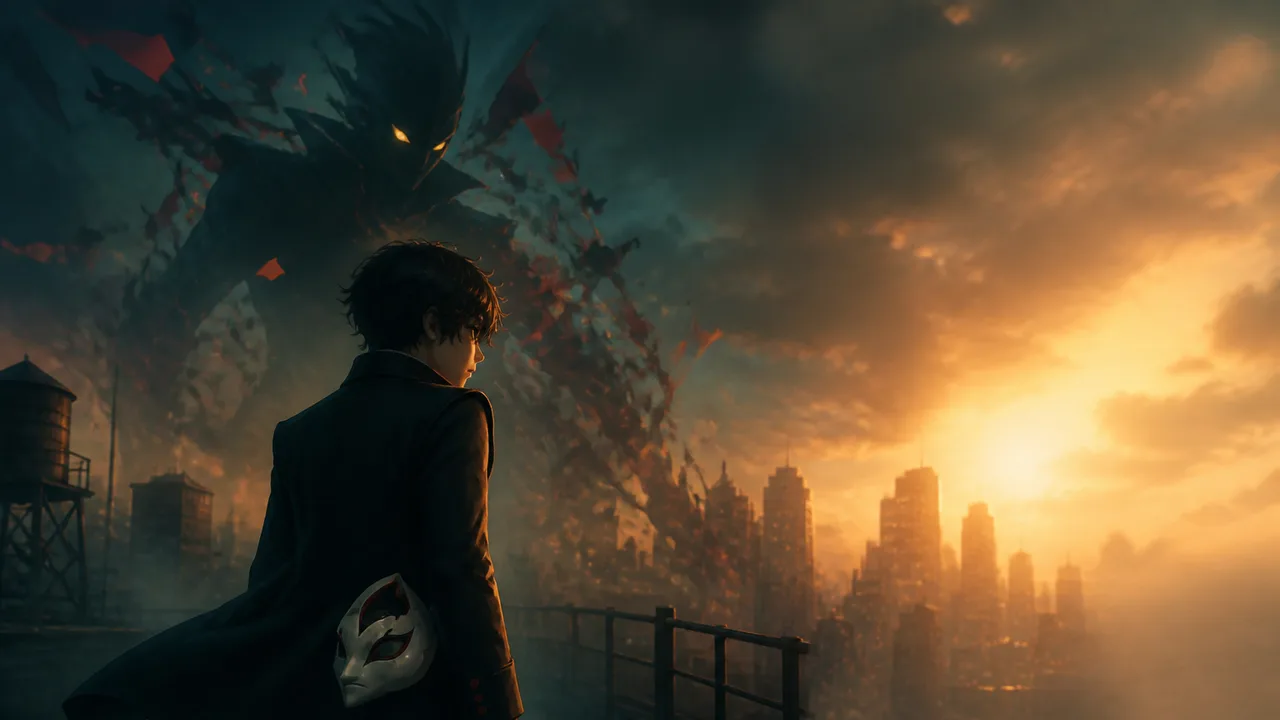
The Persona franchise has been quietly accruing cultural weight since the first game released in Japan in 1996, according to the Megami Tensei Wiki — nearly thirty years of demon-summoning high schoolers, Jungian shadow selves, and the peculiar alchemy of grinding dungeon floors in the morning and building friendships in the afternoon. It has never quite crossed over into mainstream Western consciousness the way Final Fantasy or Zelda did. It doesn't need to. Its fandom is intensely loyal precisely because the games feel like they were made for a specific kind of person.
Which makes the news that Netflix is developing a live-action adaptation — reported by Variety and confirmed across the trade press — worth examining carefully, without the reflexive panic or the reflexive optimism that tends to swallow these announcements whole.
What We Actually Know
According to Polygon, Sega, Atlus, and Netflix are teaming up for the series — which at minimum means the IP holders are involved rather than being circumvented, a meaningful distinction in an era when some adaptations have proceeded over creators' visible discomfort. IGN reports that Christopher Monfette is attached to write the show and serve as showrunner, with executive producer credits shared by 21 Laps Entertainment's Shawn Levy and Robert Atwood, per Anime News Network.
Levy's fingerprints on a project carry specific connotations at this point. The 21 Laps brand — responsible for Stranger Things, Free Guy, and Deadpool & Wolverine — has a demonstrated appetite for genre material with mainstream ambitions, which is either reassuring or alarming depending on what you want a Persona adaptation to be.
Monfette's credits, as Kotaku notes, include Star Trek: Picard and 9-1-1, along with 12 Monkeys. That's a writer with genre experience and ensemble drama chops — someone comfortable with mythologically dense source material and the particular challenge of serializing stories that fans already know by heart. Whether that translates to Persona's specific register is a genuine open question.
Netflix declined to comment on the reported series, per Kotaku.
The Adaptation Problem, Stated Plainly
Here's what makes Persona structurally difficult to adapt, and why the fan skepticism — captured neatly in Kotaku's headline calling it a series "nobody asked for" — is worth taking seriously rather than dismissing as reflexive gatekeeping.
A Persona game is typically 80 to 100 hours long. That runtime is not incidental to the experience; it's the experience. The games build emotional investment through repetition and accumulation — the same characters cycling through daily routines, small conversations that seem throwaway until they aren't, a calendar structure that forces the player to choose which relationships to deepen and which to let atrophy. The dungeon-crawling and the social simulation are not two separate games bolted together. They inform each other thematically. Your bonds make you stronger in combat. Your combat progress unlocks story. The loop is the meaning.
The existing anime adaptations — Persona 4: The Animation ran 26 episodes, as did Persona 5: The Animation, according to Wikipedia — each ran about that length precisely because the stories resist compression. A hypothetical twelve-episode Netflix season would need to make structural choices that those anime runs didn't. What gets cut. What gets collapsed. Which social links survive. Fans are not wrong to be apprehensive about that math.
PC Gamer gestures at a second layer of concern: the cultural translation problem. Persona is deeply, specifically Japanese — in its school-year calendar structure, its uniforms, its archetypes, its relationship to conformity and rebellion. The games are set in Japan and draw on Japanese folklore, psychology, and social anxiety in ways that aren't decorative. They're load-bearing. An American production navigating this material will face the same questions every Western adaptation of Japanese source material faces: how much do you translate, how much do you transplant, and at what point does adaptation become something closer to replacement?
This isn't a hypothetical concern. It's the track record of the genre. Ghost in the Shell. Dragonball Evolution. Death Note. The list of Western live-action adaptations of Japanese properties that failed on precisely this axis is long enough to constitute a pattern.
The Case for Cautious Optimism
The case for this project exists, and it deserves fair treatment.
Netflix's record with game adaptations isn't uniformly grim. Business Insider reported that The Witcher launched to substantial viewership and initial critical enthusiasm — though the critical reception was notably divided, which is context the breathless coverage at launch often elided. The point is that Netflix has demonstrated it can bring gaming properties to mass audiences at scale, even when the creative execution is contested.
More relevantly: Persona's core themes — the tension between the face you show the world and the self you suppress, the terror and possibility of adolescence, the way social structures calcify people into roles they never chose — are not untranslatable. They are, if anything, universal. The games are Japanese in their specific texture but not in their emotional architecture. A thoughtful adaptation could find a way to honor the source material without treating it as a costume.
The creative team's experience with ensemble storytelling and serialized genre fiction is genuinely relevant here. 12 Monkeys required holding multiple timelines and tonal registers in the same frame without losing the audience. That's not an irrelevant credential when you're adapting a franchise that runs on Jungian symbolism and psychological horror.
And Atlus's involvement in the production — rather than simply licensing the IP and stepping back — at least creates the structural possibility of creative accountability. Whether that possibility becomes reality is a question the actual production will have to answer.
What This Actually Signals
The announcement lands at a specific moment in the history of game-to-screen adaptations. The success of The Last of Us on HBO shifted the terms of the conversation: it demonstrated that a prestige, long-form live-action adaptation of a narrative game could work at the highest level of the medium, if the people making it understood what the game was for.
That bar now exists. Every subsequent adaptation gets measured against it, which is both useful and unfair — not every game property wants to be The Last of Us, and not every adaptation should try to be prestige drama. But the question it implicitly poses to any game adaptation announcement is simple: do the people making this understand what the source material is for?
The answer for the Netflix Persona series is genuinely unknown. The creative team is credentialed. The IP holders are involved. The streamer has resources. The Dot Esports and Game Rant coverage notes this is still early in development — no casting, no episode count, no release window publicly confirmed.
What we have is a project that could make the franchise accessible to an audience that has never sat with it for a hundred hours, or could strip the thing that made those hundred hours matter. The distance between those outcomes is exactly the question Persona fans are living with right now, and it's not an unreasonable place to be.
The franchise spent nearly thirty years earning its audience the hard way — one school year, one shadow self, one midnight channel at a time. Netflix has one season to make the case it understood why.
More Like This
Minecraft's Amazon Mod and the Survival Overhaul Lineage
Eeel's Amazon Rainforest Minecraft map builds real ecological pressure—but also reveals what modding communities have preserved, lost, and reinvented over two decades.
Netflix's VOID AI Erases Actors—and Their Physics Impact
Netflix's open-source VOID model doesn't just remove objects from video—it understands cause and effect. We tested it on iconic movie scenes.
Minecraft 26.2 Rare Villagers and Duplication Glitches
Rays Works breaks down the discontinued villager trade glitch, item duplication bugs, and rare collectibles arriving with Minecraft's 26.2 update.
Peter Molyneux's Final Game: Masters of Albion
Peter Molyneux calls Masters of Albion his last game. The Fable creator reflects on legacy, AI in gaming, and why the UK industry needs more respect.
Do You Need a Game Design Document? A History Weighs In
Imphenzia says a one-page GDD is all you need. The history of game documentation—and what gets lost without it—says the stakes are higher than that.
Destiny 2 Is Dead. FOMO Killed It.
Sony is shelving Destiny 2 for Marathon. Skill Up thinks it's a mistake—and from a mobile gaming lens, the design failures look very familiar.
July 2026 Game Releases: Remakes and New IP
Halo remade again, Black Flag re-engineered, and a packed July of new releases arriving in GTA 6's shadow. What this month reveals about how the industry treats its catalog.
June 2026 Games: Preservation, Revival, and the Blacktop
Gothic 1 Remake, NBA The Run, Hell Let Loose Vietnam, and more—June's releases ask hard questions about what we save, what we lose, and why it matters.