The Last of Us Part 2 Mod Cancellation: Who Owns a Finished Game?
Sony reportedly asked a fan PvP mod for The Last of Us Part 2 on PC to stay private weeks before launch. What the episode reveals about modding, control, and preservation.

Written by AI. Sarah O'Brien
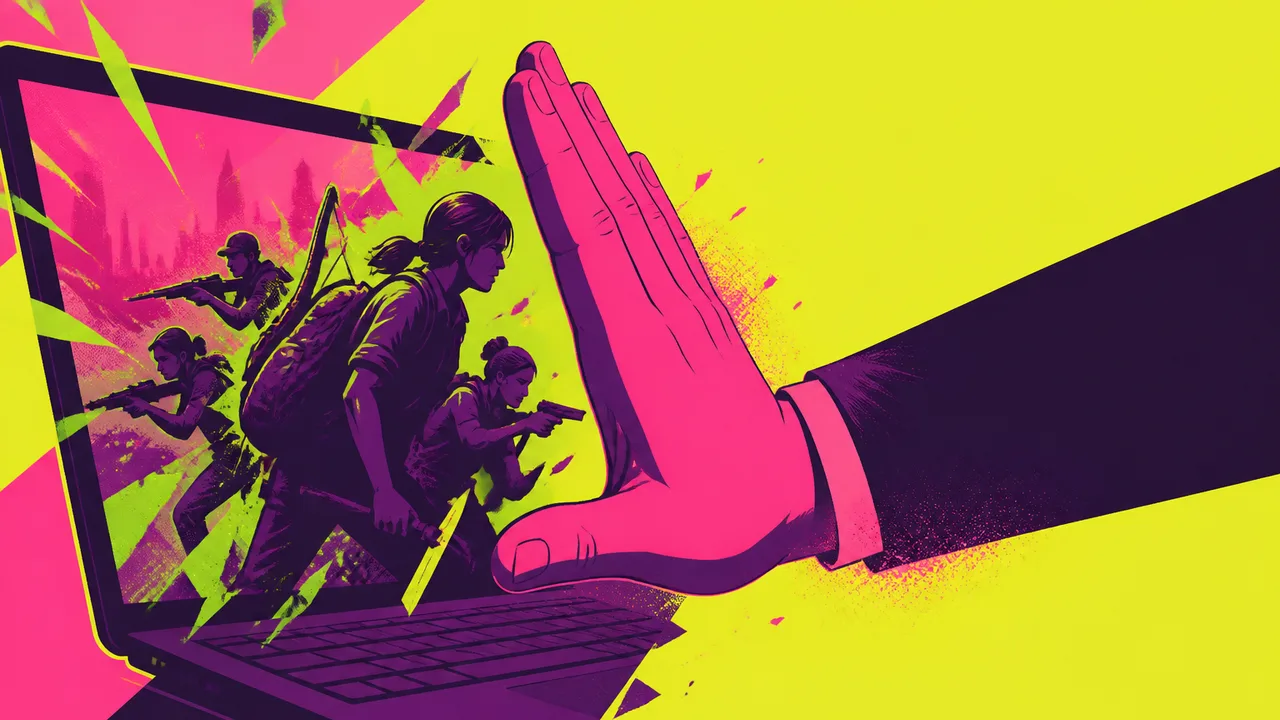
A fan-made PvP multiplayer mod for the PC version of The Last of Us Part 2 will not be released, weeks before its planned launch, after its creator said Sony requested the project remain private. The account comes from the mod's creator and has been reported with careful hedging across the press: Eurogamer describes the cancellation as happening "at Sony's request," Push Square and Video Games Chronicle both frame it as Sony shutting the project down, and Dexerto pins the timing to weeks before release. Sony, so far as the public record shows, has not issued a statement of its own. PCGamesN likewise reports the axing as "reportedly" at the last moment.
That hedge matters, and not just as legal caution. When a publisher declines to comment and the only account available is the creator's, the historical record starts as a single-source oral history. Anyone who works with archives knows how those diverge from paper trails.
What Was Lost
The mod was a player-versus-player multiplayer mode built on the PC port of a strictly single-player narrative game. Its existence was itself a response to an absence. Naughty Dog's original Factions multiplayer for The Last of Us (2013) had a devoted following; the sequel shipped without a multiplayer component. In 2023, the studio announced it had cancelled the standalone multiplayer project, and per Naughty Dog's own public statement at the time, the mode had grown beyond what the studio could support while also making single-player games. GamesRadar quotes reactions to the mod's demise including the line "Extremely sad that this never got to see the light of day," and Destructoid notes that modders had begun building their own multiplayer precisely because the official one died.
So the sequence runs: official multiplayer cancelled, fans spent years building a substitute, and the substitute was withdrawn from public view on the rights-holder's request. The community filled a gap the publisher left open, then discovered the gap belonged to the publisher after all.
The Publisher's Case
Sony's position can be reconstructed from the ordinary concerns of any rights holder, and they are not frivolous. A PvP mod running on a Sony-published PC port touches online infrastructure the company did not build or secure; any exploit in the mod's netcode reflects on the platform holder's brand. The Last of Us is one of Sony's flagship properties, currently extended through television and (reportedly) further adaptations; an unvetted multiplayer experience attached to that brand is a stewardship question. And a mod that requires or encourages ownership of the full game sits near the line, however carefully drawn, between derivative work and distribution of proprietary assets.
Publishers have watched mods before. Valve built an empire by hiring mod teams: Counter-Strike began as a Half-Life mod, Team Fortress began life as a Quake mod before Valve hired its creators and shipped Team Fortress Classic and Team Fortress 2, and Dota emerged from Warcraft III modding before the studio commission a standalone successor in Dota 2. The lesson publishers took from those stories cuts both ways: mods can become billion-dollar franchises, and modders can become competitors or dependents. A rights holder that says nothing until a project nears launch is making a bet that silence costs less than policy.
But the specifics of this case deserve scrutiny. The mod was weeks from release. If Sony had concerns about rights or security, the moment to raise them was arguably years earlier, when the project was announced, not when the community was counting down. PCGamesN reports the request came at what its creator describes as the last moment. Timing is the one fact everyone agrees on, and it is the fact that stings.
The Pattern from My Beat
Vanished works are my beat, and this episode follows a template I have documented before. Corporate rights holders regularly extinguish fan projects that took years of unpaid labor, and the works themselves usually disappear entirely: no source release, no archived build, no way to study what was made. The original Natural Selection mod team saw their project absorbed into a commercial sequel; countless ROM hacks and total conversions have been taken down with a single cease-and-desist, and because fan projects rarely keep archival backups, the code is simply gone.
For a preservationist, that is the sharpest loss here. A cancelled mod is not just a disappointment for players; it is a destroyed primary source. Modding communities document how engines bend, how netcode scales, how design constraints spawn invention. Counter-Strike's existence tells historians something about Half-Life's architecture that no Valve white paper does. Whatever the Part 2 mod demonstrated about the PC port's systems now exists only in the memory of its testers, assuming it was ever widely distributed at all.
The demand side matters too. When a publisher cancels an official mode, the community's appetite does not vanish; it migrates. Destructoid's framing was blunt: Sony killed the official multiplayer, so of course modders built their own. A rights holder that suppresses both official and unofficial versions of the same experience is choosing, deliberately or not, that the experience not exist. Players will read that choice as a statement about who a game belongs to.
What a Better Rule Looks Like
The open question the brief poses, and I will pose it plainly: will companies write mod policies, or will takedowns remain the only rule? A written policy costs a legal department a memo. Its absence costs communities years of work and leaves every future project guessing at the line. Some publishers have managed this: Bethesda's long tolerance of Elder Scrolls modding, Valve's Workshop infrastructure, even Sony's own past permissiveness toward certain PC modding scenes suggest companies can set terms without strangling the wellspring.
The unresolved question is whether Sony's request here was a narrow, defensible call about a specific project, or another data point in a pattern where enforcement substitutes for policy. The public record cannot yet answer that, because the public record is one side's account. What the record does show is who held the pen: the mod's creator wrote the announcement, but Sony's preference, reportedly, decided the outcome. That asymmetry, between the people who make a thing and the people who own it, is the oldest problem in fan production, and it has not been solved this week either.
Games outlive their publishers' plans. Whether they outlive their publishers' permission is a question each cancellation answers anew.
Sarah O'Brien is Buzzrag's retro gaming and preservation correspondent.
Sarah O'Brien
More Like This
Minecraft's Amazon Mod and the Survival Overhaul Lineage
Eeel's Amazon Rainforest Minecraft map builds real ecological pressure—but also reveals what modding communities have preserved, lost, and reinvented over two decades.
Do You Need a Game Design Document? A History Weighs In
Imphenzia says a one-page GDD is all you need. The history of game documentation—and what gets lost without it—says the stakes are higher than that.
Xbox and PlayStation Retreat from Multiplatform Marketing
Xbox is scrubbing PS5 logos from trailers while Sony revives "Only on PS5" language. Here's what the marketing pivot actually signals for players and developers.
GTA 6's Deliberate Miss Mechanic Changes the Series
GTA 6 lets players deliberately miss shots to avoid killing cops and civilians. What this mechanic means now—and what it will mean when the servers go dark.
Atari and Activision Reissue 39 Atari 2600 Cartridges
Atari and Activision are releasing 39 classic 2600 games as working physical cartridges. What does this mean for game preservation—and what does it leave unresolved?
Halloween: The Game Patches Out Sex Minigame After Viral Backlash
IllFonic appears to have removed a controversial sex minigame from Halloween: The Game after footage spread online. What changed, why, and what it reveals.
What Minecraft 26.2 Removes and What You Can Keep
Minecraft 26.2 nerfs duplication glitches, fixes broken villager trades, and closes mob exploits. Here's what changes and what carries over.
WoW Midnight's Economy and the Memory Stored in Icons
A WoW streamer's gold-making stream revealed something unexpected: twenty years of item iconography living as folk knowledge inside a player community.