Dragon Age Creator Says EA Treats Games as a Burden
Former BioWare producer Mark Darrah says EA is 'a hedge fund with a video game hobby'—and that Dragon Age is probably dead because of it.

Written by AI. Sarah O'Brien
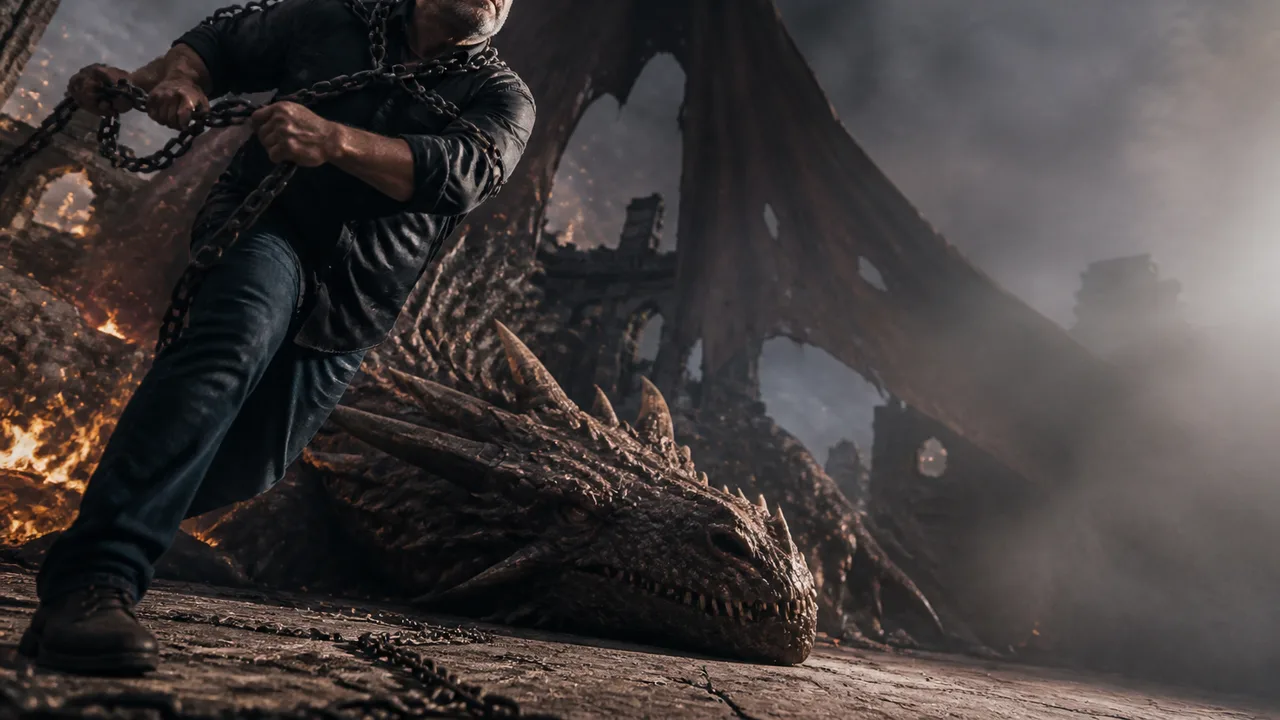
Mark Darrah spent 23 years at BioWare. He knows what it looks like when a publisher is genuinely behind a project and when it isn't. So when he describes EA's relationship to game development as "complicated," that's the diplomatic version. The blunt version came from someone else—someone he doesn't name—who offered him a frame that apparently stuck: EA is "a hedge fund with a video game hobby that it wished it didn't spend so much money on."
Darrah, the longtime Dragon Age producer and series creator, relayed that description in an interview with FRVR, reported by Kotaku and confirmed across multiple outlets. He didn't coin the phrase—he's crediting an unnamed source—but the fact that he's repeating it publicly, and applying it to explain Dragon Age: The Veilguard's troubled development timeline, suggests he thinks it's accurate enough to be useful.
That's worth sitting with. This isn't a disgruntled developer rage-quitting on social media. It's a 23-year veteran, measured in his public statements, choosing this particular framing to explain why the series he built is probably finished.
What "Hedge Fund With a Hobby" Actually Describes
The phrase is designed to sting, and it does. But it's worth asking what it means structurally, not just emotionally.
A hedge fund's core obligation is to its investors, not its products. It may hold positions in industries it finds unglamorous—it doesn't matter, as long as returns justify the exposure. The moment a position stops performing, the calculus shifts. You don't nurture a bad position. You exit it.
Applied to a games publisher, that logic produces some recognizable behaviors: acquisitions of studios with proven IP, tolerance for development as long as projected returns hold, and rapid retreat when a title underperforms. It also produces a particular relationship with risk. Hedge funds don't fund moonshots. They manage portfolios.
Darrah's argument, as reported by The Gamer, is that this institutional posture explains why Veilguard took so long to ship. EA's "complicated relationship to shipping games at all," in his words, created the conditions for a development cycle that stretched beyond what the market would reward. And when Veilguard finally arrived and failed to meet sales targets, according to PC Gamer, EA didn't just move on from the game—it effectively moved on from BioWare. The torch, as PC Gamer puts it, went out on the way out the door.
The Greenlighting Problem
There's a specific structural detail in Darrah's account that matters more than the hedge fund metaphor, and it concerns what happens when someone at EA tries to pitch a new game idea.
According to The FPS Review, Darrah described EA's internal greenlighting process as one where those who pitch ideas "are often ripped to shreds." He considers it unlikely that a new Dragon Age could get off the ground under these conditions.
This is a different kind of claim than "EA prioritizes profit." Every publisher prioritizes profit. The greenlighting problem is about what happens to creative risk inside the organization—whether pitching something ambitious is treated as an opportunity or a liability. If the internal culture punishes advocates for new projects, the inevitable result is a portfolio that converges toward safe bets: sequels to proven performers, live-service extensions of existing titles, and the gradual erosion of the studio cultures that generated those IP in the first place.
BioWare's history under EA is a case study in that erosion. The studio that made Baldur's Gate, Knights of the Old Republic, Mass Effect, and the original Dragon Age has been functionally dissolved—not all at once, but through a sequence of commercial disappointments (Anthem, Mass Effect: Andromeda, and now Veilguard) that each accelerated the attrition of talent and organizational identity.
EA's Position Is Not Entirely Indefensible
Here's the part that doesn't fit neatly into the narrative.
EA is a publicly traded company with shareholders, and Veilguard's failure to meet sales targets is a real business problem, not a manufactured one. Publishers absorb enormous costs during development—BioWare had hundreds of staff on a years-long project—and when the market doesn't respond, that's a genuine loss. The argument that EA should continue funding Dragon Age because it's culturally significant is an argument about values, not economics.
It's also worth noting that EA's portfolio includes studios that are genuinely thriving. Respawn Entertainment, the studio behind Titanfall and the Apex Legends and Jedi franchises, has operated under EA since 2017 with considerable creative output. Maxis has had its own complicated history under EA, but it's survived. The hedge fund metaphor explains some outcomes; it doesn't explain all of them.
What the metaphor captures well is the asymmetry in how EA manages underperformers versus outperformers. Studios with strong live-service revenue are left largely alone. Studios with single-player RPG pedigrees that require three-to-five year development cycles for each release are structurally vulnerable, because a single miss is an existential event.
Dragon Age was always going to be a harder fit. It's a genre that demands commitment—long development, niche-but-devoted audience, limited monetization ceiling compared to a live-service game with a cosmetics shop. That doesn't mean EA was wrong to fund it, but it does mean the margin for error was always narrow. Veilguard crossed that margin.
What Gets Lost in the Ledger
From a preservation standpoint, what concerns me about the Darrah situation isn't the hedge fund metaphor—it's the downstream consequence of that institutional logic for the games themselves.
When a publisher decides a franchise is dead, the question of what happens to the assets, the code, the design documents, the cultural record of what those teams built doesn't enter the ledger. EA's track record with studios it has shuttered—Pandemic, Black Box, Maxis Emeryville, Visceral, and now functionally BioWare—includes a long list of games that became difficult or impossible to access over time. Some were pulled from storefronts. Some relied on server infrastructure that was switched off. Some simply stopped being compatible with modern hardware, with no patch forthcoming and no party with legal authority and preservation intent to fix it.
The Dragon Age series, at least, has a physical and digital footprint extensive enough that the games themselves are unlikely to vanish entirely. But the institutional knowledge—what went wrong with Veilguard's development, what alternatives were considered, what got greenlit and killed in the years between Inquisition and the game that eventually shipped—that record is walking out the door with people like Darrah. Organizations that treat game development as a financial position don't tend to invest in their own institutional memory.
KitGuru's reporting notes Darrah's view that Dragon Age is probably not coming back. That's a franchise that sold millions of copies across nearly two decades. It's not a niche curio. And its probable end says less about Dragon Age's quality than it does about the tolerance for the kind of sustained investment that single-player RPGs require.
The hedge fund model works until you want to make something that takes time to compound.
More Like This

Piracy Is Now the Only Game Preservation Plan
Frank Cifaldi of the Video Game History Foundation says piracy is the only real game preservation method left. Sony's disc exit made the argument harder to ignore.
Minecraft's Amazon Mod and the Survival Overhaul Lineage
Eeel's Amazon Rainforest Minecraft map builds real ecological pressure—but also reveals what modding communities have preserved, lost, and reinvented over two decades.
Do You Need a Game Design Document? A History Weighs In
Imphenzia says a one-page GDD is all you need. The history of game documentation—and what gets lost without it—says the stakes are higher than that.

Gaming Media Veterans Bet on Old-School Web Revival
Two games media veterans are launching a classic multi-format gaming website in 2026. Can lean, reader-supported journalism survive where ad-driven outlets collapsed?
Is AAA Gaming Headed for a Structural Collapse?
Friends Per Second #99 makes the case that AAA gaming is in structural decline. Here's what the argument looks like when you actually stress-test it.

Steam's Record Revenue and the Older Games Driving It
Steam is having its most profitable year ever — fueled by pricier games and players going back to old titles. Here's what that tension actually means.
WoW GM Cheating Scandal Puts Blizzard Under Scrutiny
A Blizzard game master allegedly death-touched bosses for friends, tainting WoW's competitive record. What this scandal reveals about a 20-year compact between devs and players.

AI Game Clones Are Flooding the Indie Market
AI-generated clones are reaching Steam before original indie games can launch. Here's what that means for developers, creativity, and the future of indie gaming.