Piracy Is Now the Only Game Preservation Plan
Frank Cifaldi of the Video Game History Foundation says piracy is the only real game preservation method left. Sony's disc exit made the argument harder to ignore.

Written by AI. Mike Sullivan

There's a copy of EarthBound sitting in a closet somewhere — maybe yours, maybe mine, maybe your college roommate's. The cartridge works. It has always worked. Nobody asks Nintendo's permission every time you power it up, and Nintendo's server infrastructure is not involved in the transaction. The game is just there, the way a book is just there, the way a record is just there. You own it in the ordinary, uncomplicated sense of the word.
That model — physical media, actual ownership, zero dependency on corporate uptime — is ending. And Frank Cifaldi, founder of the Video Game History Foundation, wants you to understand what disappears with it.
Cifaldi's argument, which landed with some force this week, is blunt: piracy is currently the only viable method of preserving video games. Not a supplement to legitimate archival work. Not a stopgap while better solutions are negotiated. The only one. As PC Gamer reported, Cifaldi's position is that "the future of the leading videogame console is total digital licensing," and that this shift makes piracy not an ethical shortcut but a practical necessity — because the industry has, in his framing, refused to offer a meaningful alternative.
The trigger for the latest round of this argument was Sony's decision to stop manufacturing physical copies of PlayStation games. Massively Overpowered noted that the move prompted Cifaldi to "lambast" the decision and acknowledge that piracy is "pretty much the only form of games preservation that's happening these days." That's not a radical person saying a radical thing for attention. That's the director of a legitimate archival organization arriving at a conclusion he'd presumably prefer not to have arrived at.
Here's the structural problem he's describing. When a game exists on a disc — an actual disc you can hold, scratch, lose, and rediscover in a box — it has a certain resilience baked in by physics. Millions of copies distributed across millions of closets and garage sales constitute a kind of accidental backup system. Slashdot reported that while many games are no longer released on physical discs at all, a Reddit thread tracking the issue found that physical copies, where they do exist, are generally still playable — a small comfort, but a real one. A disc in a closet doesn't need a server. I still have a Dreamcast plugged in behind my desk and nobody at Sega is involved in that arrangement, which is exactly how it should be.
Digital licensing is the opposite architecture. When you "buy" a digital game, you're purchasing a revocable permission to access something that lives on someone else's infrastructure. The history of digital storefronts is full of cases where that infrastructure went away — platforms shut down, licenses expired, servers got decommissioned — and the purchases went with them. The game didn't deteriorate over decades the way a cartridge might; it just stopped existing one afternoon, without ceremony, when a company decided the maintenance costs weren't worth it.
The legal dimension here is genuinely thorny, and worth taking seriously rather than waving away. Piracy is not a neutral act. Copying and distributing copyrighted software without authorization is illegal in most jurisdictions, regardless of the archival intent behind it. The Video Game History Foundation knows this, which is why TechSpot noted that Cifaldi's position is framed as an indictment of industry inaction rather than a celebration of copyright circumvention — "although piracy sits in a legal grey area at best, game preservation experts recently claimed that the industry has left them no alternative."
The Foundation has spent years trying to create those alternatives. They've lobbied for exemptions under the Digital Millennium Copyright Act. They've engaged publishers about licensing agreements for archival purposes. They've done the unglamorous institutional work of building legitimate infrastructure. The argument Cifaldi is now making publicly isn't "piracy is great." It's closer to "we tried the other thing and it didn't work."
What makes this moment different from the general, perennial debate about piracy is the scope of what's at stake. According to Wikipedia's overview of video game preservation, preservation efforts encompass not just playable copies of games but development source code, art assets, documentation, and emulation of original hardware — the whole ecosystem of evidence about how games were made and what they meant. When that material is lost, it's not a commercial loss; it's a cultural one. Games are the dominant entertainment medium of the last thirty years. The idea that we'd let meaningful portions of that record disappear because the rights holders found the maintenance inconvenient is not a small thing.
Publishers would argue — and some do — that they have commercial incentives to keep their libraries accessible, that remasters and re-releases demonstrate their commitment to the back catalog, that the market provides. There's something to this: Nintendo's Virtual Console and Sony's PlayStation Plus catalog represent genuine, if selective, efforts to keep older titles in circulation. But "in circulation" for purchase is different from "preserved for historical access." A publisher can pull a title from a storefront tomorrow. A library cannot do the equivalent with a book.
That asymmetry is the core of what Cifaldi is pointing at. The question isn't whether publishers are evil; most of them are just doing what companies do, which is optimizing for near-term revenue and not particularly worrying about century-scale cultural stewardship. The question is whether the existing legal framework adequately accounts for the preservation interest, and on that point the record is pretty clear: it doesn't. Libraries and archives have long-established exemptions for physical media. The equivalent exemptions for digital and software preservation are narrow, contested, and require periodic renewal through a lobbying process that presupposes the existence of organizations with the resources to show up and argue.
The irony is that the piracy Cifaldi is now endorsing as a preservation mechanism is vastly more effective than any official system that currently exists. ROM sites and emulation communities have been doing this work for decades — imperfectly, illegally, but persistently. The Secret of Mana you can find online today exists in that form because someone ripped a cartridge in the mid-nineties and the file has been passed around ever since. That's not a satisfying institutional answer. It is, however, a working one.
Cifaldi isn't arguing that the law should be ignored. He's arguing that it has produced a situation where the only people actually doing preservation work are operating outside it, and that the industry's response to this — lobbying against DMCA exemptions, refusing meaningful licensing agreements with archives, and now eliminating the physical media that at least created distributed redundancy by accident — suggests the industry is not going to solve this problem voluntarily.
An industry that genuinely cared about its own history would have built the institutions to protect it. The fact that it hasn't, and that the most effective preservation happening right now is technically illegal, tells you something about whose interests the current regime actually serves.
The disc in the closet was never the problem. The server that gets shut down is.
More Like This
Do You Really Need an $80 HDMI Cable? Maybe Not
Tech reviewer Adam tests a premium HDMI 2.1 cable. We examine what you're actually paying for and whether most users need it.
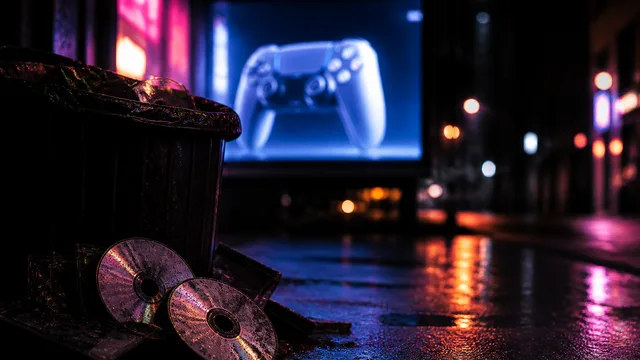
PlayStation Killing Discs Will Reshape Game Pricing
Sony ends disc production in 2028. Analysts warn of higher prices and less consumer choice — with indie devs among the most exposed to platform control.

When Agents Generate Their Own UI: The Three Flavors Explained
CopilotKit's Tyler Slaton maps the spectrum of generative UI—from pixel-perfect control to agents writing raw HTML. Each approach makes different tradeoffs.
Can Unreal Engine 5 Run on a $500 MacBook? Sort Of.
Testing Unreal Engine 5.7 on the MacBook Neo reveals what happens when professional software meets budget hardware—and why friction matters.

July 2026 Game Releases: Remakes and New IP
Halo remade again, Black Flag re-engineered, and a packed July of new releases arriving in GTA 6's shadow. What this month reveals about how the industry treats its catalog.
Unreal Engine 5 Still Doesn't Play Nice With Apple Silicon
While most 3D software runs smoothly on M-series Macs, Unreal Engine 5 remains frustratingly unreliable. One creator documents the disconnect.

AI Browsers Have a Guardrail Problem
A new exploit shows AI browsers can be tricked into abandoning their own rules. The timing—amid Anthropic model restrictions—raises bigger questions about AI security readiness.
AMD EPYC 8005 Sorano: A Genuine Generational Leap
AMD's EPYC 8005 Sorano upgrades SP6 with Zen 5 cores, 84-core density, and 96 PCIe Gen 5 lanes—but the ecosystem remains niche and memory costs sting.