Jupiter and Mars Will Appear Close in Leo on Nov. 15
Jupiter and Mars appear close in Leo on Nov. 15. Find out when to check your local sky, what a conjunction means and what you can see without a telescope.

Written by AI. Olivia Meng
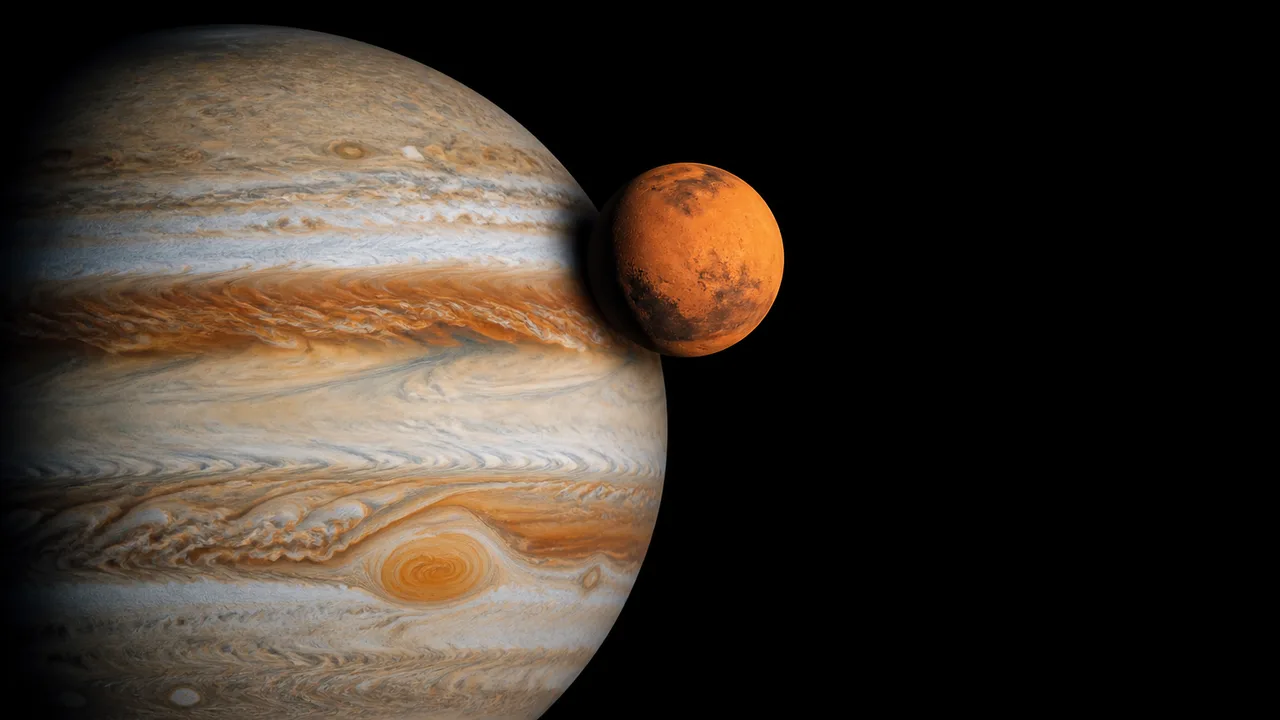
Jupiter and Mars are expected to appear close together in Leo on November 15, giving skywatchers a chance to pick out two planets in one patch of sky. The predicted pairing needs no special equipment to appreciate, provided the sky is clear and both planets have risen above your local horizon. A view through a window, however, will depend on which way that window faces.
The planets will remain far apart in space. Their apparent closeness comes from the changing positions of Earth, Mars and Jupiter around the sun: from our vantage point, two separate paths across the solar system briefly put them in nearly the same direction. Astronomers often call such a pairing a conjunction. For an observer, the immediate result is simpler than the terminology: two bright points that are easier to compare when they sit near each other.
November 15 is a useful date to mark, rather than a promise of identical views everywhere. When and where the pair appears depend on your location and the time you look. A local sky chart closer to the date can answer the practical questions: when the planets rise, how high they will be and which part of your sky offers a clear view. Cloud cover and an obstructed horizon can settle the matter before angular separation does.
What “Close” Means in the Sky
A conjunction describes an alignment on the sky as seen from Earth. Think of looking along a street and seeing a nearby lamppost beside a distant building. Their positions in your view say little about the distance between them. The planetary version involves objects moving through a solar system with enormous gaps between their orbits.
That geometry is also why the pairing changes. Earth moves around the sun, and Mars and Jupiter follow their own orbital paths. The direction from Earth to each planet shifts over time. A conjunction marks a point in that changing pattern, while the surrounding nights let an attentive observer see that the arrangement has a history and an aftermath. Looking on more than one clear night may be more revealing than treating November 15 as a single appointment.
The word conjunction can suggest more precision than an observing tip supplies. Astronomers can define and calculate an exact alignment using the planets’ positions on the celestial sphere. For someone deciding whether to step outside, the useful questions concern visibility. The pair may be attractive before or after the calendar date, depending on the local viewing window. There is no need to catch a single minute to see the broader effect.
Leo gives the pair a place on a sky chart. Constellations are patterns and mapped regions of the sky, so the label helps an observer locate the planets against the background stars. Jupiter and Mars are much closer to Earth than those stars, even though all can appear together in a flat-looking view. The sky offers no depth markers to the unaided eye; it asks us to supply the third dimension ourselves.
How to Find Jupiter and Mars
Start with a sky chart or planetarium app set to your location and the date and time you plan to look. Check the planets’ rising times, then find a place with a clear view in the direction the chart indicates. A hill, building or stand of trees can hide an object near the horizon even when an app says it has risen. Waiting until the planets are higher may give you a less obstructed view, if your local schedule allows it.
Clouds remain the more stubborn variable. Thin or broken cloud can make a bright target intermittent; a solid overcast will erase the pairing altogether. If November 15 looks poor where you live, checking the sky on a nearby night is a reasonable plan. The planets’ positions change, but the geometry does not vanish when a calendar page turns.
The naked eye is enough to see the two planets as separate points of light. Binoculars can bring more of the surrounding star field into view, helping you place the pair in Leo. A telescope changes the question from “Where are they?” to “What can I resolve?” Jupiter can appear as a small disk, and its largest moons may be visible under suitable conditions. What you see through an instrument will depend on the optics, the steadiness of the air and the planets’ position in your sky.
No telescope is required to understand the event. In fact, a wide view can serve the basic purpose better: it lets you see both planets in their setting rather than searching for one at a time through a narrow field. If you do use binoculars or a telescope, locate the planets by eye first and let your local chart guide the move to an instrument.
Why a Familiar Alignment is Still Useful
“Close approach” is an accurate description of the view, but its everyday meaning can lead the imagination well beyond the observation. Mars and Jupiter will not interact because they seem adjacent to an Earthbound observer. The occasion is a chance to watch orbital motion made visible, with distance compressed into a patch of sky.
It is also a useful test of how sky forecasts work. The positions of planets can be predicted, while the quality of a view remains local. A forecast for a pair in Leo tells someone in a clear, open location where to begin looking; it cannot remove the neighbor’s roofline or arrange a break in the clouds. The practical advice is therefore modest: check the chart, check the weather and give yourself a view of the right horizon.
Across a few nights, the changing gap between two recognizable planets can make a slow process legible. On November 15, Earth will supply the vantage point, Leo the backdrop and Jupiter and Mars the moving pieces. Your local sky decides whether you get to watch.
More Like This
August's 96% Blood Moon Lunar Eclipse Explained
A 96% partial lunar eclipse turns the moon deep red on Aug. 27-28. Here's when to watch, why it happens, and what's threatening our view of it.
Stroke Risk Peaks in the First Three Months After a Cancer Diagnosis
New research in Cancer finds stroke risk rises 2.5-fold in the first three months after a cancer diagnosis, especially with pancreatic and lung cancers.
Roman Telescope's First Test Image Is a Health Check
Roman's blurry first test image checks optics and detectors, while fuel savings raise a longer question: how much science can it deliver over decades?
A Victorian Train Delay Exposes Space Weather Risk
A disputed Victorian train delay links geomagnetic activity to telegraph faults, showing how space weather affected systems before satellites and power grids.
Montana's JM Reef and America's Platinum Supply Problem
The JM Reef in Montana is America's only platinum and palladium source. What that means for clean energy, emissions tech, and supply chain security.
Van Gogh’s Starry Night Gets a New July Sky Hypothesis
A new reconstruction links The Starry Night to a July 1889 sky. Star positions and lunar phase support it; disputed sightlines and a June letter complicate the date.

The Gulf Stream's History and Its Uncertain Future
From Ponce de León's journals to modern oceanography, the Gulf Stream has shaped history—and its potential weakening could reshape the world.

Africa's Skeleton Coast: Empty by Ocean, Law, and Diamond
The 2,000-mile gap between Luanda and Cape Town is no accident. Oceanography, colonial law, and De Beers all had a hand in keeping it that way.