August's 96% Blood Moon Lunar Eclipse Explained
A 96% partial lunar eclipse turns the moon deep red on Aug. 27-28. Here's when to watch, why it happens, and what's threatening our view of it.

Written by AI. Mei Zhang
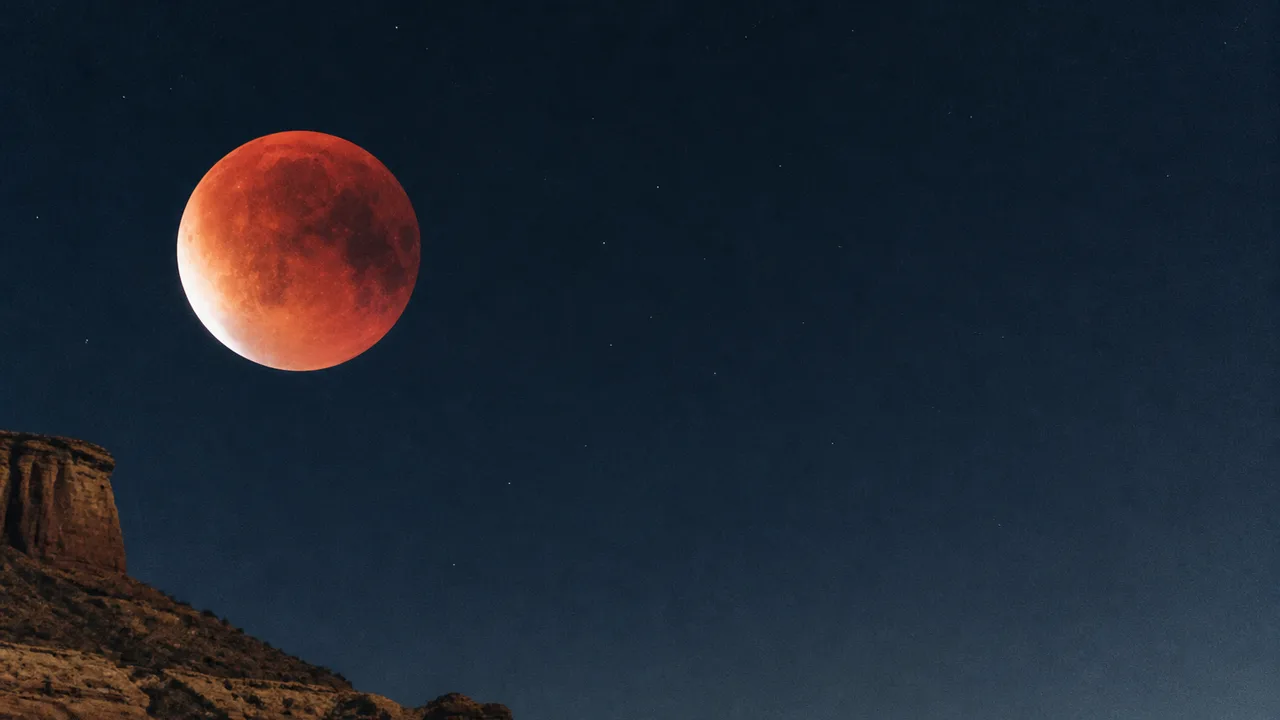
I'm setting an alarm for 12:12 a.m. I don't do this for many things. But the moon is about to look like it got dipped in rust, and I genuinely cannot miss it.
On the night of August 27th into the early hours of August 28th, a deep partial lunar eclipse will sweep across a huge portion of Earth — and if you're anywhere the clouds cooperate, you're going to want to be outside. According to Space.com, the full event runs from 9:23 p.m. EDT on August 27th to 3:01 a.m. EDT on August 28th. The moon will peak at 96.2% coverage at exactly 12:12 a.m. EDT — that's when it earns the "blood moon" label, when almost the entire lunar disk slides into Earth's shadow and glows this impossible, smoldering red.
96.2%. One thin sunlit sliver left, hugging the northern edge. That's not partial in any dismissive sense. That's a near-miss of a total eclipse, and it looks just as dramatic as one.
Why the moon turns red (and why it's more interesting than you think)
Here's the thing: the moon doesn't go dark during a lunar eclipse. It goes red. That distinction matters, and it's genuinely wild once you understand it.
When Earth sits directly between the sun and the moon, Earth's shadow — the umbra — falls across the lunar surface. But sunlight doesn't just stop. It bends. Every sunrise and sunset happening simultaneously on Earth refracts through our atmosphere, scatters the blue wavelengths away, and projects the leftovers — deep amber and red — onto the moon's surface. You're watching every sunset on Earth projected onto the moon at once. 🌍
That color isn't fixed. It depends on what's in our atmosphere at that moment. Active volcanic eruptions push ash into the stratosphere and deepen the red toward near-black. Clear atmospheric conditions produce brighter, more orange tones. Astronomers use something called the Danjon scale — zero to four — to rate the eclipse's color after the fact. Zero is almost invisible. Four is a brilliant copper-orange that you can read by.
We won't know this eclipse's Danjon rating until it happens. And that's kind of the point: every eclipse is slightly different because Earth's atmosphere is always different. The moon is basically a real-time readout of our planet's air.
When to watch — the actual schedule
Per Sunday Guardian Live, here's how the night unfolds for EDT viewers:
- 9:23 p.m. EDT, Aug. 27 — Penumbral phase begins. The moon enters Earth's outer shadow. Subtle, mostly unnoticeable.
- 10:33 p.m. EDT, Aug. 27 — Partial eclipse begins. You'll start seeing a dark bite taken from the lunar disk. This is when it starts getting visually interesting.
- 12:12 a.m. EDT, Aug. 28 — Maximum eclipse. Space.com confirms that 96.2% of the lunar surface will be inside Earth's dark umbral shadow, leaving only that slender crescent directly lit by the sun. The blood-red color is at its deepest here.
- 1:51 a.m. EDT, Aug. 28 — Partial eclipse ends.
- 3:01 a.m. EDT, Aug. 28 — Penumbral phase ends; show's over.
If you're in the UK, BBC News has coverage on regional visibility — check local weather close to the date, because cloud cover is the only thing that can actually ruin this for you. No equipment needed, by the way. Binoculars help. A telescope is a bonus. But your naked eyes are genuinely enough.
Why this eclipse does science, not just spectacle
Amateur astronomers, this one's for you — but so is anyone who likes thinking about what the moon can tell us.
As NorthJersey.com notes, this event falls on August's full sturgeon moon — and its depth makes it valuable beyond aesthetics. When sunlight filters through Earth's atmosphere and reflects off the moon, researchers can analyze that light to study atmospheric composition, aerosol levels, and how our air scatters different wavelengths. The moon essentially acts as a mirror, bouncing Earth's atmospheric fingerprint back toward any observer with a spectrometer.
Starlust.org notes that at maximum eclipse, Earth's shadow covers 96% of the moon, leaving "only a thin, sunlit sliver glowing along its northern edge" — and that geometry, that near-perfect alignment, is what makes the atmospheric backscatter so clean to study. The deeper the eclipse, the less contamination from direct sunlight, and the cleaner the read.
Professional astronomers will be pointing instruments at it. You can point your eyes.
The part that keeps me up at night more than the 12:12 alarm 🔭
Here's where I have to be honest about something I can't stop thinking about.
Imagine a kid growing up in a city where the only time they've seen a genuinely dark sky was during a power outage. That's not a hypothetical for a lot of people — it's already the reality for most of the world's urban population. And it's getting worse.
Low Earth orbit is increasingly crowded. Satellite constellations are multiplying. And researchers are now taking seriously a particular new threat: proposed reflective orbital space mirrors — structures in orbit designed to redirect sunlight for purposes like illumination or climate intervention. A preprint posted to arXiv (Atmospheric Light Pollution by Proposed Reflective Orbital Space Mirrors, arXiv:2608.06433) examines the atmospheric light pollution implications of exactly this kind of technology.
Let that land for a second. We're not talking about a future where the night sky gets a little brighter. We're talking about a future where the structures humans put in orbit might fundamentally alter what the night sky looks like for everyone, everywhere — permanently, not just during a satellite pass.
Who loses first when the sky fills up? Not people with private observatories in remote New Mexico. Not researchers with institutional telescope access. It's the kid in Jakarta or Lagos or São Paulo who only has their rooftop. It's the community in rural Appalachia where the eclipse tonight is a free, no-ticket-required spectacle that costs exactly nothing to watch. Dark skies are one of the last genuinely universal commons we have. Once you erode them, you can't opt back in.
This eclipse, weirdly, makes that concrete. The fact that 96.2% coverage creates a blood moon visible without any equipment — that accessibility is the point. You don't need a subscription, a download, or a ticket. You need clear skies and 12:12 a.m. That's it. The question worth sitting with is: how many more events like this will we actually be able to see as orbital congestion grows?
One more thing before you set your alarm
August's full moon has a name — the sturgeon moon, named by Indigenous Algonquin peoples for the time of year when sturgeon were abundant in the Great Lakes region. Lunar eclipses happening on a named full moon aren't rare, but they do add texture. There's something satisfying about an eclipse this dramatic landing on a moon that already had a story.
Space.com's stage-by-stage breakdown describes the peak as "96% of the lunar disk smothered in Earth's umbral shadow, leaving a dazzling crescent exposed." Dazzling crescent. I'll be outside with my coffee, looking up.
If you're going to watch, the only real prep you need: get away from streetlights if you can, give your eyes 15-20 minutes to adjust to the dark, and don't stare at your phone during the peak. The irony of documenting a blood moon on an OLED screen while standing under it is real, and I say this as someone who will absolutely still try to photograph it.
The alarm is set. Is yours?
More Like This
How Maxwell Unified Electricity and Magnetism
A compass needle twitched in 1820 and set off a chain of discoveries that now powers every wireless signal in your life. Here's the physics behind it.
Total Solar Eclipse 2026: Watch Live and What It Means
The August 12, 2026 total solar eclipse is streamable free from NASA, ESA, and more. Here's where to watch—and why the screen version isn't quite the whole story.
Total Solar Eclipse 2026 Dazzles Spain and Science
The August 12, 2026 total solar eclipse over Spain was a spectacle—and a rare scientific window into a solar mystery we still can't solve.
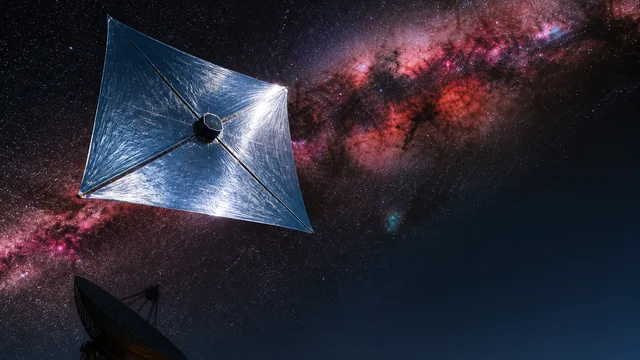
FCC Approves First Space Mirror Satellite Launch
The FCC cleared Reflect Orbital's Eärendil-1 space mirror for launch. Here's what the approval means for astronomy, connectivity, and orbital governance.
Black Hole Paradox: Are Reference Frames the Key?
Exploring how reference frames might resolve the black hole information paradox.
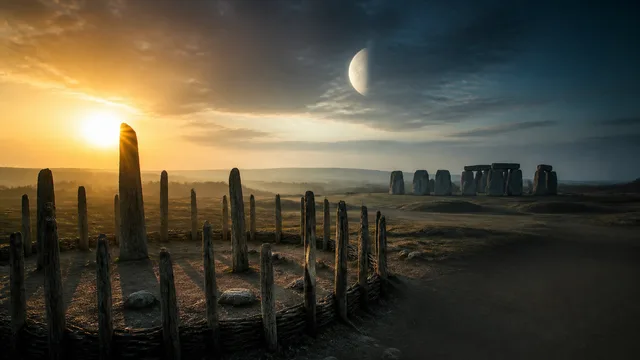
Czech Sanctuary Near Chleby Predates Stonehenge by 1,000 Years
A 6,500-year-old Neolithic sanctuary in Czechia tracked the Sun and Moon long before Stonehenge. What the Chleby site tells us about prehistoric astronomy.
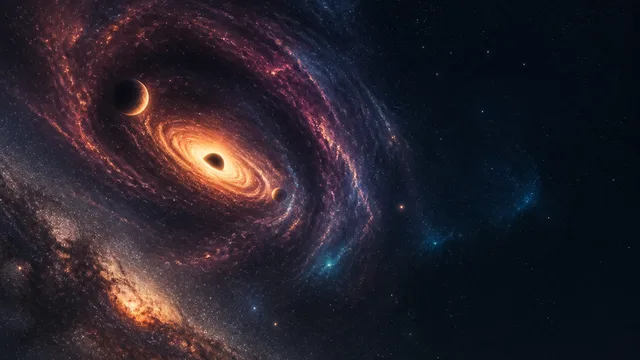
Black Holes, Colliding Galaxies, and the Chaotic Universe
Astrophysicist Mordecai-Mark Mac Low joins StarTalk to unpack galaxy collisions, planets orbiting black holes, dark matter, and why the universe is messier than we thought.
Ten Discoveries That Rewired How We See Everything
From CRISPR to dark energy, ten scientific breakthroughs that didn't just change their fields — they changed what questions we're allowed to ask.