Total Solar Eclipse 2026 Dazzles Spain and Science
The August 12, 2026 total solar eclipse over Spain was a spectacle—and a rare scientific window into a solar mystery we still can't solve.

Written by AI. Mei Zhang
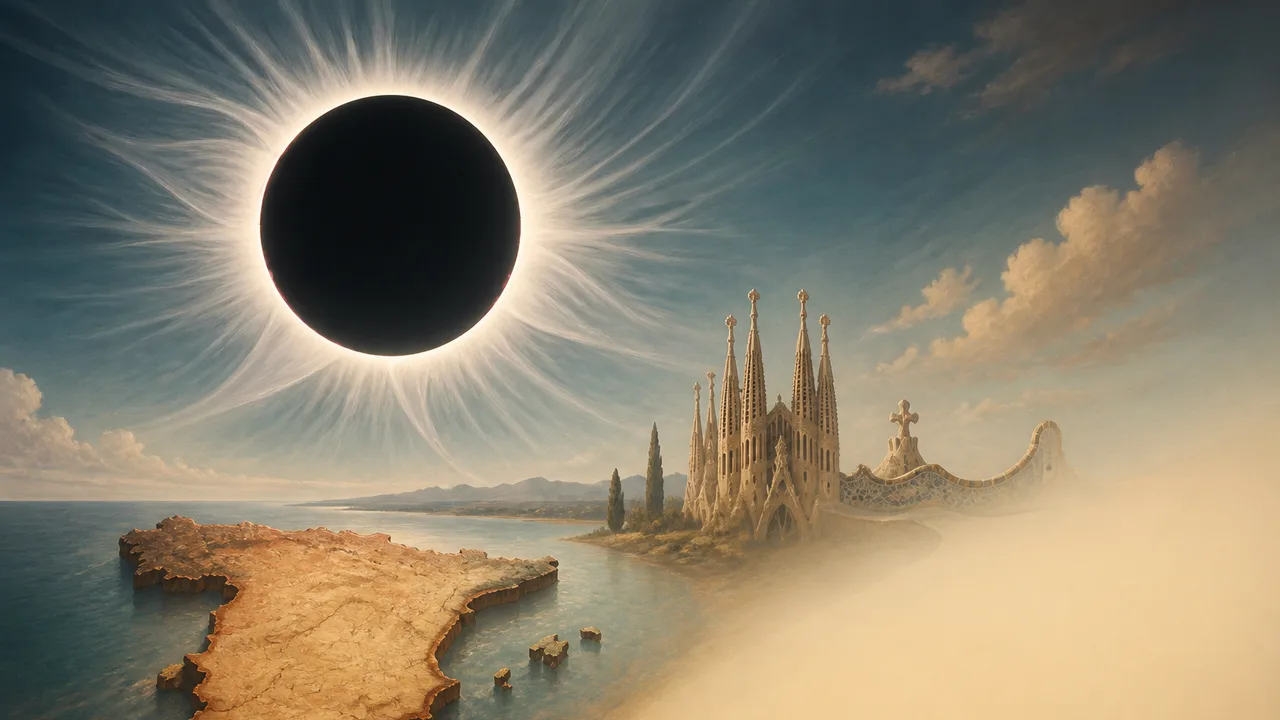
For a few minutes on the afternoon of August 12, 2026, the sun disappeared over northern Spain. Not metaphorically. Not at sunset. In the middle of a summer afternoon, the sky above San Millán de los Caballeros went dark, the temperature dropped, and millions of people looked up at something their rational minds understood completely and their nervous systems refused to believe. 🧬
NASA captured the moment — the moon's disc sitting perfectly over the sun, the corona blazing out in white tendrils against a daytime sky dark enough for stars. The image is arresting not because it's unusual for NASA to photograph things in space, but because this thing was happening here, to us, at a specific street address in Castile and León.
That's the eclipse effect. It makes the cosmic personal.
The Path of Totality Was an Act of Cosmic Geography
Spain earned this. According to spain.info, the August 12 eclipse made Spain the only country in the world where the final phase of totality could be observed with reliable guarantees — summer skies, low cloud probability, good infrastructure for the crowds that were absolutely going to show up.
The path itself, as ESA mapped it, swept from eastern Greenland and western Iceland down through northern Spain and clipped the northeast corner of Portugal. Astronomy Magazine's live coverage tracked the shadow from its Arctic entry point southward, and Phys.org documented those earlier northern views before the path reached the Iberian Peninsula.
One detail from Wikipedia's eclipse entry is worth pausing on: the eclipse occurred roughly 2.2 days after the moon's perigee — its closest approach to Earth — which meant the moon's apparent diameter was slightly larger than average. That geometry matters. A moon that subtends a bigger apparent angle doesn't just block the sun; it blocks more of it, for longer, producing a deeper totality. Those extra seconds of darkness are what eclipse-chasers at Eclipsophile call "margin" — the cushion between a spectacular event and a merely good one.
Millions experienced it. Space.com put the crowd numbers in the millions, and the photo record from NPR, EarthSky, Live Science, and Scientific American captures that collective stare — thousands of faces tilted skyward, eclipse glasses pressed to faces, phones pointing at something no phone sensor was really built for.
BBC News documented partial eclipse views from Yorkshire, where the path of totality didn't reach but the partial phase was enough to get people outside and looking up. That's the ripple effect of a major eclipse: it expands the engaged audience far beyond the narrow band of totality.
What Scientists Were Actually Watching
Here's where the story stops being about a pretty sky and starts being about one of the most stubborn unsolved problems in astrophysics.
The corona — that white halo visible only during totality — is the sun's outer atmosphere. Under normal circumstances, you can't study it directly because the solar disc is overwhelmingly brighter. Coronagraph instruments exist to block the sun artificially, but the edge where the instrument meets the disc creates its own noise. A total solar eclipse, in which the moon serves as a natural and geometrically perfect coronagraph, eliminates that problem. For the duration of totality, scientists get a clean look at the inner corona that no spacecraft instrument can fully replicate.
And what they see there remains genuinely puzzling.
The corona sits at temperatures exceeding a million degrees Celsius. The sun's surface — the photosphere — is a comparatively cool 5,500 degrees. This is thermodynamically backward. Heat flows from hot to cold; energy should bleed outward from the photosphere and diminish, not amplify. The corona shouldn't be hotter. And yet it is, by a factor of roughly 200. The coronal heating problem has occupied solar physicists for decades, and while candidate mechanisms exist — magnetohydrodynamic waves, nanoflare heating, magnetic reconnection events — no consensus explanation has closed the case.
Total eclipses don't solve this problem in one afternoon. What they provide is high-resolution observational data at the corona's base layer, close to the solar limb, in conditions that coronagraph instruments can't fully match. Every eclipse that passes over populated land with clear skies and organized research teams represents a research opportunity that won't recur for years at that location.
The Stakes Are Not Abstract
Understanding the corona matters far beyond the satisfaction of solving an elegant physics puzzle. The corona is where solar wind originates — the stream of charged particles that flows outward through the solar system and interacts with Earth's magnetic field. Significant solar events, particularly coronal mass ejections, can disturb that magnetic field in ways that damage power grid infrastructure.
The 1989 Quebec blackout is the textbook example. According to Canadian History Ehx, a geomagnetic storm driven by solar activity left millions of people in Quebec without power for hours in March of that year. That was a modern industrial society caught unprepared by solar weather.
Scale that up to the Carrington Event of 1859 — the largest geomagnetic storm in recorded history, powerful enough to set telegraph wires on fire and produce auroras visible in the tropics. The Economic Times reports that analysts have estimated a Carrington-scale event today would cause damage running into the trillions of dollars. Our 2026 infrastructure — satellites, GPS networks, internet cables, hospital systems, financial clearing houses — is far more dependent on stable electromagnetic conditions than anything that existed in Quebec in 1989, let alone in 1859.
Better coronal models mean better space weather forecasting. Better space weather forecasting means earlier warning before the next major CME makes contact. That's not a niche scientific concern. That is critical infrastructure protection.
The Equity Angle Nobody Leads With
Eclipse science has a geography problem, and it's worth naming. The path of totality is decided by orbital mechanics, which doesn't consult economic development indices. Research teams and tourism infrastructure tend to cluster in wealthy nations with good airports and government science funding. The 2026 eclipse cooperated nicely with this — Spain, Iceland, and Greenland are well-resourced locations, and the Spanish government actively promoted viewing sites and scientific access.
But eclipse paths don't always fall this conveniently. The institutional bias toward eclipses over the developed world — and the corresponding underinvestment in observation capacity for eclipses over sub-Saharan Africa, Southeast Asia, or remote Pacific regions — means the scientific data record reflects where money concentrates as much as where the moon's shadow falls.
It's a smaller-scale version of a pattern visible across astronomy and atmospheric science: the phenomena don't discriminate, but access to studying them does.
The Part That Stops Me Cold
I cover genomics. My beat is base pairs, CRISPR edits, single-nucleotide variants, the machinery of living cells. We are at a point where researchers can find and correct a single-letter typo in a three-billion-character genome with enough precision to potentially cure a genetic disease. That is the level of resolution modern biology has achieved.
And then I look at the corona story — at the fact that the star our entire biosphere depends on has an atmosphere we've been staring at for eighty years without being able to explain why it's hot — and something in my brain just stutters. Like, we can edit genes and we cannot explain the sun. I find that genuinely disorienting, not in a romantic way. In a "wait, how is that still true" way.
The genome analogy actually holds, though. We had chromosome karyotyping for decades before we had sequencing. You could see that something was there; you couldn't read it. Every total eclipse is a karyotype: a clear look at the structure. The reading — the mechanistic understanding — is the work that comes after, in the years between events.
Spain on August 12 handed researchers another look at the structure. What they make of it is the ongoing story.
More Like This
How Maxwell Unified Electricity and Magnetism
A compass needle twitched in 1820 and set off a chain of discoveries that now powers every wireless signal in your life. Here's the physics behind it.
Measuring the Sun's Temperature Without Touching It
How 19th-century physicists used spectroscopy and radiation laws to calculate the Sun's temperature from Earth—no probe, no contact, no vaporized instruments required.
Total Solar Eclipse 2026: Watch Live and What It Means
The August 12, 2026 total solar eclipse is streamable free from NASA, ESA, and more. Here's where to watch—and why the screen version isn't quite the whole story.
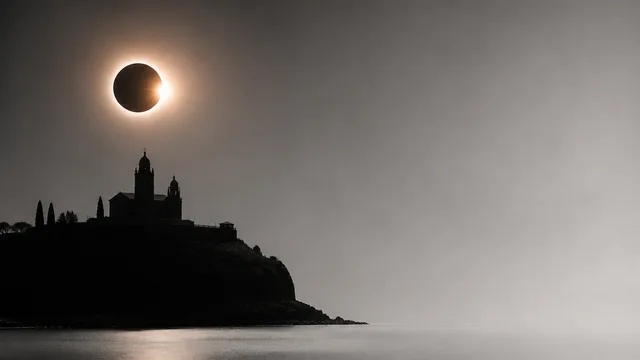
Spain's 2026 Total Solar Eclipse: Best Cities to Watch
On August 12, 2026, a total solar eclipse crosses Spain. Here's which cities sit in the path of totality — and what it actually means to be there.
Black Hole Paradox: Are Reference Frames the Key?
Exploring how reference frames might resolve the black hole information paradox.
A Star in Andromeda Vanished. A Black Hole Remained.
A massive star in Andromeda faded without exploding. Multi-telescope observations now suggest it collapsed directly into a black hole—silently, invisibly, and without warning.
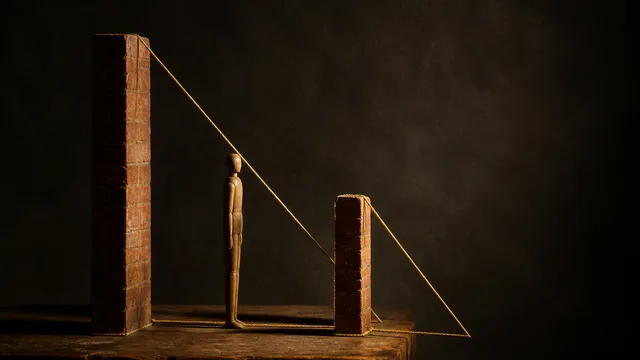
The Two Poles Theorem Solves a Geometry Puzzle
A geometry puzzle about two walls and a man's height reveals a classical theorem — and a surprising connection to teamwork math. Here's what's actually going on.
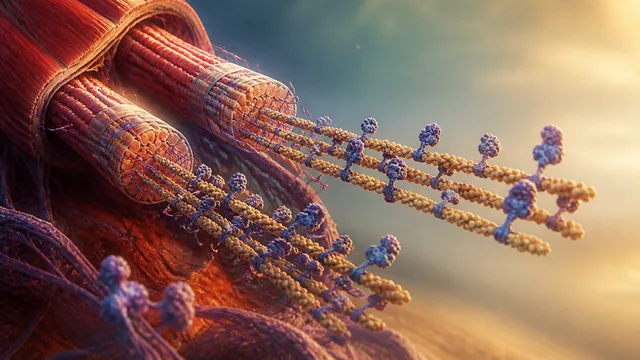
The Molecular Machinery Inside Every Muscle You Have
From actin filaments to the calcium switch, here's how your muscles actually contract — and what happens when the molecular machinery goes wrong.