Joseph Bell and the Medical Roots of Sherlock Holmes
Joseph Bell's Edinburgh lessons helped shape Sherlock Holmes. His story shows how clinical observation became detective fiction, and what the shift leaves out.

Written by AI. Sofia Ramirez
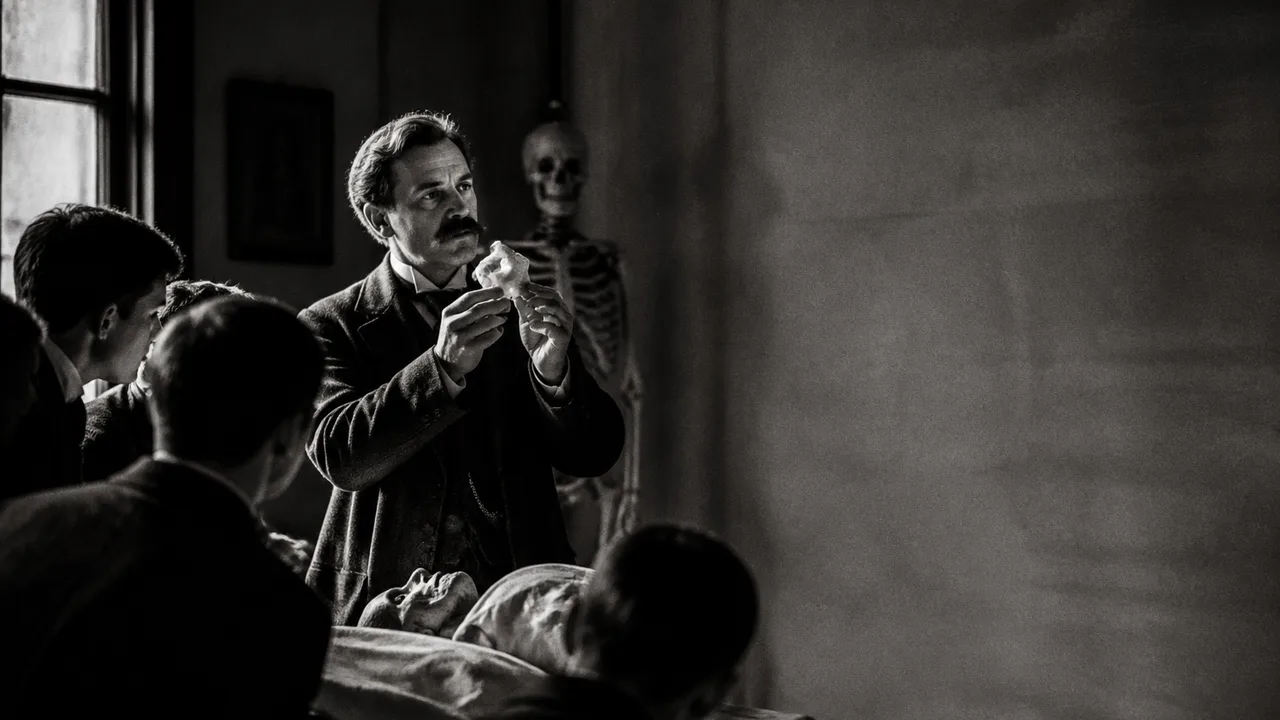
Joseph Bell could look at a patient’s clothes and manner, then tell a room of medical students what he thought those details revealed about the person standing before them. Arthur Conan Doyle was among the students watching the Edinburgh surgeon work. Years later, readers would meet Sherlock Holmes, a detective whose most memorable trick was making other people realize how much they had failed to notice.
A new book revisits Bell’s influence on Doyle. The connection is appealing: a real teacher demonstrates a method, and a former student gives that method a fictional life. It also raises a more interesting question than whether Bell was the “real Sherlock Holmes.” What happened to a way of reasoning when Doyle moved it from a medical classroom, where a patient could answer back, into a mystery, where the author controlled the clues?
The Patient in the Room
Bell, born in 1837, was an Edinburgh surgeon and teacher whose demonstrations could identify a patient’s occupation or background from appearance and mannerisms. Doyle took Bell’s class and also served as his outpatient clerk. That second role suggests a more sustained encounter with Bell’s teaching than a single dazzling classroom performance.
Picture the basic exercise without granting it magic. Someone enters a room. Clothing might show wear associated with work; speech might suggest where a person has lived; bearing might offer a clue to discomfort or habit. Each detail can generate a question. A clinician then has to ask it, listen to the answer and revise the first impression if it fails. Bell’s demonstrations made the opening move visible to students: begin paying attention before the patient has finished explaining why they came.
The famous deductions concerned personal details as well as illness. That combination helped make Bell’s teaching memorable, but the stakes differed. Guessing someone’s occupation might impress a class; understanding symptoms requires more than an impressive guess. The patient’s account, examination and subsequent evidence can expose an early inference as mistaken. A patient also has something a fictional clue does not: a life that continues after the demonstration ends.
Bell’s method deserves its strongest reading. He taught observation as work, a discipline that students could practice rather than an innate gift reserved for the cleverest person in the room. That is a useful challenge to anyone tempted to rush past the person in front of them. The danger lies in promoting the first inference into a verdict. Clothes can be borrowed, accents can change, and the person being assessed knows things an observer cannot see.
How a Classroom Method Became a Detective’s Signature
Doyle’s connection to Bell helps explain the architecture of a Holmes story. The detective notices something small, draws a conclusion and eventually lets everyone else in on the steps. A reader gets the pleasure of seeing an ordinary object become consequential. Bell’s students saw a related performance when he used outward details to propose an account of a patient they had barely met.
Fiction gives that performance advantages medicine cannot. Doyle can decide which marks on a coat count, how much the detective knows about them and when the explanation arrives. He can arrange an ending that rewards attention. A clinician works with incomplete information and consequences that cannot be tidied into a final chapter. Bell’s demonstrations supplied an arresting model for Holmes; Doyle made the model feel dependable by building stories around it.
That is why the familiar label “the real Sherlock Holmes” does only part of the job. Bell helped inspire the detective’s method. Holmes belongs to fiction, with its freedom to compress observation, interpretation and confirmation into one scene. The translation also ran across professions. Doyle took a practice associated with treating people and used it to solve invented crimes, at a time when investigation and policing drew public fascination alongside new attention to reading signs and symptoms.
The movement between those fields helps explain Holmes’s staying power. He promises that an untidy social world can be read. He also promises that an expert will show his work, at least eventually. Readers can admire the result while trying to beat him to it. Bell’s lesson was portable because it began with something anyone might attempt: look again at what is already in front of you.
Who Gets Read, and Who Gets to Answer
The people in Bell’s teaching demonstrations were patients. They supplied the coats, voices and bodies from which the surgeon drew his conclusions. Their place in the story is easy to lose once the account becomes a tale about the brilliant man doing the looking.
Occupation, accent and clothing can carry information because work and social position leave marks on daily life. A hand roughened by labor is also a hand that has done labor; a worn garment may reflect what someone can afford to replace. Yet the same signs invite shortcuts. If an observer believes everyone in an occupation looks or speaks alike, a plausible clue can harden into a stereotype.
It is possible to respect the teaching without treating the performance as a full account of medical knowledge. Bell brought students’ attention to details they might otherwise miss. The person under observation could complicate every conclusion. If an initial reading was wrong, correcting it was part of the work. Holmes, by contrast, often holds back the answer until the story is ready for one. His subjects seldom get the same role in revising his interpretation that a patient must have in a clinical encounter.
That difference reaches beyond nineteenth-century medicine. We still reward professionals who seem able to read a situation immediately, whether they work with patients, investigate an event or assess a stranger’s account. Speed is impressive in a story. In practice, the harder skill may be keeping an inference open long enough for another person’s answer to change it.
Doyle learned from a teacher who made observation visible. Then he made it entertaining. Bell’s legacy lives in both acts: the invitation to notice what others pass over, and the obligation to ask the person in the room whether you have understood it.
More Like This
Douglas MacArthur and the People He Left Behind
MacArthur is remembered as a military legend. But what about the veterans he gassed, the soldiers he abandoned, and the Japanese citizens who built a new democracy?
California's Hidden Underground: Caves, Tunnels, and Buried History
From a buried Gold Rush city to survival tunnels built by Chinese immigrants, California's underground holds layers of geology, history, and forgotten infrastructure.
Medieval England: How Peasants and Guilds Shaped Society
A new documentary traces medieval England's social divide through two real families—one peasant, one guild merchant—and the starkly different worlds they inhabited.

How the Continental Congress Named the United States in 1776
On September 9, 1776, Congress swapped 'United Colonies' for 'United States.' The name left the country's whole structure deliberately unresolved. Here's how.
Medicine's Strangest History, Explained
Medical historian Richard Barnett unpacks lobotomies, Typhoid Mary, penicillin, and why the history of medicine is a mirror for the present.
The Anaconda Plan Was Right. People Paid for It.
Winfield Scott's Anaconda Plan was strategically vindicated — but the years it took to work were paid for in hunger, death, and bondage by ordinary people.

The Spanish Civil War at 90: What the Coup Unleashed
On July 17, 1936, a military coup fractured Spain and drew the world in. What the Spanish Civil War's 90th anniversary still asks of us.