How the Band-Aid Went from Flop to Household Name
From a cotton salesman's kitchen-table problem to a $54K first-year flop to an American icon—the Band-Aid's origin is stranger than you'd expect.

Written by AI. Sofia Ramirez

Photo: AI. Astrid Lehmann
Somewhere in your medicine cabinet right now, there's a small cardboard box with a red cross on it. You probably didn't think about buying it. You just knew you needed Band-Aids—not "adhesive bandages," not "self-adhesive wound closure strips." Band-Aids. That's not an accident. That's the result of a hundred years of one brand doing something so completely right that it swallowed the generic noun whole.
But the road from invention to icon was, as a recent episode of the History Channel's Mega-Brands That Built America makes clear, neither smooth nor inevitable. The Band-Aid nearly died in its first year. And the decisions that saved it weren't made in a laboratory or a boardroom—they came from paying attention to something embarrassingly obvious that nobody had bothered to notice before.
Before the Band-Aid, There Was Mostly Chaos
The adhesives story starts further back than most people would guess. According to experts featured in the episode, adhesives have existed since roughly 4000 BCE—tree sap, animal hooves, fish intestines, tar. The original glue was pretty much whatever humans could boil down or scrape off something else. Functional, certainly. Glamorous, not remotely.
The first meaningful step toward medical tape came in 1845, when a surgeon named Dr. Horace Day combined rubber, pine gum, and turpentine to create a strip that could hold gauze in place after surgery. It was, by the account given in the documentary, not particularly good. It left residue. It required scissors. It didn't adhere reliably. What's remarkable is how little this changed over the next eight decades—by the early 1920s, medical tape had barely improved. "It tears easily, doesn't stick very well," one expert notes. "The opposite of everything you need tape to be."
That stagnation matters. It means that when Earle Dickson came along in 1921, he wasn't disrupting a refined product. He was filling a gap that an entire industry had somehow managed to keep ignoring.
The Cotton Salesman Who Couldn't Let It Go
Earle Dickson was not an engineer. He wasn't in research and development. He was a mid-level cotton salesman at a medical supply company—the kind of person who, in most corporate histories, doesn't get a chapter. But the History Channel episode gives him one, and it's worth sitting with why.
The origin story, as told here, involves his wife cutting herself repeatedly in the kitchen and Dickson struggling to bandage her wounds with the clunky, two-handed, scissors-required tape of the era. The insight he arrived at was almost offensively simple: there should be an at-home version of what medical professionals already had access to. Pre-assembled. Self-contained. Something one person with one functional hand could actually apply.
What he built first was a prototype that secured sterile gauze to an adhesive strip. Not glamorous. Barely a prototype in the modern sense. But it was the first time someone had thought to bring that combination to a household context rather than a surgical one. "This seems so simple to us today," one expert observes in the episode, "but no one had ever done that before."
That "no one had ever done that before" deserves a moment. The materials existed. The need existed. The medical knowledge existed. What didn't exist was someone deciding the problem was worth solving for ordinary people at home, not just surgeons in hospitals. That is less a technology story than a perspective story.
A Product Nobody Bought
Here's where things get uncomfortable for the triumphant brand origin narrative: the Band-Aid launched in 1921 and essentially failed.
The original product was an 18-inch strip of gauze-backed tape. You bought it, brought it home, and then—if you had a cut on your hand, which was the whole point—you had to use scissors and two functioning hands to cut yourself a piece. The episode doesn't soften this: "It's really hard to use them because it's just a big long strip and you have to cut it yourself into smaller pieces. So no one is buying them."
First-year sales: $3,000. Roughly $54,000 in today's money. For a product that Johnson & Johnson had spent considerably more than that bringing to market.
What's interesting about this failure is that the product worked. It did what it was supposed to do. The problem was that the conditions of use—specifically, what you had to do before you could use it—negated the whole benefit. A bandage you need two hands and scissors to prepare is not particularly useful when the thing prompting you to use it has just injured one of your hands.
Dickson and his team went back to basics and identified this with what the documentary frames as a moment of clarity: pre-cut bandages in standardized sizes, individually wrapped, ready to use straight from the box. Remove one step. That's it.
In 1924, Johnson & Johnson relaunched with exactly that product—small boxes, three common sizes, sterile and ready. By the end of that year, sales had helped nearly double the company's value. By the end of the decade, the brand was nationwide and generic. "When you go to the store," one expert in the episode notes, "you don't say, 'Can you get me some self-adhesive bandages?' You say, 'Can I get some Band-Aids?' That's such a successful brand."
What the Flesh Tone Problem Reveals
The documentary touches briefly on one design decision that deserves more than a brief touch: the choice to make the bandage "skin-toned" rather than clinical white. The reasoning was consumer psychology—people didn't want to walk around visibly bandaged; something subtle would be more appealing. It's presented, with appropriate caveat, as a general idea that made sense even if the execution had "blind spots when it comes to flesh tone."
Those blind spots have a specific, documented history. For decades, "flesh-colored" in mass-market products meant one particular skin tone—a decision with real consequences for the many people it visibly excluded. The Band-Aid brand didn't begin offering darker shades until 2020, nearly a century after launch. That's not a footnote. That's a design choice that persisted through generations of product iterations, acquisitions, and rebranding efforts without anyone treating it as a priority.
The documentary acknowledges it in passing. Whether that acknowledgment is sufficient is a question viewers will answer differently depending on how they weight historical context against corporate intent. What it does illustrate, fairly unambiguously, is that the product was designed with a specific consumer in mind—and that assumption was baked in so deeply it took a hundred years and sustained public pressure to revisit.
The Ordinary Person Problem and the Brand-Building Answer
The History Channel's framing of this story—within a series about "mega-brands" and the "visionaries" who built them—leans hard on the heroic-individual model of innovation. Earle Dickson had an idea. He fought for it. He saved it. End of chapter.
That frame isn't wrong, exactly, but it leaves some threads hanging. Dickson's insight was powerful precisely because it was rooted in a domestic, everyday problem that wasn't being solved for ordinary people. The medical establishment had usable adhesive tape. Doctors had it. Hospitals had it. The gap the Band-Aid filled was between professional medical infrastructure and the kitchen table—between what institutions could do and what a person alone at home could manage.
That gap is a recurring feature of American consumer history. Products designed for professionals that nobody thought to adapt for home use. Treatments available to the wealthy that took decades to reach mass markets. Technologies that required specialized knowledge until someone figured out how to remove a step.
The Band-Aid crossed that gap by making something simpler. Not smarter. Not cheaper, initially. Just less demanding of the user. "The great brand builders are ones who try to take a good idea and make it better, make it more efficient," one voice in the episode observes.
By the late 1920s, growing public interest in hygiene and germ theory added cultural tailwind to the product's practical appeal. People were increasingly receptive to the idea that treating wounds properly—rather than rubbing dirt on them and walking it off—was both possible and worthwhile. The Band-Aid arrived at exactly the moment Americans were starting to believe that ordinary people deserved the same access to wound care that only professionals had previously had.
That's the part of the story that tends to get absorbed into brand mythology and forgotten as its own history: the moment when a population decided it was worth taking care of themselves, and a small, pre-cut adhesive strip was there to meet them.
More Like This

How the Nest Thermostat Launched the Smart Home Era
Tony Fadell's Nest Learning Thermostat didn't just fix an ugly device—it sparked the smart home era. A look at what it got right, wrong, and what Google killed.
Unveiling Rome's Gladiator Underworld
Explore the hidden world beneath ancient Rome's arenas, unveiling gladiator training, underground tunnels, and cultural practices.

When the Dead Were Headed for the Stars
Ancient burial sites from Peru to Egypt share a striking obsession with the cosmos. What does that convergence actually mean—and for whom?
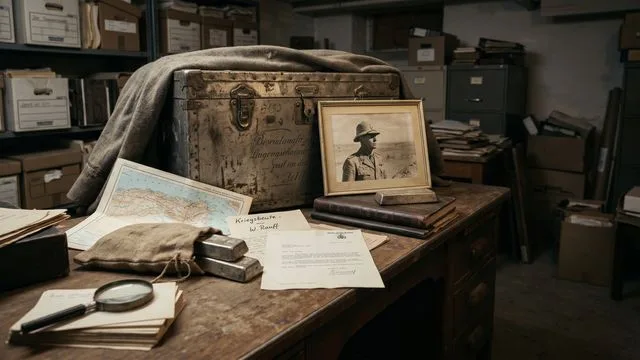
Rommel's Gold: Nazi Plunder or Enduring Myth?
The story of Rommel's lost gold is part treasure hunt, part Holocaust history. What do we actually know—and what are we choosing to romanticize?

The Invisible Inventions That Built Modern Life
From flush toilets to undersea fiber cables, the inventions that most shaped modern civilization are the ones we've stopped noticing entirely.

How Alexander the Great Weaponized the Catapult
Alexander's engineers turned catapults into city-destroying machines—and the siege of Tyre shows exactly what that meant for the people living inside those walls.
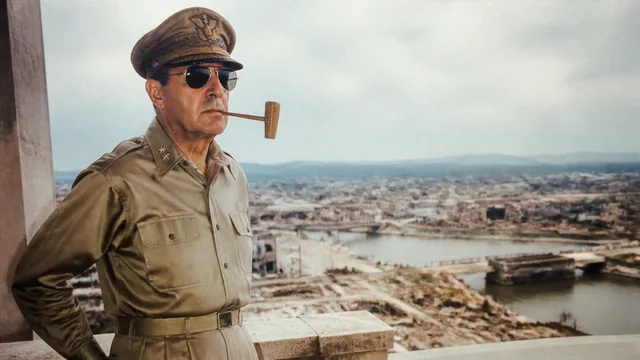
Douglas MacArthur and the People He Left Behind
MacArthur is remembered as a military legend. But what about the veterans he gassed, the soldiers he abandoned, and the Japanese citizens who built a new democracy?

Egypt's New Delta Project: Green Miracle or Mirage?
Egypt is engineering a new Nile in the desert. But satellite data, groundwater depletion, and a troubling history raise urgent questions about who this is really for.