Chamberlain, Hitler, and the Munich Agreement of 1938
Three flights in 15 days, one agreement that failed within months. A close look at Munich 1938 and what it still asks of us.

Written by AI. James Morrison
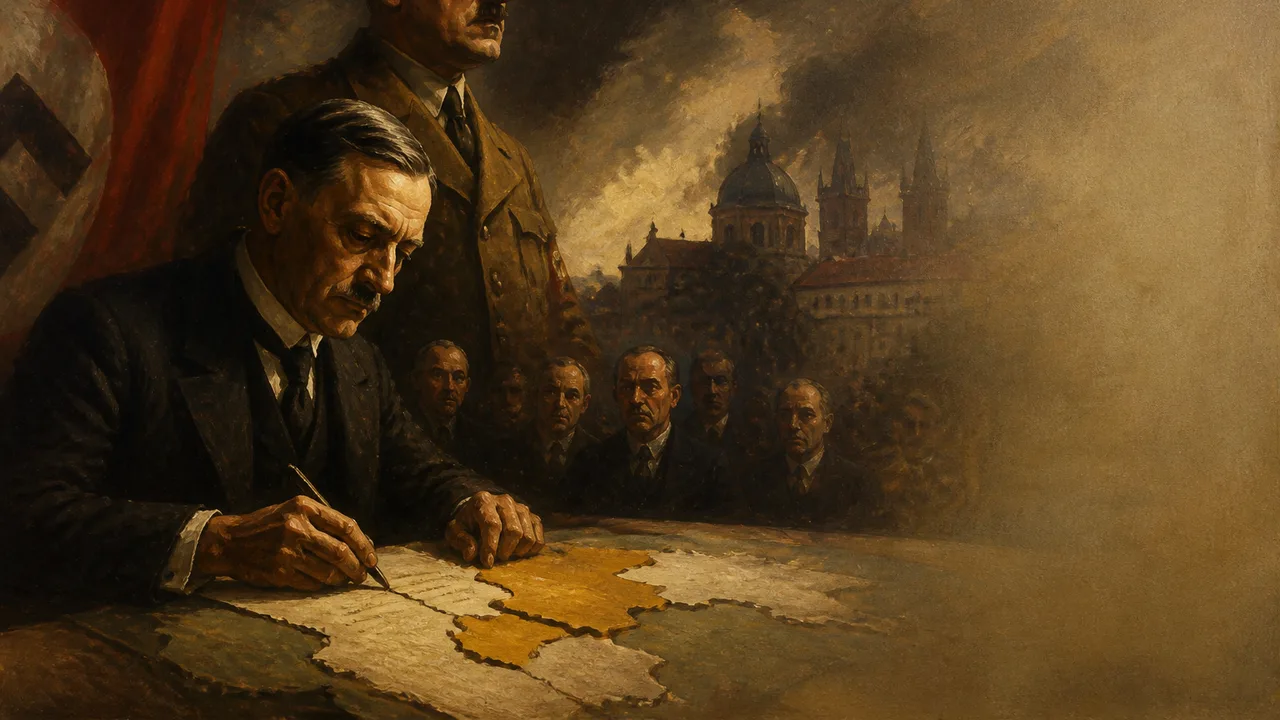
Photo: AI. Henrik Solberg
Neville Chamberlain was 69 years old and had never flown abroad when he boarded a plane at Heston Airport on the morning of September 15, 1938, bound for Bavaria and a meeting with Adolf Hitler. He told reporters: "I'm going to meet the German chancellor because the situation seems to me to be one in which discussion between him and me may have useful consequences. My policy has always been to try to ensure peace."
He would make that trip three times in fifteen days. The Doc of the Day documentary on the Munich Agreement reconstructs those fifteen days using archival footage, and what emerges is a story about two parallel operations running simultaneously: one diplomatic, the other theatrical, and the gap between them.
Three Trips, Three Failures
The structure of Chamberlain's September reveals the progressive collapse of his negotiating position. At the first meeting, at Hitler's Berghof residence in Berchtesgaden, Chamberlain arrived having already signaled willingness to concede the Sudetenland under certain conditions. He returned to London describing "a frank talk but a friendly one," saying he felt "satisfied now that each of us fully understands what is in the mind of the other." Hitler's mind, as subsequent events clarified, held a deadline: German occupation of the Sudetenland by October 1st, on his terms.
By the second trip, September 22nd to Bad Godesberg, Britain and France had already accepted in principle that the Sudetenland would transfer to the Reich. Chamberlain arrived carrying what he believed were workable concessions. Hitler rejected them. As Britannica notes, Chamberlain and French Premier Édouard Daladier had conceded to Hitler's demands in an effort to prevent war, but Hitler's appetite expanded to match every concession offered.
The third trip, September 29th to Munich, produced the agreement that Chamberlain would wave at Heston Airport the following afternoon. According to the Imperial War Museum, the Munich Conference allowed Germany to occupy the Sudetenland, with Britain and France abandoning the guarantees they had nominally sought to secure. Czechoslovakia had no representative in the room. The document gave non-German-speaking Czechs ten days to leave.
The agreement that Chamberlain described as "the prelude to a larger settlement in which all Europe may find peace" was broken within six months. German troops entered Prague in March 1939. Poland fell in September.
The People Who Weren't in the Room
While Chamberlain shuttled between airports, Londoners were doing their own arithmetic. In Hyde Park, workers dug trenches and constructed air raid shelters. Civil defense teams moved through neighborhoods distributing gas masks and running drills. The adults in those lines had lived through 1914 to 1918; the Western Front had ended only twenty years before, and the men fitting masks onto children's faces remembered what the last war had cost. The newsreels showing a smiling prime minister stepping off planes were playing in the same cinemas where audiences could read in their programs about the shelter locations nearest their homes.
For the 3.5 million ethnic Germans living in the Sudetenland, the agreement meant German annexation arriving with official sanction from London and Paris. For the Czech majority in those same districts, it meant ten days to pack and leave land their families had occupied for generations, with no government to protest on their behalf. Prague was informed of the terms, not consulted about them. The Munich Agreement Wikipedia entry records that the Czechoslovak government, after the British and French made clear they would not support resistance, accepted the diktat. They had, as the documentary puts it plainly, only one choice: submission.
The British Army, for its part, was not ready for war in September 1938. Rearmament was underway but incomplete. Chamberlain knew this; it shaped his calculation. Whether Munich bought the Allies necessary time to prepare, or simply handed Hitler the Czech arms industry and Skoda's output along with it, is a question historians still contest.
What Chamberlain Was Actually Managing
The footage the documentary assembles tells a second story alongside the diplomatic one. At Heston Airport, white circles were painted on the tarmac to mark exactly where Chamberlain should stand for optimal camera angles. Two communications advisers appear in multiple arrival sequences, positioned to guide him to the microphones and ensure his voice was cleanly recorded. The press was not incidental to these airport scenes; it was the audience the scenes were designed for.
Before his third flight, Chamberlain invoked Shakespeare at the airport, the documentary reports: he hoped to come back able to say, as Hotspur says in Henry IV, "out of this nettle, danger, we pluck this flower, safety." The literary reference was deliberate. Chamberlain understood that he was performing statecraft as much as practicing it, that public confidence in his mission had its own strategic value.
This is not a cynical observation. Every wartime and near-wartime leader manages public perception, sometimes for good reasons. The question the footage raises is whether the communications operation was shaping the public's understanding of what was happening, or substituting for it. After Bad Godesberg, where talks had broken down, Chamberlain returned to Britain and told reporters he couldn't say anything until he'd briefed his government, then added: "I trust that all concerned will continue their efforts to solve the Czechoslovak problem peacefully, because on that turns the peace of Europe in our time." The phrase "peace in our time" had a productive ambiguity: it described an aspiration as though it were an achievement.
The National WWII Museum's account of appeasement notes that concessions in diplomatic negotiations were not new before Munich, but that after Munich, the word appeasement acquired its permanent meaning. Chamberlain gave a word its definition.
The Question Munich Keeps Asking
Historians have debated Chamberlain's intentions and capabilities for eight decades. The revisionist case holds that Britain was militarily unprepared, that public opinion would not have supported war over Czechoslovakia in 1938, and that Chamberlain secured at minimum a year's additional rearmament time. The traditional verdict holds that he misread Hitler's intentions despite substantial evidence, excluded his allies from the negotiations, and delivered a democracy to a dictatorship without its consent.
Both readings carry evidence. What they share is the underlying question: at what point does a negotiated concession to an aggressive state stop being diplomacy and become an invitation for further aggression? Munich didn't invent that question, but it made it unavoidable for every subsequent generation of policymakers.
The question is not abstract right now. Leaders in multiple capitals are currently negotiating with governments that have demonstrated territorial ambitions backed by military force, offering concessions in exchange for agreements whose durability depends entirely on the other party's good faith. Chamberlain believed Hitler's assurances in September 1938 because he needed to believe them, because the alternative required confronting how little leverage he actually held. The white circles on the tarmac, the communications advisers, the Shakespearean flourishes: they were all attempts to project confidence the situation did not support.
The crowd at Buckingham Palace was jubilant when Chamberlain appeared on the balcony with King George VI on the night of September 30th. Six weeks later, the German army was at the Czech border. Eleven months after that, it crossed into Poland.
When a government's public case for a diplomatic agreement is more polished than its private leverage, the agreement tends to hold only as long as the other party finds it convenient. Munich didn't prove that negotiation fails. It proved that negotiation without credible consequences produces paper.
More Like This

Bodmin Moor's Bronze Age Village and Its Neolithic Cairn
Archaeologists confirm a Bronze Age village on Bodmin Moor—and find a 6,000-year-old cairn that may have outlasted the community that built it.
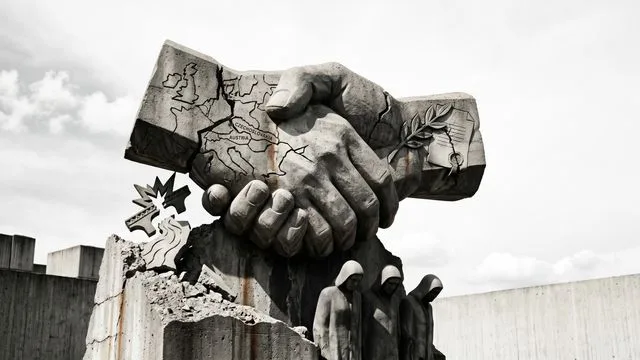
1938: The Year the World Chose Not to See
From Munich to the Yellow River, 1938 was the year crisis became catastrophe. What the decisions of that year still ask us to reckon with.
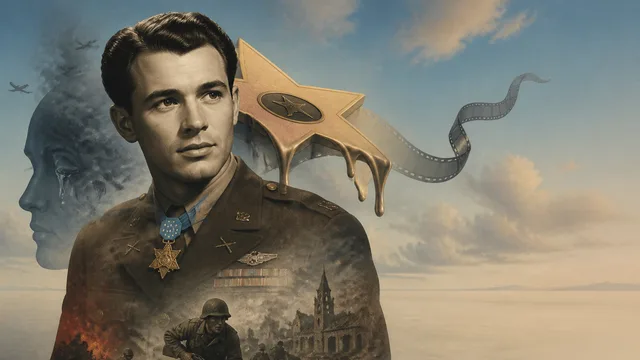
Audie Murphy: Soldier, Icon, and Haunted Man
Audie Murphy was America's most decorated WWII soldier. His battlefield heroism and Hollywood fame masked a man deeply scarred by combat and survivor's guilt.
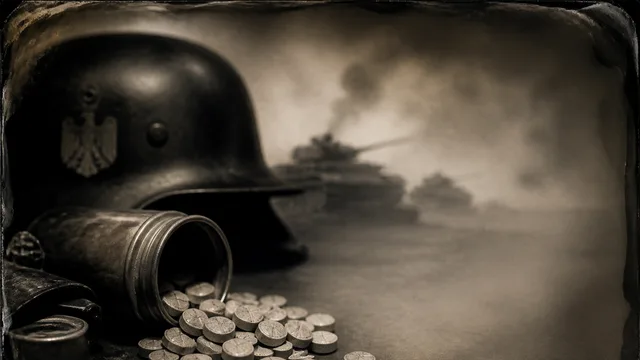
Pervitin: The Methamphetamine That Fueled the Blitzkrieg
How 740 million doses of Pervitin, a military-grade methamphetamine, shaped Nazi Germany's early victories and left a trail of addiction and death.
Roosevelt's 1936 Peace Promise: What He Really Meant
In 1936, FDR ran on "peace" — but he meant three different things by it. Unpacking that word reveals a political strategy still worth examining today.
Manfred von Richthofen and the Legend He Did Not Write
Eighty confirmed kills, a red Fokker, and a propaganda memoir. What does the Red Baron's legend reveal about how war machines manufacture heroes?
The Crusades: Two Centuries of Holy War Explained
From Pope Urban II's 1095 call to arms to the fall of Acre in 1291, the Crusades reshaped Christianity, Islam, and the medieval world permanently.
Gettysburg's Command Failures and What They Still Cost Us
Dr. Roy Casagranda's Gettysburg lecture reveals how four command archetypes from 1863 shaped the battle's outcome—and what they still tell us about military leadership today.