Audie Murphy: Soldier, Icon, and Haunted Man
Audie Murphy was America's most decorated WWII soldier. His battlefield heroism and Hollywood fame masked a man deeply scarred by combat and survivor's guilt.
Written by AI. James Morrison
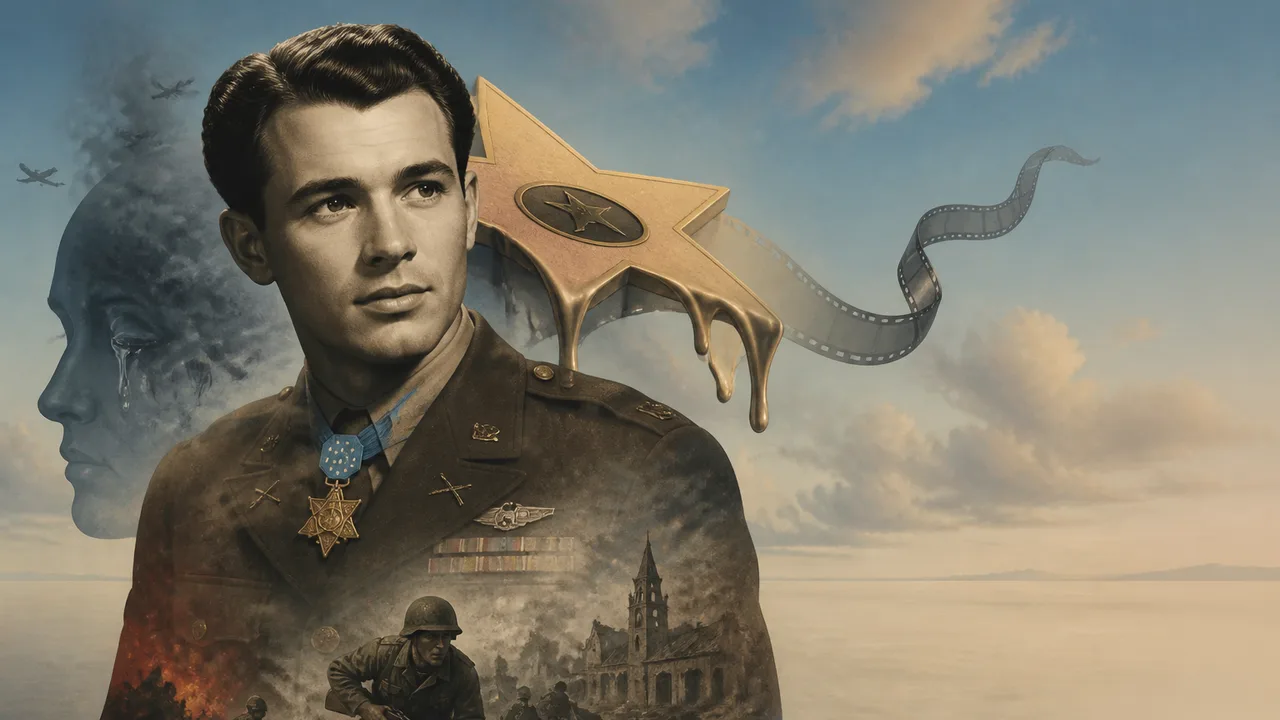
Photo: AI. Iolanthe Fenwick
Holtzwihr, northeastern France. January 26th, 1945. Six Tiger tanks and roughly 250 German infantry are advancing on a tree line held by a company of American soldiers. The two M10 tank destroyers that accompanied them are gone — one burning, one ditched. Every man has been ordered back to the forest. Every man but one.
Nineteen-year-old Second Lieutenant Audie Murphy climbed back onto the burning M10, got behind its .50-caliber machine gun, and held that position alone for an hour. He simultaneously worked a field phone, calling artillery coordinates onto his own location as the German infantry closed within yards. When the Germans finally withdrew, he climbed down. Minutes later, the tank destroyer exploded beneath where he'd been standing.
That action at Holtzwihr would earn Murphy the Medal of Honor and cement his status as the most decorated American soldier of World War II. What it didn't do — what no medal can do — was leave him whole.
The Man the Myth Required
There is a version of Audie Murphy that America needed in 1945, and it is worth being precise about what that version demanded. The country wanted its returning veterans to embody something clean: courage rewarded, sacrifice vindicated, the American dream confirmed. Murphy, at twenty years old, with his lean frame and frank face, fit the template so perfectly that the myth practically assembled itself around him without his consent.
The raw material of his biography only sharpened the narrative. Born June 20th, 1925, in Kingston, Texas — seventh of twelve children, no plumbing, no electricity, an absent father, a mother who died when he was sixteen. He left school in the fifth grade to work odd jobs and pick cotton. When Pearl Harbor was attacked on December 7th, 1941, Murphy was on a double date. Within months, he was trying to enlist, getting turned away by the Marines for being too short and underweight at five feet five inches and 112 pounds. He falsified his birth certificate and got into the Army in June 1942, joining Company B, 15th Infantry Regiment, 3rd Division.
The irony runs thick: the recruiters who rejected him were looking for a soldier, and they looked right past one.
What the Battlefield Actually Was
Murphy's combat record built itself over more than a year of sustained front-line exposure — 400 days on the front, according to the Association of the United States Army — that took him from North Africa through Sicily, up the Italian peninsula through Naples, Anzio, and Cisterna, and finally into France. His first medal for valor came at Anzio in January 1944, when he immobilized a column of German tanks by calling artillery on the lead vehicle, then crept up to the disabled tank alone in darkness and destroyed it with grenades while machine gun fire swept around him.
He accumulated two Bronze Stars, three Purple Hearts, and a Silver Star before Holtzwihr. The promotion to Second Lieutenant came along the way.
The Extra History video covering Murphy's life quotes his own explanation for why he stayed behind that day in January 1945, and it's the most important sentence in his biography: "I was tired of seeing men die. They had lives and kids to go home to. I had nothing. If one man could do the job, why kill 30?"
Set aside the heroism for a moment and read that as a psychological document. Murphy wasn't calculating odds. He was, at nineteen, already operating from a place of profound disconnection from his own survival. The man who would later be sold to the American public as the embodiment of the will to live was, at his most decisive moment, indifferent to whether he lived.
The Machinery of Myth
After the Medal of Honor, Army protocol pulled Murphy from the front and put him on the bond-tour circuit — recruitment drives, public appearances, press availability. He hated it. He'd been a soldier; now he was a prop.
When the war in Europe ended in April 1945, Murphy found himself in Lyon, France, and the question of what came next had no obvious answer. West Point — his preference — rejected him because of his combat injuries. He considered becoming a mercenary, a veterinarian, a radio repairman.
Then the Life magazine cover happened.
Jimmy Cagney — by then an Academy Award winner for Yankee Doodle Dandy and a Hollywood star who'd spent the 1930s playing the kind of hard men Murphy actually was — saw that cover and reached out. Exactly how Cagney made contact is less certain than the fact of it; what's documented is that Murphy eventually flew to Los Angeles, met with Cagney, signed a contract, and started taking acting classes. Cagney's production company later ran into financial difficulties and couldn't deliver the promised role, releasing Murphy to work with other studios instead.
Murphy was candid about his limitations in a Screenland Magazine interview: "When people first asked me to take a screen test and go into the movies, I refused. I didn't know anything about acting. I still don't."
He appeared in more than forty films between 1948 and 1969. Westerns suited him — the self-reliant loner, comfortable with violence, sparse with words. He played Billy the Kid in The Kid from Texas and Jesse James in Kansas Raiders. John Huston directed him in The Red Badge of Courage. He worked alongside Jimmy Stewart in Night Passage and Audrey Hepburn in The Unforgiven. He was never the actor Stewart was. He didn't need to be. Audiences weren't paying to watch him act; they were paying to watch him be who they already believed him to be.
What the Lights Couldn't Bleach Out
Behind the filmography was a man sleeping with a loaded gun under his pillow and waking in the dark screaming. Murphy's PTSD — the term didn't exist yet in clinical use, but the condition certainly did — was an open secret he chose, unusually for the era, not to fully suppress. He spoke about it in the press with a directness that sits uncomfortably against the stoic-veteran mythology that was supposed to define men of his generation.
A Screenland Magazine profile captured it plainly: "He knows that the war is very much still with him and always will be. He says now that it is difficult for him to become interested in kids his own age, kids who weren't in the service. He just cannot get excited about hot rods and jukeboxes. He's seen a few other things."
That last sentence is doing quiet, devastating work.
Murphy's memoir, To Hell and Back, put the weight of that service into print — including, as documented in the book, his accounting of approximately 240 enemy combatants killed during his time in combat. That number is not a boast in context; it is the ledger of a man trying to reckon with what he had done and what it cost him. Survivor's guilt ran through everything. He hated being called a hero. He insisted, repeatedly, that he could not have done any of it without the men around him — many of whom did not come home.
When Universal Pictures approached him in 1954 to adapt the memoir with Murphy playing himself, he initially refused. The studio eventually persuaded him by granting him advisory control over script, props, and costumes. The concession didn't make the process painless. Recreating scenes from his own war — including his mother's death, performed under studio lights in front of a full crew — was, by any measure, an act of psychological endurance that the film's marketing would never adequately acknowledge. Universal, for its part, softened the memoir for general audiences, adding lighter material to leaven the darkness. The film performed well commercially and marked the high point of Murphy's Hollywood career.
He continued working through the 1950s and into the 1960s, eventually moving to television with Whispering Smith, a series cut short after broadcasters deemed it too violent. Murphy died on May 28th, 1971, when the small private plane he was aboard crashed near Roanoke, Virginia. He was forty-five years old. He is buried at Arlington National Cemetery, where people still leave flowers.
The Extra History video on Murphy closes with an observation worth sitting with: that Murphy's particular courage wasn't only what he did at Holtzwihr, but his insistence on being an active narrator of his own story rather than a passive subject of someone else's mythology. He wrote the memoir. He controlled the film. He spoke publicly about his nightmares at a time when that was not what men, especially decorated combat veterans, were expected to do.
Whether that constitutes a kind of heroism or simply a man refusing to be fully consumed by the machine that had already consumed so much of him is a question Murphy's story doesn't resolve so much as it keeps asking.
More Like This
Douglas MacArthur and the People He Left Behind
MacArthur is remembered as a military legend. But what about the veterans he gassed, the soldiers he abandoned, and the Japanese citizens who built a new democracy?

Ray Dalio's Framework for Tracking Empire Decline
Ray Dalio argues empires follow measurable, repeating cycles of rise and fall. His framework deserves scrutiny—and raises questions relevant to today's geopolitics.
Unraveling Rome's Dodecahedron Mystery
Exploring the enigmatic Roman dodecahedron, its theories, and historical significance in modern archaeology.
FBI's Struggle Against Omega 7: A Tale of Terrorism and Intrigue
Explore the FBI's complex investigation of Omega 7, a Cuban exile terrorist group, amid community challenges and evolving tactics.
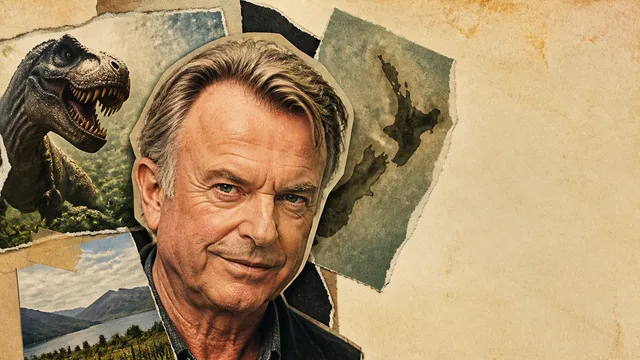
Sam Neill Remembered: Actor, Winemaker, Generous Man
Sam Neill, who died at 78, is mourned by Hollywood and rural New Zealand alike. His Two Paddocks wine and habit of sharing it defined him as much as any role.
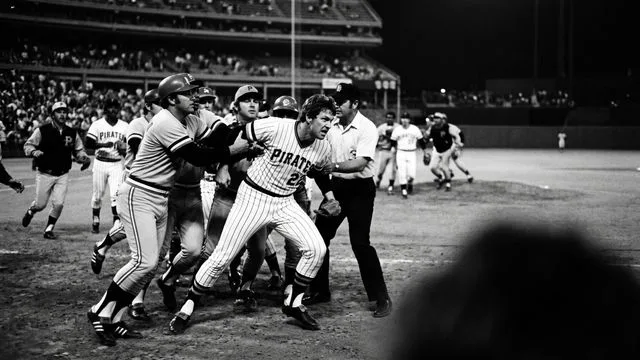
Bruce Kison: Baseball's Most Charged Pitcher
Bruce Kison was charged four times—tied with Pedro Martinez. Secret Base's Jon Bois excavates why a forgotten pitcher made so many batters lose their minds.
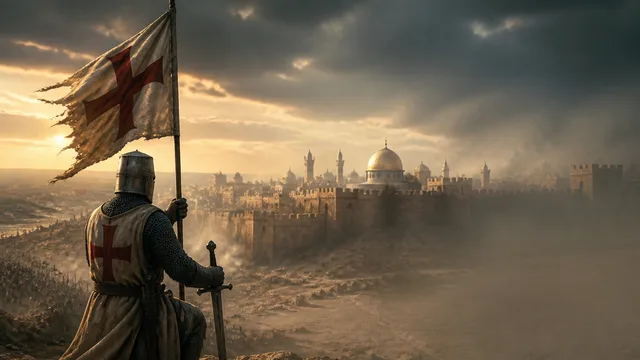
The Crusades: Two Centuries of Holy War Explained
From Pope Urban II's 1095 call to arms to the fall of Acre in 1291, the Crusades reshaped Christianity, Islam, and the medieval world permanently.
Gettysburg's Command Failures and What They Still Cost Us
Dr. Roy Casagranda's Gettysburg lecture reveals how four command archetypes from 1863 shaped the battle's outcome—and what they still tell us about military leadership today.