Airport and Travel Rule Changes Hitting Flyers in 2026
New fees, stricter bag rules, and passport traps are catching travelers off guard in 2026. Here's what actually changed and what it costs you.

Written by AI. Tomas Reyes-Kim
Photo: AI. Ondine Ferretti
A family books the cheapest fare to save money. Smart move, in theory. Then the boarding passes print and their four-year-old is assigned a middle seat six rows from both parents. They beg the gate agent. They offer to pay. The flight is full. Nothing can be done.
Flight Clever opens their recent rundown of 2026 travel rule changes with that story, and it's not an edge case—it's a function of how basic economy fares work now. On most U.S. carriers, the cheapest tickets don't include seat selection. The airline assigns you whatever's left at check-in, and it has no mechanism to keep families together. Legislation to change that has been stalled in Washington. So the fix, as Flight Clever puts it bluntly: "Never book a basic economy fare when you're flying with young children." An upgraded fare with seat selection runs about $15–$20 more. That's the math.
That story is a useful frame for everything else in the video: the rules didn't always change dramatically, but the enforcement did. And travelers running on 2024 assumptions are the ones getting caught.
The fees that hit before you even land
The biggest financial shock Flight Clever covers is the U.S. Visa Integrity Fee — a mandatory $250 charge stacked on top of normal visa costs for most travelers who require a full U.S. visa to enter. Signed into law in July 2025, it doesn't touch ESTA travelers from visa-waiver countries. But for families coming from countries that require a visa, it compounds fast: a family of four is looking at an extra $1,000 before they've paid for a single meal or a metro card.
The law technically allows for a refund if travelers comply with all terms and depart on time. Flight Clever's read is that the refund mechanism is more aspirational than functional at this point — but what's certain is that the fee is real, it's active, and building it into your budget as a non-recoverable cost is the safer assumption right now.
Japan's changes are a double-hit. As of July 1, 2026, the country tripled its tourist departure tax — the so-called "Sayonara Tax" — from 1,000 yen to 3,000 yen, roughly $20 per person. It's baked into your flight or cruise ticket, so there's no separate line at the airport, but it affects every traveler regardless of nationality. On top of that, Japan's single-entry visa fee jumped from 3,000 yen to 15,000 yen. If you're from one of the many visa-exempt countries, you dodge the visa hike entirely — but the departure tax catches everyone. The bottom line: any Japan trip you priced out using numbers from last year is now undercosted.
The UK's Electronic Travel Authorization — the ETA — also got pricier, climbing from £16 to £20 as of April 2026, and is now valid for two years with unlimited entries. The part that's genuinely catching people: Canadian citizens now need one as of February 2026. And the ETA requirement applies even if you're just connecting through a UK airport on the way somewhere else. Flight Clever is direct about this one: apply through the official UK government site before you leave home, not through the third-party copycat sites that charge double for the same thing.
The operational stuff that costs you at the gate
Carry-on enforcement has quietly gotten teeth. Airlines are now using physical metal sizers at departure gates, and if your bag doesn't fit — including wheels and handles — you're paying to check it on the spot. Flight Clever notes that bags that fit fine in overhead bins for years are suddenly failing these checks not because the bags changed, but because the enforcement did. Measure at home, check your airline's exact dimensions (they vary), and if you're borderline, bring the smaller bag.
Smart luggage with sealed lithium batteries is getting flagged with zero flexibility now. The rule isn't new — non-removable lithium batteries aren't allowed in the cargo hold — but airlines are enforcing it hard in 2026. If the battery pops out, remove it before the flight and carry it in the cabin. If it doesn't pop out, Flight Clever's advice is straightforward: don't fly with that bag.
Power banks have a new specific rule worth internalizing: they can't go in the overhead bin, and you can't recharge them during the flight. They have to stay within arm's reach — seat pocket, under-seat bag, wherever you can physically grab them. The reasoning is safety-based and stems from a cabin fire incident. As Flight Clever explains it, "a power bank is just a raw battery with no safety system watching over it" — if it overheats, crew need to be able to reach it immediately.
The paperwork trap that ends trips before they start
Advance Passenger Information — your full passport details, sometimes including your destination address — is now a hard requirement for more and more international flights, not the optional formality it used to feel like. Miss it, type something wrong, and you can be blocked from checking in entirely. Flight Clever's recommended habit: the night before any international flight, open your booking, fill every field carefully, and double-check against the physical documents in your hand. A typo in a passport number is a trip-ender.
Passport validity rules are the other quiet trip-killer. Many countries require your passport to be valid for 3–6 months beyond your travel dates, counting from entry — not from when you booked. Europe's updated border systems have made this stricter. What happens in practice: travelers show up holding a passport that's technically not expired, but expires too soon for the destination's rules. They get turned away at check-in.
If your passport expires anytime in 2026 or early 2027, check your government's official passport renewal portal now for current processing timelines — don't rely on secondhand estimates, which vary widely by country and season. The actionable move is to start the renewal process early, before you've booked anything you'd be heartbroken to lose.
The changes that actually work in your favor
Not everything in this batch of updates is a cost or a headache. A few are genuinely useful if you know to use them.
A growing number of major U.S. airports now offer free reservation-based security time slots — book a window in advance, show up at that time, walk past most of the line. It goes by different names at different airports (Spot Saver is one). It's not universal yet, but it's expanding. Flight Clever points out that almost nobody is using it, which means right now it actually works.
TSA is also piloting a guest pass program at select airports — Seattle, San Diego, Orlando, Philadelphia, San Francisco among them — that lets a non-traveler accompany someone through security all the way to the gate. You apply in advance and get a digital pass. If you're walking an elderly parent to their gate, or a kid flying solo for the first time, this matters.
TSA PreCheck members also have an underused perk: touchless ID, where a camera matches your face to your passport photo and you walk through without touching a boarding pass or license. It doesn't activate automatically — you set it up once in your airline's app (Delta, United, and American all support it), link your known traveler number and passport, and opt in. Two minutes of setup. Flight Clever's framing on digital IDs more broadly is worth repeating: "That digital ID is a backup. It is not a replacement for the real thing." The plastic stays in the wallet.
Dual pricing at major attractions is spreading too — the Louvre now charges 32 euros for visitors from outside Europe versus around 22 for European residents. It's not a regulation change exactly, it's a pricing strategy, but the effect on travel budgets is real if you're still working off ticket prices from an old blog post. Check the official site of every major attraction before you go.
The throughline in all of this is exactly what Flight Clever says at the close: "The people who get blindsided at the airport aren't careless or foolish. They're simply working off last year's rules."
The rules shifted. The question is just whether you shifted with them before or after you got to the airport.
More Like This

Uber Wants to Book Your Hotel Now, Too
Uber is teaming up with Expedia to add hotel booking inside its app. Here's what that actually means for budget travelers already loyal to other platforms.
Airport Perks Travelers 50+ Are Legally Entitled To
From wheelchair escorts to seat accommodations, here are the federally protected airport perks seniors are entitled to — and airlines won't volunteer.
What Smart Travelers Do Right After Boarding a Plane
From seat checks to jet lag tricks, here's what experienced flyers actually do in the first few minutes after boarding—and why it matters.
American Airlines Ends 24-Hour Refunds on Last-Minute Tickets
American Airlines has quietly removed the 24-hour refund window for tickets booked within seven days of departure. Here's what that means for last-minute travelers.

TSA Airport Security: Passenger Rights and Limits
From leaked master keys to surveillance programs, here's what TSA's checkpoint procedures actually look like — and what rights you have going through them.
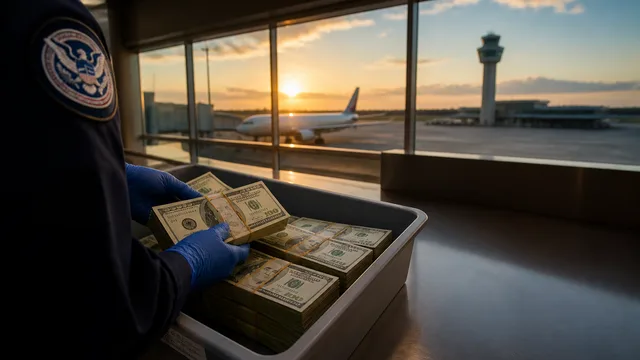
U.S. Customs Cash Rules: What Travelers Must Know
A $53,800 seizure at Fort Lauderdale Airport puts the $10,000 cash declaration rule back in focus. Here's what travelers actually need to know.

Mass Media Doesn't Change Your Accent. Your Friends Do.
A linguist breaks down why Netflix won't flatten your vowels, what the Peppa Pig effect actually proves, and why teenage girls lead every major sound change.

What TSA Confiscates at Airport Security in 2025
From dead electronics to cordless hair tools, TSA confiscates over a million items a year. Here's what triggers confiscation and how to keep your gear.