Uber Wants to Book Your Hotel Now, Too
Uber is teaming up with Expedia to add hotel booking inside its app. Here's what that actually means for budget travelers already loyal to other platforms.

Written by AI. Tomas Reyes-Kim

Photo: AI. Ines Cienfuegos
Here's something I think about more than is probably healthy: the apps on my phone that have quietly expanded their surface area until they're almost unrecognizable from what they started as. Uber launched as a way to hail a black car. Then it was taxis. Then bikes and scooters. Then food. Then groceries. And now — as the Financial Times is reporting — hotels.
Uber has partnered with Expedia to let users book travel directly inside the Uber app. It's the latest move in what the FT describes as a "longer-term ambition at Uber, which wants to keep customers on its platform by offering them a wide array of services." The company expanded into food delivery in 2019, quickly followed by groceries and shopping. Hotels are just the next layer.
The strategy has a name that Silicon Valley loves and everyone else sort of tolerates: the super app.
What a Super App Actually Is (and Why the West Is Weird About It)
If you've used WeChat or Grab or Gojek, you already know what a super app feels like. You open one app and you can message your friend, pay for lunch, book a motorbike, order medicine, and reserve a flight — all without ever leaving the interface. It's genuinely convenient. In Southeast Asia and China, it's just how things work.
In Western markets, it has basically never landed. And the FT is pretty direct about why: "super apps have had limited traction in Western markets, where users seem to be tied to individual services."
That's a polite way of saying: Western users are stubborn about their apps. They have their thing for ride-hailing, their thing for food delivery, their thing for hotels. The idea of collapsing all of it into one platform sounds efficient until you remember that your Booking.com Genius Level 2 status exists, your hotel loyalty points exist, and that specific app muscle memory you've built over years of travel also exists. Convenience is relative. Consolidation isn't always it.
This isn't just a behavioral quirk — it reflects something structural about how Western tech markets developed. Unlike in Southeast Asia, where super apps like Grab scaled into digital infrastructure gaps (limited banking, fragmented logistics, low existing app adoption), Western users already had deeply embedded, competing ecosystems before any single player could colonize the whole stack. Apple and Google built the foundational layer. Everyone else had to fight for vertical slivers. That's a very different starting position than WeChat had in 2011.
The Loyalty Points Problem Nobody Talks About
Here's the thing that the super app pitch almost always glosses over: switching costs aren't just financial, they're psychological and logistical.
If you're a budget traveler who has spent two years accumulating Booking.com Genius status — which unlocks free breakfast at certain properties, room upgrades, and actual discounts that stack — the question isn't whether Uber's hotel booking feature is cool. The question is whether the discount Uber One members get on Expedia hotel bookings is worth more than the rewards infrastructure you've already built somewhere else.
And I genuinely don't know the answer to that. Nobody does yet, because the details aren't public enough to run a real comparison. But my read? For most price-sensitive travelers, the Uber One hotel discount is probably a feature that sounds great in a press release and performs mediocre in practice. Not because Uber is doing something wrong — Expedia's inventory is solid — but because loyalty programs compound. The person who's going to benefit most from booking hotels inside Uber is someone who wasn't doing much deliberate travel loyalty optimization to begin with. Which is a real segment! Just probably not the one reading this.
The Bigger Picture
What Uber is actually doing here isn't really about hotels. It's about engagement depth and subscription stickiness.
The FT frames the Expedia partnership as part of a push to drive uptake of Uber's premium membership program. The logic is straightforward: the more categories of spending Uber can capture, the more valuable the membership becomes, and the harder it is to cancel. That's not a novel playbook — it's exactly what Amazon Prime did, and what Apple is attempting with its bundle of services. Stack enough things into a subscription and eventually the calculus tips toward "it's just easier to keep paying."
The problem is that this works better when you're the default layer people are already living inside. Amazon has Prime because people were already buying things on Amazon constantly. The subscription was almost incidental — it just made the existing behavior cheaper. Uber is trying to run this logic in reverse: add enough new services to make the subscription feel necessary, then hope the behavior follows. It can work. It's just harder.
And it gets harder still when you factor in where technology is actually going. The FT raises what is probably the most interesting threat Uber faces right now: AI agents. The report notes that AI systems "which can book travel and undertake a range of tasks on behalf of users all threaten to cut out middlemen like Uber." That's the thing worth sitting with. Uber's entire expanded value proposition is built on being the layer where things happen. If an AI agent can just... book your hotel, your car, and your restaurant reservation directly — interfacing with suppliers without going through a platform — then the platform itself becomes optional. Uber isn't just racing to add features. It's racing against a future where features are irrelevant because the interface disappears.
Google has been navigating a version of this tension for years. The company that once tried to consolidate everything under the Google Pay umbrella — banking, transit passes, loyalty cards, peer-to-peer payments — eventually found itself fragmented and outmaneuvered in payments by dedicated players like Venmo and Cash App, even as it commanded extraordinary reach. Being everywhere didn't automatically translate into owning anything. Uber is staring at a similar paradox.
So Is This Actually Good for You?
If you're already an Uber One subscriber, the hotel booking feature costs you nothing extra to try — and Expedia's inventory is genuinely broad, so you're not going to end up stranded with three sketchy options. If you're shopping for a specific trip with no existing loyalty attachments, maybe it's worth checking.
But if you've got Genius Level 2 on Booking.com, Hilton Honors points accumulating, or any other loyalty scaffolding you've deliberately built — the Uber One hotel discount is probably not your move. Not because it's bad, but because your existing infrastructure is almost certainly worth more, and the math on switching costs almost never favors the newcomer.
The more interesting question is what Uber looks like in three years if the AI agent scenario actually materializes. Right now, Uber is adding hotel booking to stay relevant. If autonomous agents become the primary interface for travel planning, Uber's response to that challenge will be a lot harder to watch.
More Like This

Booking Holdings CEO on AI, Scale, and Survival
Booking Holdings CEO Glenn Fogel survived the dot-com crash and now faces the AI wave. His take on moats, agentic travel, and job displacement is worth your time.
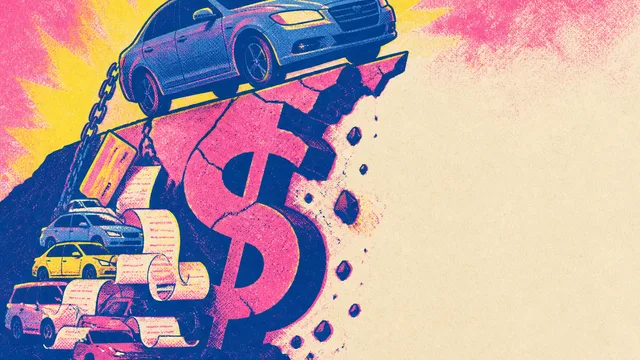
The Broken Economics of the Car Rental Business
Car rental companies aren't just greedy—they're structurally trapped. A look at the unit economics that make the industry's misery nearly unavoidable.
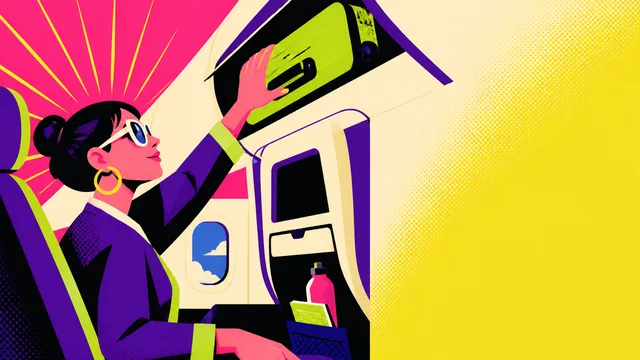
What Smart Travelers Do Right After Boarding a Plane
From seat checks to jet lag tricks, here's what experienced flyers actually do in the first few minutes after boarding—and why it matters.

Accor and H World Link 19,000 Hotels in Loyalty Deal
Accor and H World are linking loyalty programs across 19,000 hotels and 430 million members. Here's what it means for travelers—and why execution is everything.

Delta's 2026 Profit Bet Rides on High Airfares Holding
Delta reaffirmed its 2026 earnings forecast despite fuel volatility—but the plan depends on keeping fares high for customers it says can afford it.
Google's Auto Browse: AI Assistant or Automation Theater?
Google's new Auto Browse feature promises to automate shopping, scheduling, and paperwork. But does it deliver genuine innovation or repackaged assistance?
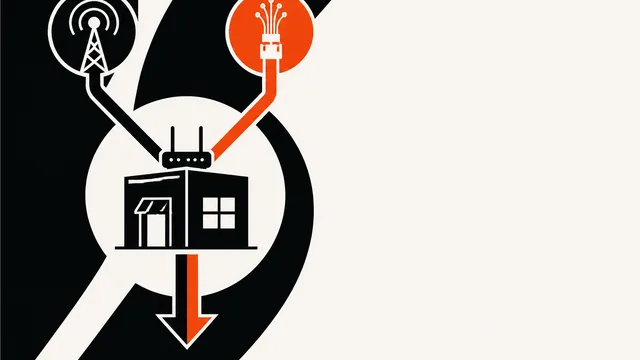
Dual Internet Connections Are Still Needlessly Hard to Set Up
IPv6 multihoming could let you plug two ISPs into one network and get automatic failover. Here's how close we actually are—and what's still broken.

Travel Spending Is Rebounding—But Read the Fine Print
Travel spending rebounded in June and agents are booking again—but the data tells a messier, more interesting story than the headlines suggest.