American Airlines Ends 24-Hour Refunds on Last-Minute Tickets
American Airlines has quietly removed the 24-hour refund window for tickets booked within seven days of departure. Here's what that means for last-minute travelers.

Written by AI. Priya Chandrasekaran
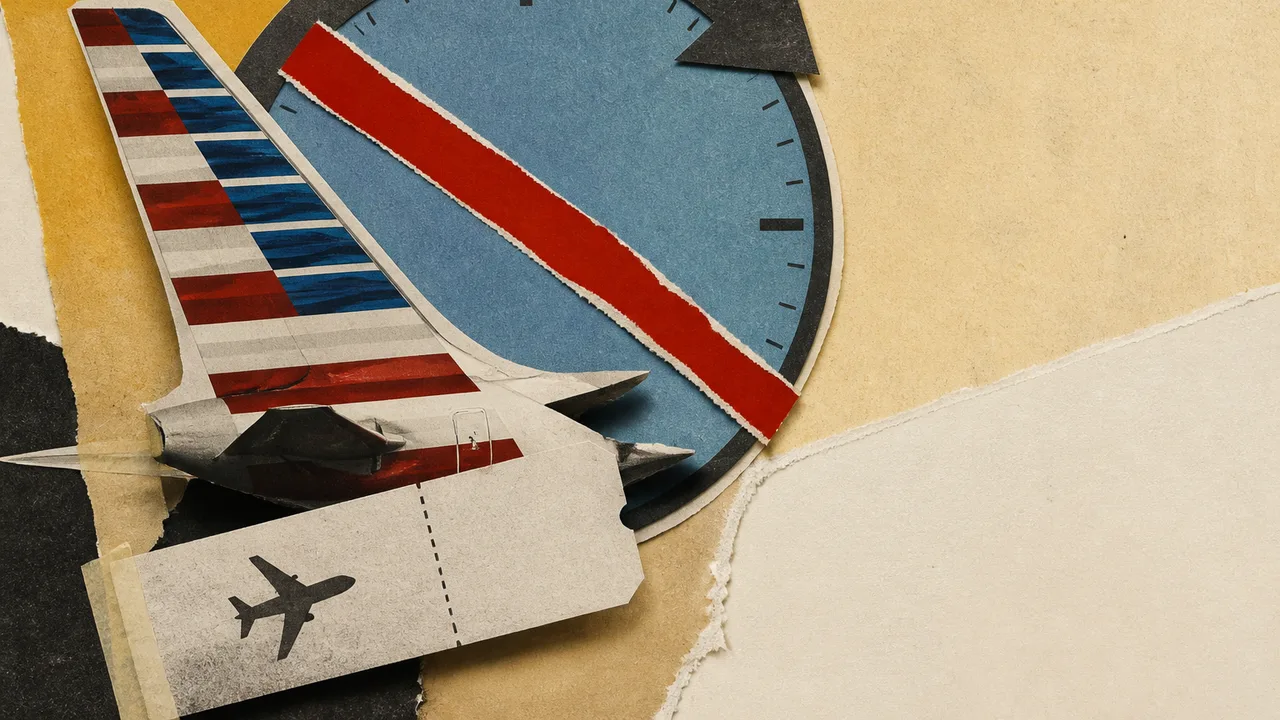
Picture Thursday night, somewhere around eleven. You've got a family situation — or a deal that closed, or a window of good weather in a city you've been meaning to visit for two years. You open the American Airlines app, you find a Saturday departure, and you book it. The confirmation lands in your inbox with that particular combination of relief and mild dread that comes with every impulsive travel decision. You think: if I wake up tomorrow and this feels wrong, I can cancel. That's the whole point of the 24-hour window.
That window, for this ticket, no longer exists.
American Airlines has quietly revised its refund policy to eliminate the 24-hour cancellation window for any flight booked within seven days of departure, according to reporting from Simple Flying, View from the Wing, and CBS News. The airline's updated policy language is now explicit: "You have 24 hours from the time you first buy your ticket for a refund if you booked at least 7 days before departure." The Thursday-for-Saturday traveler — and anyone booking within that seven-day corridor — is no longer covered.
The change was not announced with a press release or an email campaign. It was updated on American's customer service page and noticed, as these things usually are, by aviation enthusiasts and consumer advocates paying close attention. Aviation A2Z confirmed the tightened policy; Travel and Tour World noted that under the revised rules, travelers must now book at least seven days before departure to qualify for a full refund within 24 hours of purchase. The old policy, Simple Flying reports, allowed passengers buying a ticket as little as two days before departure to cancel and receive a full refund within 24 hours of purchase.
What the regulation actually requires — and what this change means
Here's the part that matters most, and that most coverage has underplayed: American's old policy was not required by federal law. The Department of Transportation's 24-hour refund rule applies only to tickets purchased at least seven days before departure. American was voluntarily exceeding that minimum, extending the protection to last-minute buyers. That voluntary generosity is now gone.
Which means American hasn't violated any regulation. It has simply retreated to the regulatory floor — and in doing so, left a segment of travelers with protections that exist on paper but don't apply to how they actually book.
This distinction is worth sitting with. The DOT rule was designed in an era when most leisure travelers booked weeks in advance. Last-minute booking — fueled by fare-tracking apps, flexible remote work schedules, and the general cultural normalization of spontaneous travel — is a different behavior than the one the rule was written to protect. American's old policy quietly accommodated that evolution. The new policy does not.
The longer story behind the fine print
To understand why this change feels like something more than a routine policy update, it helps to place it in a longer timeline.
The Airline Deregulation Act of 1978 handed airlines the freedom to set their own prices and routes — a transformation that produced genuinely cheaper fares and genuinely worse service, often in the same transaction. For decades after deregulation, the consumer-protection burden shifted steadily from carrier to passenger: non-refundable fares became standard, change fees ballooned (United and Delta charged up to $200 for domestic changes before the pandemic), and the baseline expectation became that a ticket, once purchased, was essentially a commitment.
The 2012 DOT rule requiring the 24-hour refund window was one of the few regulatory moments that pushed back on that direction. It acknowledged that passengers make mistakes in the first 24 hours of a purchase — wrong dates, wrong airport, a fare that looked different in the cart than on the card statement — and that a brief cooling-off period costs airlines relatively little while protecting travelers meaningfully. American's decision to extend that protection voluntarily to last-minute bookers was, in retrospect, a rare instance of the industry getting ahead of consumer expectation rather than trailing it.
Now it has reversed course. That is not a dramatic revelation. It is simply the pattern, continuing.
Timing and trust
The policy change arrives at a moment when American's relationship with its passengers is already strained. TheTravel reported that following a nationwide IT outage, American Airlines saw a significant cancellation meltdown, recording the most cancelled flights worldwide during that period — a headline that, whatever its precise methodology, reflects a carrier already navigating turbulence on multiple fronts.
There is no evidence that the refund policy change is directly connected to those operational disruptions. American has not offered a public explanation for the timing or rationale of the revision. What does exist is a pattern: a carrier trimming consumer flexibility during a period when consumers have fewer reasons than usual to extend good faith. Whether that timing is meaningful or coincidental, I genuinely cannot say. But I notice it.
What I find harder to dismiss is the manner of the change. "Quietly" is the word most sources reach for, and it's the right word. Policies that benefit airlines tend to arrive quietly; policies that benefit passengers tend to arrive with press releases. That asymmetry is not unique to American, and it's not a conspiracy — it's just how institutions protect themselves from the friction of having to explain themselves. The explanation, in this case, might be perfectly reasonable. We don't have it, because we weren't given it.
What it actually costs the Thursday-for-Saturday traveler
Back to that confirmation email glowing on your phone at eleven p.m.
Under the old policy, you had until sometime Friday evening to reconsider. Maybe you slept on it, checked the forecast, confirmed the hotel, and flew. Maybe you woke up anxious, pulled up the app, and cancelled — and got your money back. That second version of the story is now unavailable if you booked within seven days of departure.
What you have instead: the ticket, whatever fare conditions applied at purchase, and the option to pay a change or cancellation fee if your plans shift. On basic economy fares — which American actively markets to price-sensitive, often last-minute travelers — those options may not exist at all.
CBS News puts it plainly: travelers are now only entitled to full refunds for trips canceled within 24 hours of booking for flights departing at least a week later. For everyone else, you're in at the moment of purchase.
The Thursday-for-Saturday traveler, the one who booked impulsively and wisely and maybe a little desperately — they'll figure it out. Travelers always do. They'll read the fine print more carefully, or book earlier when they can, or accept that spontaneous travel now carries a different kind of financial weight than it did last month. What they won't get is a cooling-off period, a brief and humane acknowledgment that buying an airline ticket under pressure is not the same as buying one with time to think.
That's a small thing to lose. It's also, the more I look at this history, a very specific kind of small thing — the kind that accrues quietly, line by line, until one day travelers look up and find that the gap between what airlines owe them and what airlines once offered them has grown very wide indeed.
By Priya Chandrasekaran
More Like This

Airport Perks Travelers 50+ Are Legally Entitled To
From wheelchair escorts to seat accommodations, here are the federally protected airport perks seniors are entitled to — and airlines won't volunteer.
Southwest Airlines in 2026: What Actually Changed?
Southwest Airlines overhauled everything in 2026—assigned seats, bag fees, new fare tiers. A 12-flight stress test reveals what the changes actually mean for travelers.
The Broken Economics of the Car Rental Business
Car rental companies aren't just greedy—they're structurally trapped. A look at the unit economics that make the industry's misery nearly unavoidable.
A New Object in the Sky: The JetBlue Drone Strike
A JetBlue pilot reported hitting a drone on approach to JFK. What the incident reveals about airspace rules built before drones existed.

France Tests Low-Cost Rail Signalling for Rural Lines
France's NS2F consortium is trialling digital signalling tech to cut rural rail costs by 30%. Here's what's at stake for the towns trains forgot.

Home Swapping Saves Families Thousands on Holidays
Home swapping is helping families save thousands on holidays by cutting accommodation costs. Here's how the model works, what it costs, and what the risks are.

Einstein vs Quantum Mechanics: The EPR Paradox Explained
Physicist Jim Al-Khalili unpacks the EPR paradox—Einstein's 1935 challenge to quantum mechanics that inadvertently gave us the concept of entanglement.

Machiavelli Gave His Secrets Back to His Torturers
Ada Palmer reframes Machiavelli not as a cynic but as a patriot who handed his most valuable knowledge to the regime that tortured him. Here's what that actually means.