Home Swapping Saves Families Thousands on Holidays
Home swapping is helping families save thousands on holidays by cutting accommodation costs. Here's how the model works, what it costs, and what the risks are.

Written by AI. Jonathan Park
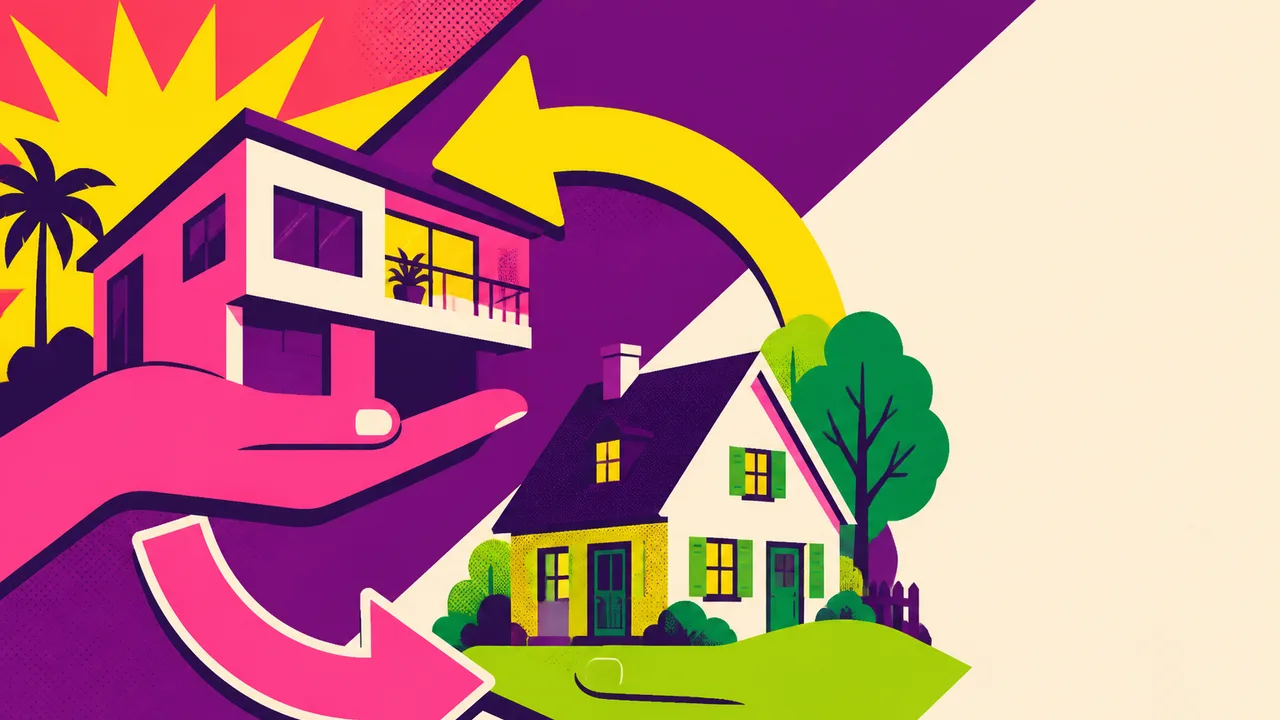
The maths of a family holiday has become quietly brutal. Accommodation alone—according to Hotels for Families' budget calculator—typically accounts for 30 to 50 percent of total trip costs. Stack that against years of elevated inflation, post-pandemic demand surges that never fully unwound, and the structural fact that hotel chains and short-term rental platforms have both discovered exactly how much families will pay before cancelling the trip entirely—and you start to understand why some travelers are looking for the exit ramp.
The exit ramp, it turns out, involves handing your house keys to a stranger.
What Home Swapping Actually Is
The model is straightforward in principle: you stay in someone else's home while they stay in yours, coordinated through a platform that handles matching and some degree of vetting. No nightly rate. No cleaning fee. No resort surcharge. The only real cost is the platform membership fee and whatever you'd spend on getting there.
The numbers that have emerged from documented cases are striking. The Vanderpumps, profiled by BBC News, have used home swaps to stay in Hamburg and Copenhagen—saving roughly £2,500 on accommodation per trip, plus an additional £700 on transport by swapping cars alongside the house. The compound effect: they've gone from one summer holiday a year to two. A separate case tracked by The Guardian put the total savings at approximately £6,000—the figure that's become the headline shorthand for what this model can deliver. ABC News has documented similar patterns among American families, with some saving thousands of dollars across summer vacations by switching homes with vetted strangers.
These aren't outliers cherry-picked by platforms for marketing materials. They're documented outcomes from real families. That said, the sample is still self-selected—you don't tend to read profiles of the home swap that went badly—so the aggregate savings picture is harder to assess than the individual anecdotes suggest.
The Trust Architecture
What makes home swapping economically interesting is also what makes it psychologically demanding: the entire system runs on reciprocal vulnerability.
You are, as BBC News put it, taking "a leap of faith." You're letting strangers sleep in your bed, use your kitchen, and access your belongings—in exchange for the same privilege at their end. The platforms that facilitate this exchange apply varying degrees of vetting: profile verification, review systems, and in some cases identity checks. But none of that eliminates the fundamental asymmetry between the contract and the trust it requires.
This is where the comparison to Airbnb's early days is instructive, and also where it breaks down. Airbnb's original premise was also peer-to-peer, trust-based, and premised on community norms rather than legal enforcement. What happened next—regulatory conflict in dozens of cities, professionalization of hosts, the platform's gradual drift toward boutique hotel dynamics—is well-documented. Home swapping, in its current form, operates differently: there's no commercial transaction between participants, which removes some regulatory exposure but also removes some of the financial accountability that governs Airbnb relationships. Nobody's losing a security deposit. The incentive structures are built almost entirely on reputation and reciprocity.
The Guardian's 2022 reporting noted that it "hasn't all been plain sailing" for participants—a diplomatic hedge that points toward real friction without cataloguing it in detail. The record on specific disputes, platform liability, and resolution mechanisms is thin in the public sources available. That's a gap worth noting rather than papering over.
Who This Works For (And Who It Doesn't)
The economics of home swapping are real, but they're not uniformly accessible.
The most obvious precondition is having a home that someone else would want to stay in. That sounds circular, but it's meaningful: participants in the documented cases tend to live in cities or desirable locations that generate genuine exchange interest. A family in central Hamburg has a natural audience. Someone in a suburb with limited transit access has a harder pitch.
The second precondition is flexibility. Reciprocal exchanges require coordination on dates, which introduces friction that a hotel booking doesn't. Some platforms have moved toward a points-based system—where you earn credits by hosting and spend them on stays—which partially decouples the timing problem. But even that requires a certain kind of planning tolerance that not every traveler has.
Third: there's a class dimension here that doesn't get surfaced much in the coverage. Home swapping requires owning or having long-term control over a property. It requires having the kind of home that photographs well and competes in a marketplace of listings. It requires time to manage the logistics. The families saving £6,000 on holidays are families who had holidays to begin with. That's not a critique of the model—it's a feature of the landscape.
What the Hospitality Industry Makes of This
The traditional hotel sector has been watching the short-term rental market reshuffle demand for a decade, and home swapping represents a smaller but directionally similar pressure. The difference is scale: Airbnb demonstrably moved accommodation volume at a macro level. Home swapping, in its current form, is too niche and too friction-heavy to register the same way.
But the direction of travel matters. As platform UX improves, as trust mechanisms mature, and as accommodation costs keep climbing, the addressable population for home swapping grows. Every hotel price hike is, in a sense, a recruitment tool for the alternative.
The hospitality sector's counterargument—when it makes one—tends to emphasize consistency, accountability, and professional standards. These are real. A home swap doesn't guarantee the same bed quality, amenity set, or responsiveness you'd expect from a managed property. But "consistency" is a harder sell when the consistent experience costs £2,500 more per trip.
The Regulatory Blind Spot
One thing that's largely absent from the current coverage is what happens when something goes wrong—and who's responsible when it does.
Home swapping platforms occupy an interesting regulatory position. They're not landlords. They're not travel agents in the traditional sense. They're marketplaces for a non-commercial exchange, which tends to place them outside the frameworks that govern short-term rentals in many jurisdictions. Whether that's a feature or a bug depends on your perspective. For participants, it means fewer protections if a dispute arises. For platforms, it means lighter regulatory touch—for now.
The "for now" is doing real work in that sentence. Regulators in the EU and UK have shown increasing interest in the taxonomy of digital platforms and their liability exposure. Home swapping hasn't attracted significant regulatory attention yet, largely because the volumes are small and the commercial stakes are low. If the sector grows meaningfully, that calculus changes.
The Actual Question
None of this resolves into a simple verdict. Home swapping works, demonstrably, for the families who've made it work. The savings are documented, the mechanisms are real, and the model addresses a genuine problem—accommodation costs that have outrun what many families can absorb without cutting elsewhere.
What it isn't, yet, is a mainstream solution. It's a workaround that suits a specific profile of traveler: flexible, digitally comfortable, property-owning, and willing to absorb the trust risk. That profile describes a meaningful slice of the holiday market, but not all of it.
The more interesting question is whether the conditions that make home swapping attractive—rising costs, eroding confidence in the value offered by mainstream accommodation, and improving digital trust infrastructure—continue to move in the same direction. If they do, the platforms facilitating these exchanges won't stay niche for long. And the hospitality industry, which spent a decade underestimating Airbnb's structural implications, might want to think carefully about what it's looking at here.
More Like This

USMCA Won't Be Renewed: What Annual Reviews Mean
The Trump administration has blocked USMCA's 16-year renewal, opting for annual reviews. Here's what that means for trade, business, and North America.
Bill Ackman's Art of Finding Invisible Money
Explore Bill Ackman's strategy of finding hidden value in companies, beyond standard metrics.

34 Self-Hosted Projects That Could Replace Your Cloud Stack
From AI email agents to thermal printer dashboards, these trending GitHub projects show what happens when developers get tired of subscription fees.

How APL Turned an NBA Ban Into a Brand Identity
APL's NJ Falk breaks down the six storytelling threads behind one of e-commerce's most unlikely brand-building moves—starting with an NBA ban.

Accor and H World Link 19,000 Hotels in Loyalty Deal
Accor and H World are linking loyalty programs across 19,000 hotels and 430 million members. Here's what it means for travelers—and why execution is everything.

What to Expect When Staying in European Hotels
European hotels operate by different rules than North American ones. Here's what actually differs—room size, beds, breakfast pricing, accessibility, and more.

Divorce Rings Are Booming — and Jewelers Are Paying Attention
Women are turning post-divorce jewelry into declarations of independence. What's driving the divorce ring trend—and who's really selling it?

High Mortgage Rates Stall Housing Market Recovery
Three in five homes listed since January remain unsold as mortgage rates above 6% freeze out buyers. Here's what the data reveals about who pays the price.