Zond 8 Closed a Soviet Chapter in the Race to the Moon
Zond 8 launched in 1970 as the Soviet program's last lunar mission. Its uncrewed flight shows how Moon plans depended on testing, politics and staying power.

Written by AI. Olivia Meng
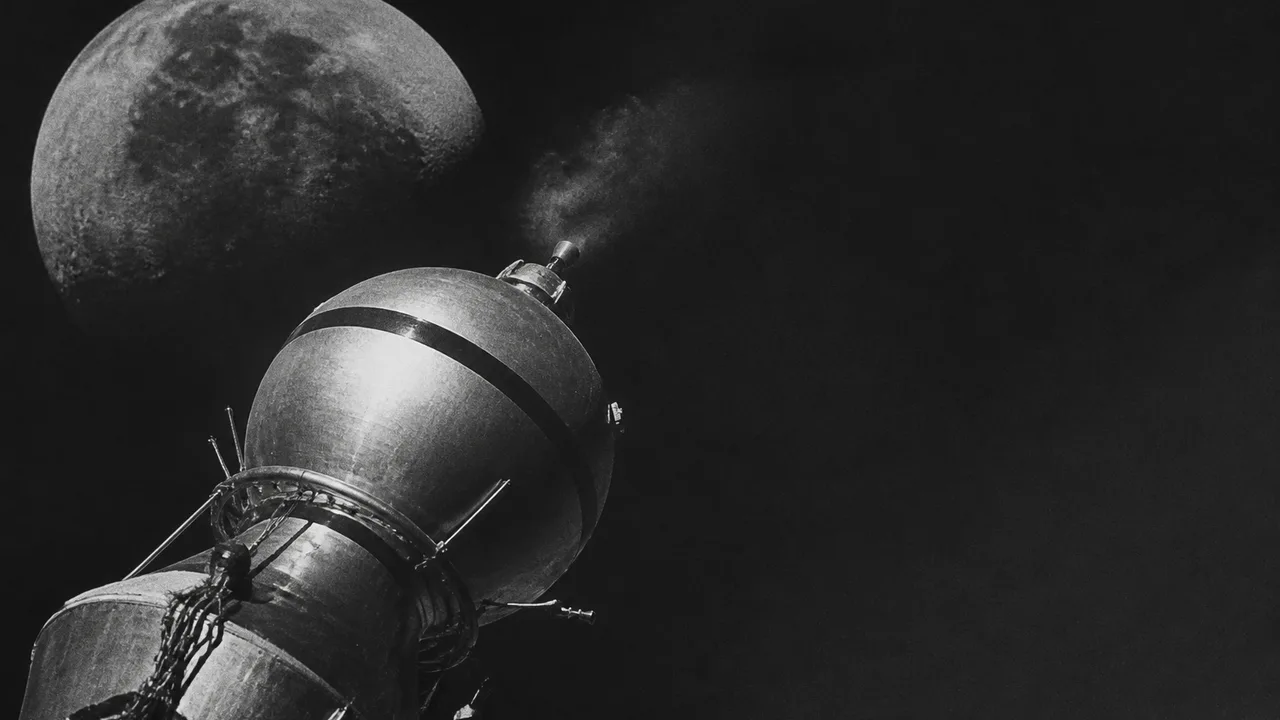
On October 20, 1970, the Soviet Union launched Zond 8 toward the Moon. It became the last lunar mission in the Zond series, which had sent spacecraft on journeys around the Moon during the space race. Its place in that history rests on an unfinished ambition: the program was built to prepare for a flight carrying people, but Zond 8 carried none.
The spacecraft left Baikonur Cosmodrome uncrewed. Two more Zond spacecraft had been planned for launch after it, yet neither followed. That gap between a flight plan and an actual flight is a useful place to examine the program. Space projects advance by testing hardware, interpreting the results and deciding whether the next mission justifies its cost and risk. A launch can answer engineering questions without securing approval for the journey it was meant to make possible.
The anniversary marks an end to the Zond series of lunar missions, rather than an end to Soviet interest in the Moon. It also calls for care with the word success. Zond 8 reached the launchpad and set out on its mission. Whether a program achieved its larger purpose requires another question: did its sequence of tests lead to the human flight it was designed to rehearse?
A Flight Built Around a Future Crew
Zond 8 was also known as L-1 No. 14. It belonged to a program designed to rehearse a piloted circumlunar flight, using an uncrewed version of the Soyuz 7K-L1 spacecraft intended for that journey. The project began in 1965 amid competition with the United States over the Moon.
A circumlunar flight travels around the Moon. It demands much more than a powerful launch: a spacecraft must follow a suitable path across the distance from Earth, remain in contact with controllers and survive the conditions of flight. For a crewed version, engineers would also have to show that people could make the journey safely. Testing an uncrewed spacecraft could address parts of that problem while avoiding the immediate risk of putting a crew aboard an unproven mission.
That gives Zond 8 a clear purpose even without people on board. Hardware intended for a human journey must first demonstrate that it can operate beyond the comparatively familiar environment of Earth orbit. Navigation errors have room to grow over a lunar-distance flight. Radio signals take time to cross that distance, so controllers cannot treat a spacecraft as though it were sitting on a nearby test stand. Each flight can reveal how a design behaves under conditions that ground testing cannot fully reproduce.
Its established role was the uncrewed rehearsal of a proposed piloted journey. The engineering aim alone explains why the mission belonged in a sequence. A test can narrow uncertainty, expose a fault or establish that a system deserves another trial. No single uncrewed flight, however, can stand in for every requirement of a human mission.
The Schedule Behind the Engineering
The Zond project began as the United States and Soviet Union competed to extend human spaceflight to the Moon. By the time Zond 8 launched in 1970, Apollo 11 had already landed astronauts there in 1969. That chronology changed the political setting for a proposed Soviet circumlunar flight. It does not erase the work involved in developing one.
The strongest case for the Zond program is straightforward: reaching a piloted lunar journey requires practice, and an uncrewed spacecraft offers a way to test the journey before asking people to take it. The strongest challenge is just as concrete. Testing becomes a route to a crewed mission only if enough flights, resources and decisions follow. The two planned Zond launches that did not happen show where that route stopped in this series. Their cancellation alone does not explain every political or technical decision behind the program's end.
That tension can disappear when the space race is reduced to a list of firsts. Apollo's landing supplied an unmistakable milestone. A rehearsal program has a harder story to tell because its intended outcome lies in a future mission. The public sees the rocket lift off; engineers and decision-makers must still decide what the flight demonstrated and what remains unresolved. Political competition can set an ambitious timetable, but it cannot shorten the distance to the Moon or make an untested system reliable by decree.
The word final also needs its proper boundary. Zond 8 was the last lunar mission of the Zond series. Calling it the Soviet Union's final Moon mission would fold a broader history into one program and give this launch an ending it did not represent. Its narrower place is revealing enough: a spacecraft prepared for an ambitious next step became the last flight of the effort that was supposed to enable it.
What a Lunar Rehearsal Can Teach Now
Modern lunar ambitions invite easy comparisons with the 1960s and 1970s. The more useful comparison concerns what each mission is asked to prove. A flight around the Moon can test a trajectory, spacecraft operations and communication across distance. A human flight adds demands that an uncrewed test cannot settle on its own. A plan for sustained activity would add another layer: repeatable transport, dependable equipment and a reason to keep committing resources after a landmark flight.
Those goals call for different evidence. A spacecraft may accomplish its assigned journey while leaving open questions about the next one. Conversely, a program may end before its most ambitious mission flies, even though its test flights have advanced the engineering. Treating either outcome as a simple verdict on competence strips away the sequence through which space exploration works.
Zond 8 sits at precisely that intersection of engineering and choice. The Soviet Union launched an uncrewed spacecraft toward the Moon on October 20, 1970, after developing a program meant to rehearse a piloted trip around it. Two further Zond launches remained plans. Fifty-six years later, the cleanest way to read the anniversary is to keep both facts in view: the flight happened, and the journey it prepared for did not follow within the Zond program.
More Like This

Stroke Risk Peaks in the First Three Months After a Cancer Diagnosis
New research in Cancer finds stroke risk rises 2.5-fold in the first three months after a cancer diagnosis, especially with pancreatic and lung cancers.

SpaceX Rocket Team Wins First Neil Armstrong Prize
SpaceX's Falcon 9 landing team won the first Neil Armstrong Space Prize, spotlighting reusable rocket engineering, costs, climate and access to orbit.

A Victorian Train Delay Exposes Space Weather Risk
A disputed Victorian train delay links geomagnetic activity to telegraph faults, showing how space weather affected systems before satellites and power grids.

Montana's JM Reef and America's Platinum Supply Problem
The JM Reef in Montana is America's only platinum and palladium source. What that means for clean energy, emissions tech, and supply chain security.

Magnetic Shielding for Space Radiation: What's Possible
A new study assesses neodymium permanent magnets as radiation shields for spacecraft. Here's what the physics allows, what it doesn't, and why this problem won't go away.

Starship Flight 14 Reached Orbit, but Lunar Tests Remain
Starship delivered 26 satellites to orbit on Flight 14, then ended its test early. Its result clarifies what remains for reuse and NASA's lunar lander plans.

Mountain Pass Mine and the U.S. Rare Earth Supply Gap
The Mountain Pass mine once supplied 70–80% of global rare earths. Here's how the U.S. surrendered that dominance—and what it actually takes to rebuild it.

Smartphones and the Global Baby Bust
John Burn-Murdoch's data on falling global birth rates points to smartphones as a key driver—and the mechanism looks familiar to anyone who covers collective action failures.