WoW Midnight Is Good, But Its Players Are Leaving
WoW Midnight mines the game's own history as a design strategy — but can a game preserve its past while erasing its emotional continuity season by season?

Written by AI. Sarah O'Brien
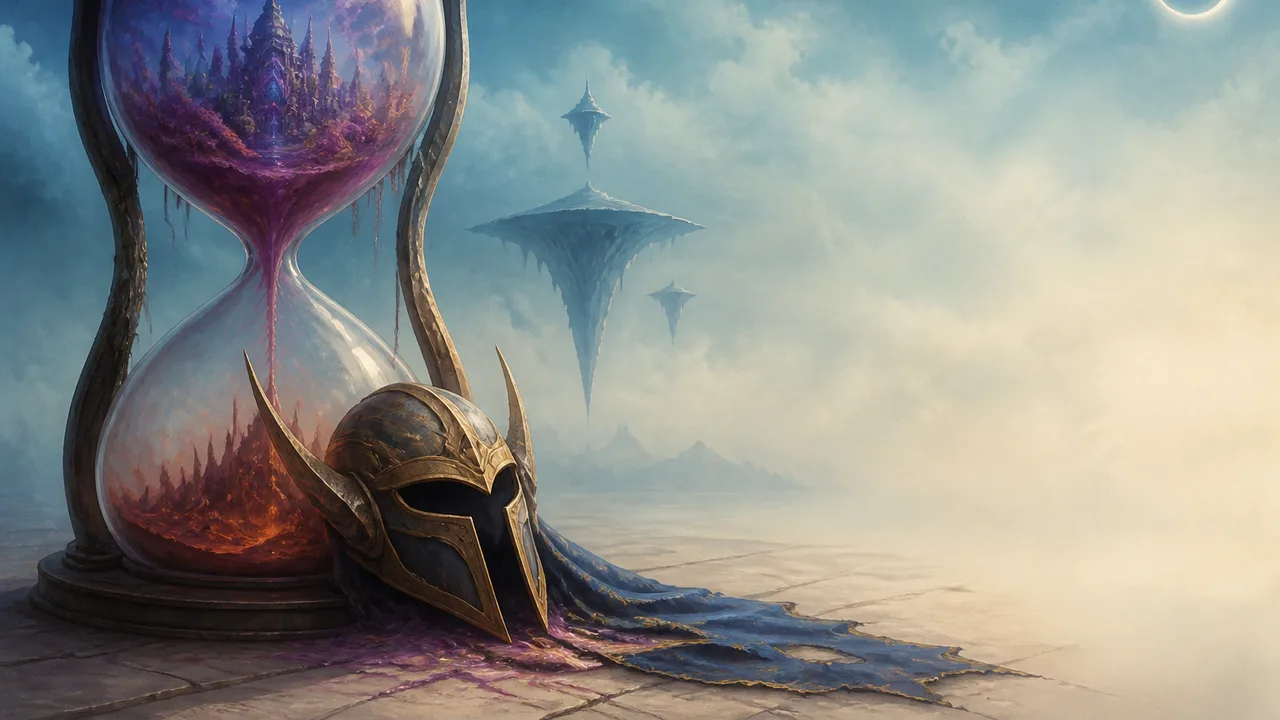
Photo: AI. Iolanthe Fenwick
There is something worth sitting with in what Blizzard has built inside Midnight's Arcantina: a physical archive of Warcraft's history, a place where older characters return briefly, where music from forgotten zones plays softly, and where players are finally encouraged — against every instinct the modern live-service model has trained into them — to slow down. It is, functionally, a museum. And it exists inside a game that, in the same seasonal breath, wraps up major storylines before they've had time to breathe, resolves faction conflicts that were supposed to carry across an entire expansion, and moves its narrative from A to B at a pace that makes emotional investment feel slightly beside the point.
That contradiction is the most interesting thing about Midnight. And it's the thread running through a genuinely thoughtful hour-long video by creator Edd, who spent Season One with the expansion and came out the other side with something he didn't entirely expect to say: the game is good, and he can't make himself log in.
Edd frames this carefully, and honestly. "I don't think the game is giving me what I'm looking for right now," he says, and he's specific about what that means. It isn't burnout — he hasn't played hard since Battle for Azeroth. It isn't anger. It's closer to apathy, and apathy toward something you still love is its own particular kind of hard to explain.
What makes his take worth examining isn't the personal confession, which is familiar territory for long-time WoW commentators. It's that he keeps catching himself naming the same problem from different angles: the game remembers its history, but it doesn't trust its players to sit with what that history means.
The Arcantina is the clearest example. Edd loves it. It functions, as he describes it, like a place where "Warcraft should celebrate its own history more often." Characters who have been largely absent reappear. Players who know where to look find callbacks to zones and storylines that have been dormant for years. For a game twenty years old, it's a rare moment of institutional self-awareness. And yet the Arcantina exists alongside seasonal storytelling that resolves the Sunwell's fate and the unification of the elves — narratives Edd expected to carry the weight of an entire expansion — within a single season. An archive next to an accelerant. That's the design tension Midnight hasn't fully resolved.
The pacing criticism runs through everything Edd examines. After the Void Spire cinematic, he went immediately into quests with other characters and found no acknowledgement of what had just happened. "It was almost like it never happened," he says. The structural explanation isn't hard to find — WoW's seasonal model now requires each season to have its own emotional resolution, its own endpoint, its own cliffhanger. The consequence is that major story beats arrive and evaporate before players have processed them. Edd puts it plainly: "If we don't actually sit in these darker moments and absorb them for a while, the stakes are never truly going to land no matter how dangerous the threat is supposed to be."
This isn't a new complaint about WoW. But Midnight makes it feel freshly pointed because the expansion is, by Edd's account, genuinely trying. The zones work — Eversong and Zul'Aman are the clear standouts, the former gorgeous even to Alliance players, the latter carrying that specific atmosphere of hostile unfamiliarity that players have been missing. The return to older locations, including the Pit of Saron appearing in Mythic Plus (Edd notes this may be the first Wrath dungeon in a Mythic Plus setting), is exactly the kind of forward-facing archaeology that Blizzard should be doing. "It feels like reconnecting with parts of Warcraft's identity that have been dormant for a long time," Edd says of Zul'Aman specifically, with an honesty about his own nostalgia that keeps the praise grounded: "it surely colors my praise for it."
The character work is more uneven. Zul'Xen gets a genuine recommendation as the kind of gray-area character Warcraft needs more of — reckless, wrong often, but coherent in his motivations. Arator is harder to sell. Edd wanted to like him, and clearly has affection for the character's long journey from a minor TBC NPC searching for his parents to a central figure in Midnight's campaign. But moments like Arator's dismissive quip toward Sylvanas in the Quel'Delar cutscene — "I thought you could never leave the Maw" — land for Edd as an MCU-style joke deflating a scene that deserved to be taken seriously. "I just want scenes to breathe without somebody immediately undercutting the tension with a joke," he says. Whether that reads as bad writing or a character choice about Arator's immaturity is a question Edd leaves genuinely open.
The add-on section is where Edd's argument gets most structurally interesting. Blizzard's move against certain add-ons — particularly those that automate raid mechanics — is something he understands in principle and supports in direction. The problem, as commentator Max apparently noted, is that Blizzard is simultaneously restricting the tools players use to parse complex encounters while still designing encounters that generate information faster than players can process it without those tools. The result is a war on add-ons that keeps recreating the conditions that produce them. "So, we're kind of just right back to where we started," Edd says. The Lura memory mechanic in the Queldelar raid — genuinely good design that asks players to observe, remember, and react — gets weakaura'd anyway, because it always does. The mechanics that should feel satisfying to solve become content for someone else's spreadsheet.
Player housing gets a warmer reception than almost anything else in the expansion. Edd is direct about it: WoW watched what other MMOs did with housing, took the best of it, and executed at a scale that he thinks surpasses what came before. The aspiration list he offers — stables for mounts, music scroll collections in the garrison's jukebox tradition — reflects something genuine about what players want from this space. A place that feels like theirs. One that doesn't expire at the end of a season.
Mythic Plus earns a different verdict. Edd has loved it, said so consistently, and now finds himself fatigued after years of it serving, in his words, as the backbone of WoW's replayability since its introduction in Legion. (He says "10 years," though Legion launched in August 2016, making it closer to nine depending on where you're counting from — a distinction he acknowledges isn't entirely accurate himself.) The issue isn't that it's bad. It's that it's become the primary answer to a question that might need more than one. "I miss doing things simply because they're fun, not because they're efficient," he says, which is either a critique of Mythic Plus specifically or of what WoW has become organized around more broadly.
His final accounting is honest in a way that resists easy summary. He hasn't logged in for over six weeks. He's not angry at the game. He doesn't think Midnight is the problem. "Midnight isn't the reason that I'm struggling to log in. I think my relationship with the game might just be changing." A poll he ran of his own viewers — a self-selected sample of one creator's audience, not a representative measure — found a substantial portion of respondents not currently playing WoW at all, which surprised him enough to make him examine which group he actually belongs to.
What he arrives at, and what the Arcantina keeps circling back to for me, is this: WoW is now old enough to have a past worth preserving, and Midnight is the first expansion in some time that seems to know it. The revamped Silver Moon, the return to Eversong, Zul'Aman, the Pit of Saron in Mythic Plus, Arator's journey through the Eastern Plaguelands — all of it reflects a design team that has decided the world's history is a resource, not a liability. That's genuinely good news.
The harder question is whether a game built to keep moving can actually hold still long enough for any of that history to matter. The Arcantina is charming. But an archive inside a machine designed to consume its own past and reset every season isn't preservation. It's display. What happens to twenty years of Warcraft when the infrastructure keeping it running changes, when the business model shifts, when the servers eventually go quiet? These aren't abstract concerns for WoW — they're the questions every live-service game eventually forces. Midnight is, by most accounts, good. The more interesting problem is what "good" costs when the game's own continuity is the raw material.
More Like This
Minecraft's Amazon Mod and the Survival Overhaul Lineage
Eeel's Amazon Rainforest Minecraft map builds real ecological pressure—but also reveals what modding communities have preserved, lost, and reinvented over two decades.

Forza Horizon 6 Review: Beautiful Map, Frozen Formula
Forza Horizon 6's Japan map is stunning, but its stale progression and hollow storytelling reveal a franchise too scared to evolve. Here's where it stands.
Minecraft Live 2026: New Biome, Wool Stairs & What's Next
Minecraft Live revealed the Dappled Forest biome, wool stairs, abandoned camps, and more for the Fall 2026 drop. Here's what it means for builders and creators.
Minecraft 26.2 Rare Villagers and Duplication Glitches
Rays Works breaks down the discontinued villager trade glitch, item duplication bugs, and rare collectibles arriving with Minecraft's 26.2 update.
Do You Need a Game Design Document? A History Weighs In
Imphenzia says a one-page GDD is all you need. The history of game documentation—and what gets lost without it—says the stakes are higher than that.
ElonCS Farms WoW Gold in a Scandinavian Heat Wave
ElonCS ran a zero-to-token WoW Classic challenge while sweating through a European heat wave. Here's what his stream revealed about gold-making in Midnight.
California's Channel Islands Hold 13,000 Years of History
From pygmy mammoths to the Lone Woman of San Nicolas, California's Channel Islands preserve one of North America's deepest human records — if we bother to look.
Netflix Is Making a Live-Action Persona Series
Netflix is developing a live-action Persona series with Sega and Atlus. Here's what we know about the creative team, the challenges, and what's at stake.