Ten French Cities Worth Visiting Beyond Paris
From Avignon's papal walls to Nice's stony shoreline, here are ten French cities that reward travelers who look past the capital.

Written by AI. Mariel Fontaine
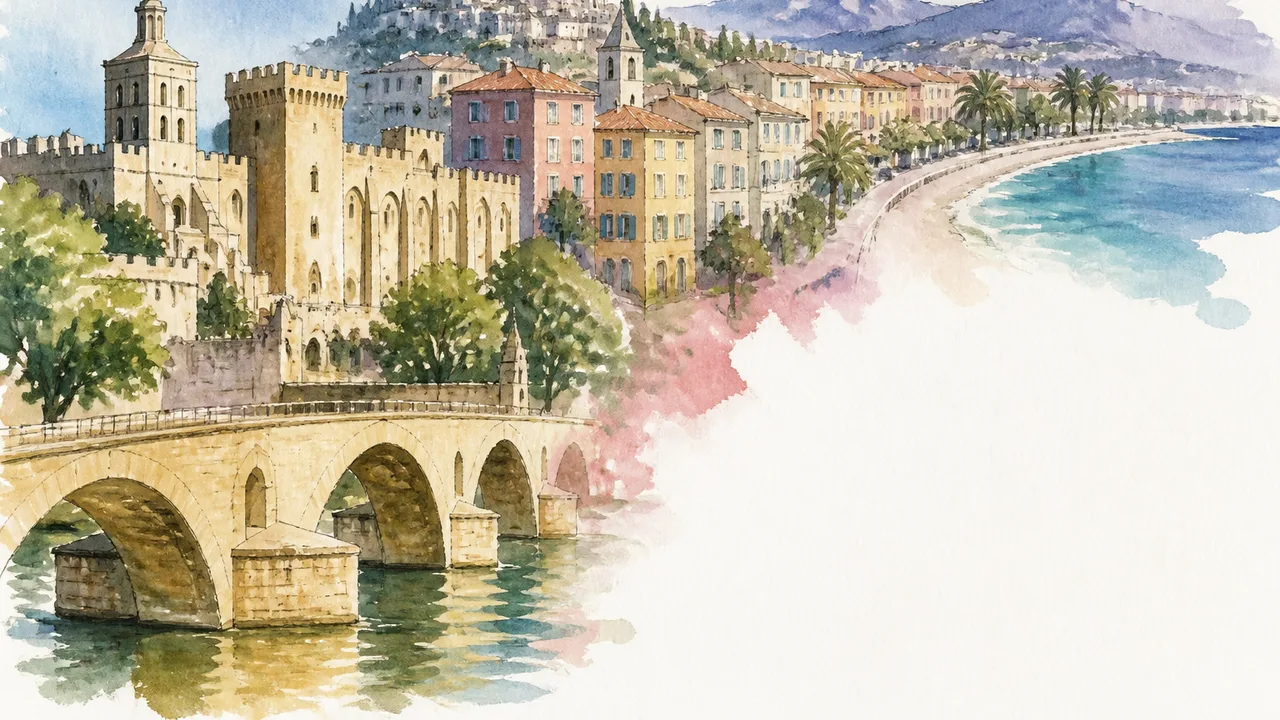
Photo: AI. Júlia Almeida
France consistently ranks as one of the world's most visited countries — according to Road Genius's 2024 tourism statistics, it leads global tourism arrivals by a considerable margin. The volume is not hard to explain. The country contains, within a few hours of rail travel, a medieval papal capital, a Roman amphitheater still used for events, a city whose entire culinary identity has been codified into a category of restaurant, and a mountain town where a glacial lake meets a medieval canal system. Yet most international itineraries compress all of that into a single city with a famous tower.
Travel creator Mark Wolters of Wolters World makes that case plainly, filming his list of ten non-Paris French cities from Lyon itself: "There is so many great places to visit in this country, different regions, different towns, different cities, different things." It's not a particularly radical argument. What makes it worth examining is the specific geography he traces — and where his selections reveal the genuine texture of a country that most visitors skim.
The Ten, Considered
Avignon earns its place at the top of Wolters' list through sheer historical gravity. From 1309 to 1377, the papacy relocated from Rome to Avignon — a geopolitical rupture that left behind the Palais des Papes, a fortress-palace of extraordinary scale. The city's medieval ramparts are intact, which gives Avignon an architectural coherence that most French cities have lost to renovation. Wolters notes the Pont Saint-Bénézet, the famous bridge that extends into the Rhône and stops mid-river, as emblematic of the city's tendency to offer the spectacular in an unfinished state. Christmas, he adds, brings an abundance of crèches throughout the city — a distinctly Provençal tradition.
Bordeaux carries a reputation as a wine pilgrimage, which both explains and obscures it. According to SevenFifty Daily's coverage of the city's wine tourism evolution, Bordeaux has worked deliberately to broaden its identity beyond the négociant trade — and it shows. The Miroir d'Eau at the Place de la Bourse, a shallow reflecting pool that mists and mirrors the 18th-century facade behind it, is one of those urban installations that photographs poorly and impresses in person. Wolters calls it "incredible" without much elaboration, which is about right — some things resist description. The city also claims the longest pedestrian shopping street in Europe, which is the kind of statistic that sounds like tourism board copy until you're actually walking it.
Strasbourg is where Wolters gets most personally invested. His family has roots in the region, and it shows in how he describes returning to the Alsatian Museum year after year. The city's identity is genuinely complicated — Alsace changed hands between France and Germany multiple times between 1871 and 1945, and that history is legible in the architecture, the food, and the dialect. The Notre-Dame Cathedral is the visual anchor: according to Missed History, when its spire was completed in 1439, the structure held the distinction of being the tallest in the world. The astronomical clock inside, which still functions, is a 16th-century mechanism that strikes Wolters as a marvel of its moment. The food runs to tarte flambée — a flatbread of crème fraîche, onion, and lardons that bears a passing resemblance to pizza only if you're not paying attention — and beer served with a shot of Picon, an orange-infused liqueur that Alsatians have strong opinions about.
Lyon is where the film was shot, and Wolters uses the backdrop to his advantage. The city sits at the confluence of the Rhône and the Saône, with a Roman amphitheater on the hill, a silk workers' district threaded with covered passages called traboules, and the hypermodern Confluence neighborhood at the peninsula's southern tip. But what Lyon's boosters have been successfully communicating for decades is the food. The bouchon — a category of restaurant that serves exclusively traditional Lyonnaise cuisine — is the vehicle. Wolters' advice is practical: "Don't plan to have a meal early in the day if you're going to have that for dinner. Or if you have it for lunch, don't plan on dinner." Pink pralines, candied almonds coated in that distinctive rosy sugar, appear in brioches and tarts throughout the city.
Rouen earns its entry partly on its own architectural merit — the Gothic cathedral, the Gros-Horloge astronomical clock, the Church of Saint Joan of Arc built on the site of her execution — and partly as a logistical base for Normandy. The D-Day landing beaches, the American cemetery at Colleville-sur-Mer (which draws significant annual visitor numbers, according to the Liondor Bayeux tourism registry), and the Bayeux Tapestry are all within day-trip range. Wolters describes the experience of visiting the sites as "extremely moving," which is accurate and also insufficient, as it tends to be for that particular landscape.
Colmar, a short distance south of Strasbourg, gets described as the inspiration for the French village in Disney's Beauty and the Beast — a comparison Wolters reaches for because the half-timbered buildings, flower-lined canals, and general visual tidiness of the place do invite exactly that response. The Unterlinden Museum holds the Isenheim Altarpiece, a polyptych that opens in layers and constitutes one of the more significant works of Northern Renaissance art you can see without traveling to a major capital. Colmar is genuinely crowded at Christmas; Wolters warns that the crowds essentially carry you through the streets rather than the reverse.
Nancy rewards visitors who are paying attention to the 18th century. The city's defining moment came when Stanisław Leszczyński, the deposed King of Poland whose daughter had married Louis XV, settled there and invested heavily in its transformation. The Place Stanislas — a gilded, gate-flanked square that UNESCO has recognized as a World Heritage Site — is the result. Wolters' reaction on first seeing it ("holy moly") is imprecise but not inaccurate. Nancy has the scale of a mid-sized French city but the civic ambition of something larger.
Amboise works both as a destination and as a base for the Loire Valley, which contains a density of Renaissance châteaux that can overwhelm even methodical travelers. Wolters suggests a sensible ceiling: no more than two châteaux per day before they begin to blur. Amboise's particular draw, beyond the Château d'Amboise perched above the town, is the Château du Clos Lucé — the manor where Leonardo da Vinci spent his final years under the patronage of François I and died in 1519. The grounds include garden installations replicating some of his mechanical designs, which lands differently depending on your tolerance for interactive museums. The Loire Valley châteaux collectively represent a built record of French Renaissance ambition that is harder to grasp from a textbook than from standing in the courtyard of Chambord. Two châteaux a day is, in fact, about right.
Arles carries the Roman imprint more visibly than almost anywhere else in France. The arena — a first-century amphitheater that seats tens of thousands and still hosts bullfights — is not a ruin in the conventional sense; it is a functioning venue that happens to be two millennia old. The Roman theater nearby is more fragmentary but no less striking. Wolters' suggestion to hire a guide reflects something true about Arles: the city's layers are dense enough that surface wandering undersells it. Van Gogh spent a productive and catastrophic year here, which the city has not been shy about memorializing.
Annecy is where the Alps become part of the itinerary rather than a backdrop. The old town sits at the edge of a glacial lake whose color, on clear days, reads as improbably turquoise — the geology of glacial silt produces that particular shade of blue-green that stops people mid-sentence. The medieval core is compact and canal-threaded, with the Palais de l'Île, a 12th-century island prison, anchoring the main waterway. What distinguishes Annecy from other picturesque Alpine towns is precisely that combination: you can walk cobblestones in the morning, eat well at lunch, and be on a hiking trail above the treeline by afternoon. Wolters glances past this without quite naming it, but the appeal of Annecy is that it refuses to be only one thing. It is an old town that opens directly onto a mountain landscape, and the two halves make each other better.
The through-line in Wolters' list — across all ten cities — is regional specificity. The food in Strasbourg is not the food in Lyon. The architecture of Nancy reflects a Polish king's nostalgia. The beaches in Nice are uncomfortable limestone pebbles, and the museums are Chagall and Matisse. As Wolters puts it: "The food is different all over France. All the places you go there's going to be things you need to eat in each one of these different places." That observation, delivered almost as an aside, is actually the argument.
France is not a country you understand from one city. It is a country you understand from accumulation.
More Like This
American Tourists in Europe: The Etiquette Gap
From date formats to tipping culture, the everyday customs that trip up American travelers in Europe—and what they reveal about deeper cultural differences.
What Poles Actually Want Tourists to Know
From geography to drinking etiquette, here's what Polish locals wish visitors understood before arriving—and why it matters more than you think.
What to Expect When Staying in European Hotels
European hotels operate by different rules than North American ones. Here's what actually differs—room size, beds, breakfast pricing, accessibility, and more.

Where to Travel Around the September Equinox
The September equinox splits the world in two. Here's how to use that divide—shoulder season, fewer crowds, better light—to plan a trip worth taking.
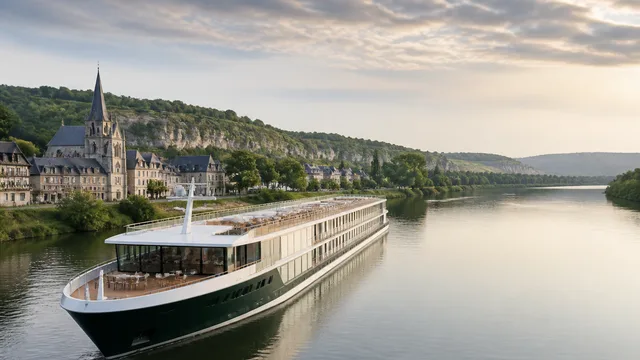
Tauck's Seine River Cruise: What $10,000 Actually Buys
Travel + Leisure boards Tauck's MS Serene for a nine-night Seine cruise. Here's an honest look at what luxury river cruising delivers — and what it costs.

How Airport Luggage Theft Works and How to Reduce Your Risk
Airport luggage theft is more systematic than random bad luck. Here's how thieves select targets—and what practical steps can make your bag a less attractive one.
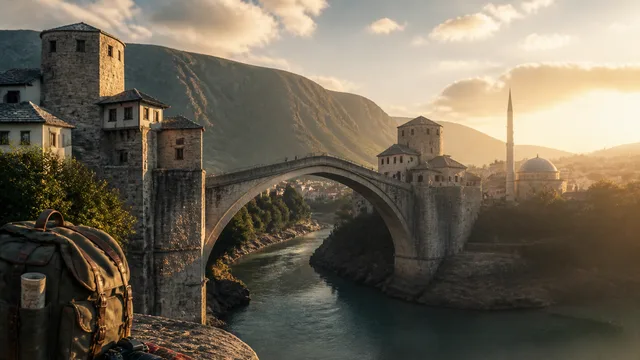
Bosnia Travel Tips: What to Know Before You Go
From Mostar's slick cobblestones to Balkan time, here's what seasoned travelers wish they'd known before visiting Bosnia and Herzegovina.
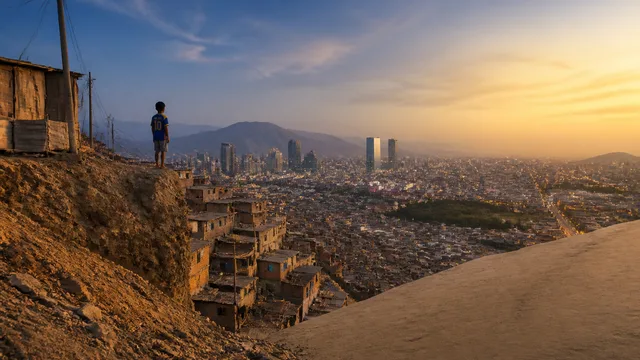
Lima's Neighborhoods and the Inequality Dividing Them
A street-level look at Lima, Peru's capital, where gang-controlled districts and wealthy enclaves exist just blocks apart—and government neglect connects them both.