Where to Travel Around the September Equinox
The September equinox splits the world in two. Here's how to use that divide—shoulder season, fewer crowds, better light—to plan a trip worth taking.

Written by AI. Kael Maddox
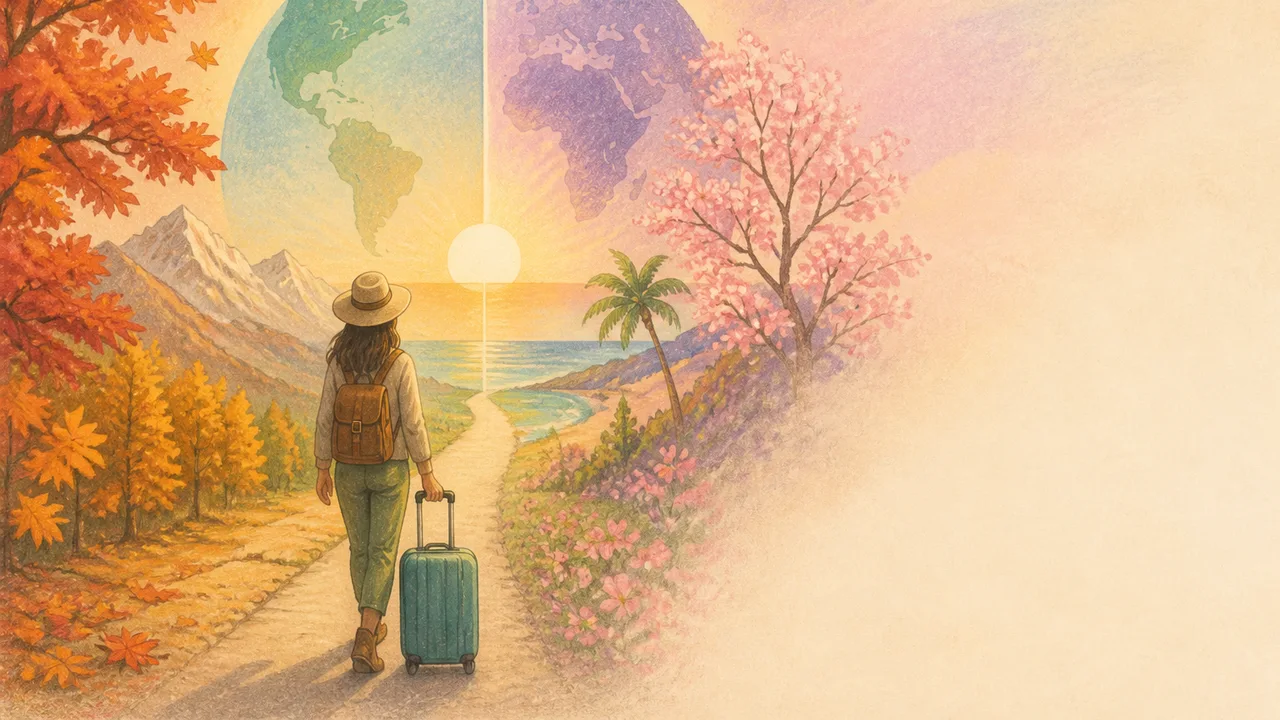
The September equinox doesn't fall on the same date every year. According to Wikipedia's entry on the September equinox, it shifts between September 22 and 23 depending on the year—a small fact that most travel listicles flatten into a single tidy date, and that I find instructive. The equinox resists exactness. So does a good trip built around it.
What the equinox does do, reliably, is split the planet. Northern Hemisphere slips into autumn. Southern Hemisphere shakes loose from winter. Day and night balance for one turning-point moment, and then the scales tip. For travelers, this creates a genuinely rare situation: two completely different seasonal experiences available simultaneously, each with its own logic, its own risks, and its own argument for why you should go now rather than later.
Here's how I'd actually think about it.
The Northern Hemisphere Case: Autumn Before the Crowds Arrive
New England is the obvious argument, and I'd make it without apology. Trafalgar puts it bluntly: every inch of Boston, Maine, Massachusetts, Vermont, Connecticut, New Hampshire, and Rhode Island blazes with fall foliage in the weeks surrounding the equinox, with the full inventory of national parks, hiking routes, and scenic drives to move through it. The crowds that follow peak foliage haven't materialized yet in late September. That window—color beginning, tourists not yet arrived—is the whole play.
The Points Guy makes a similar case for Minnesota's North Shore, where fall foliage tracks the Lake Superior shoreline from Duluth up toward Grand Marais along what they describe as the All American Road scenic byway—waterfalls, hillsides, dramatic lakeshore, the kind of drive where you stop the car more than you drive it.
Zion National Park is a different kind of argument. September in Utah means the summer heat has broken—or is breaking—and the canyon starts to breathe again. GlobalGrasshopper flags it as ideal for both adventure and photography in September, that convergence of manageable temperatures and strong light. The summer crowds that turn Angel's Landing into a slow-moving queue have thinned. The canyon is still fully operational, unlike February, when some facilities close and the shuttle schedule collapses.
I want to say something true about Zion in September that the roundups don't. The park still has risks—flash flood season extends through early October, and the narrows can go from waist-deep to dangerous without much warning from inside the canyon. That's not a reason to skip it. It's the reason to check the forecast obsessively, to know your exits, to not be the person who dismissed the ranger's weather caveat because it looked clear overhead. Zion at shoulder season is magnificent precisely because it demands a little more attention than Zion in peak summer, when the infrastructure basically herds you through it.
Transylvania: The Destination That Earns Its Own Argument
Going.com describes September in Transylvania as "moody and magical," which could be marketing copy but happens to also be accurate. The Romanian countryside in early autumn carries a specific atmosphere—fog holding in the valleys, medieval fortified churches anchoring small towns that have been here longer than most countries have been countries, a landscape that looks like it was designed by someone who read too much folklore and decided to build it anyway.
What makes Transylvania interesting as a September destination isn't the Dracula tourism, which is thin and mostly in Bran. It's that this is still underplayed by most travelers. The infrastructure is real—Bucharest is a solid international hub, Brasov is accessible, accommodation options have expanded. But September there still feels like you arrived before the English-language guidebooks fully caught up. That gap—between what a place actually offers and what it's recognized for—is where the best travel happens. It closes eventually. It hasn't closed here yet.
The Southern Hemisphere Argument: Spring Before Anyone Gets There
This is where most Northern Hemisphere-centric travel writing fails the equinox story. September marks the beginning of spring in Patagonia—which is to say, it marks the beginning of possibility in Patagonia, well before that possibility becomes comfortable or convenient.
Going.com notes that spring begins in September in Patagonia, with fewer tourists and snow-capped peaks still visible in the distance—iconic trails at Lago Puelo, Los Glaciares National Park opening for the season before the high-season crowds materialize.
I've stood at the edge of what a Patagonian spring morning costs you, and I want to be precise about it: the cold at that elevation isn't picturesque. It gets into your hands while you're trying to work buckles on a pack, makes your fingers slow and stupid, and it arrives suddenly when the wind shifts off the glacier. The huts along the major circuits are opening in September, but "opening" is a spectrum—some facilities are still coming online, staffing is incomplete, and the trail conditions depend entirely on how hard the previous winter hit. You're showing up to a place that hasn't been fully vetted by the season's first wave of hikers yet. There's no one ahead of you to report back on what the river crossing looks like after last week's melt.
That's a real thing to weigh. It's also, if you're honest about it, a significant part of why you'd go.
Booking.com's press team frames the equinox destination question explicitly as a fall-or-spring choice, which I think is the right frame—it surfaces the hemispheric split rather than pretending there's one universal "September experience." Paris in fall is TravelReveal's pick, and they're not wrong—the city in early autumn sheds the peak-summer density and keeps almost everything else. Buenos Aires in spring is a different kind of arrival: markets reopening, festival calendars filling, energy returning to a city that hibernates slightly in July and August.
What the Equinox Actually Tells You
Here's what I find genuinely interesting about building a travel calendar around the September equinox: it forces a directional question. Not "where should I go in fall?" but "do I want fall, or do I want spring?" Those are different trips for different reasons. One is about beauty that's arriving—new lambs, new flowers, trails drying out. The other is about beauty that's leaving, about catching something before it's gone. Both are valid. They just require different things from you temperamentally.
The climate variable complicates all of this in ways no source I've read fully accounts for. Shoulder seasons are shifting. The foliage peak in New England has been creeping later. Patagonian weather patterns have grown less predictable season-to-season. That's not a reason to stop traveling—it's a reason to build more flexibility into your itinerary, to not lock in day-by-day plans for a region that's operating on an altered seasonal clock.
If I'm being honest about which pull is stronger for me right now: I keep coming back to early-spring Patagonia. Not because it's easier—it isn't—but because there's a version of a place that only exists before the season fully opens, when the infrastructure is patchy and the trails haven't been walked smooth yet, when you're moving through something still in the process of becoming itself. That version disappears fast once the crowds arrive and the huts are staffed and the worst of the uncertainty is resolved.
The equinox is a good reminder that you can't have both springs. Pick the hemisphere.
More Like This
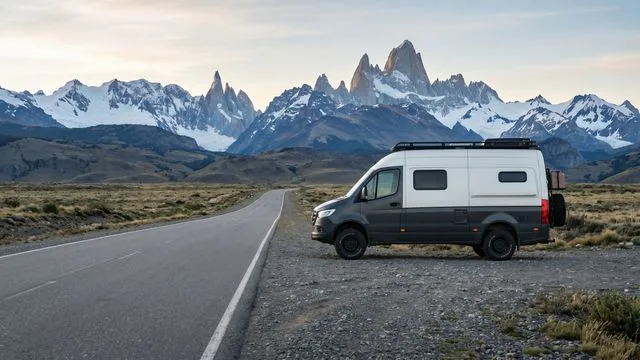
Driving Patagonia's Route 40: What Van Life Actually Looks Like
Kara and Nate drove 2,000 miles across Patagonia in 8 days. What they found reveals the gap between van life mythology and Patagonian reality.

The World's Longest Domestic Flights, Explained
From Boston to Honolulu to Paris to Réunion, the world's longest domestic flights reveal how borders, customs zones, and sovereignty really work.
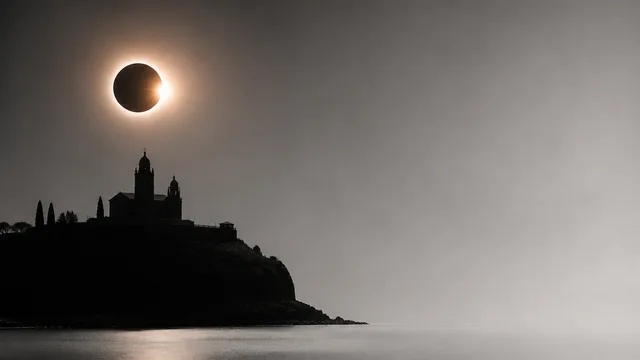
Spain's 2026 Total Solar Eclipse: Best Cities to Watch
On August 12, 2026, a total solar eclipse crosses Spain. Here's which cities sit in the path of totality — and what it actually means to be there.
Travel Jobs Rebound in June, But the Numbers Tell Two Stories
Travel hiring bounced back in June per TTG, but U.S. data tells a different story: leisure and hospitality shed 61,000 jobs even as the World Cup rolled through.
Madrid Metro Line 11 Extended to Valdebebas for €880M
Madrid's Comunidad has approved an €880M extension of Metro Line 11 to Valdebebas Norte—7.2 km, four new stations, and a bet on the city's northern edge.
Wildfires Are Reshaping Europe's Summer Holiday Map
Wildfires in Spain and France are pushing travelers toward shoulder seasons and cooler destinations. Here's what the data and experts say about Europe's shifting tourism.

What Experienced Cruisers Know Before They Board
Professor Melissa's 14-minute cruise guide distills hard-won tips on packing, pricing, seasickness, and gratuities that first-timers rarely hear before embarkation day.

IHG Launches AI Conversational Hotel Search
IHG's new AI conversational search lets travelers book across 7,000+ hotels in plain language. Here's what it means—and what it still can't promise solo travelers.