Roblox's Platform Ambitions Face a Profitability Test
Roblox combines user-made games, social activity and digital spending. Its investment case now depends on turning that ecosystem into durable cash flow.

Written by AI. Jonathan Park
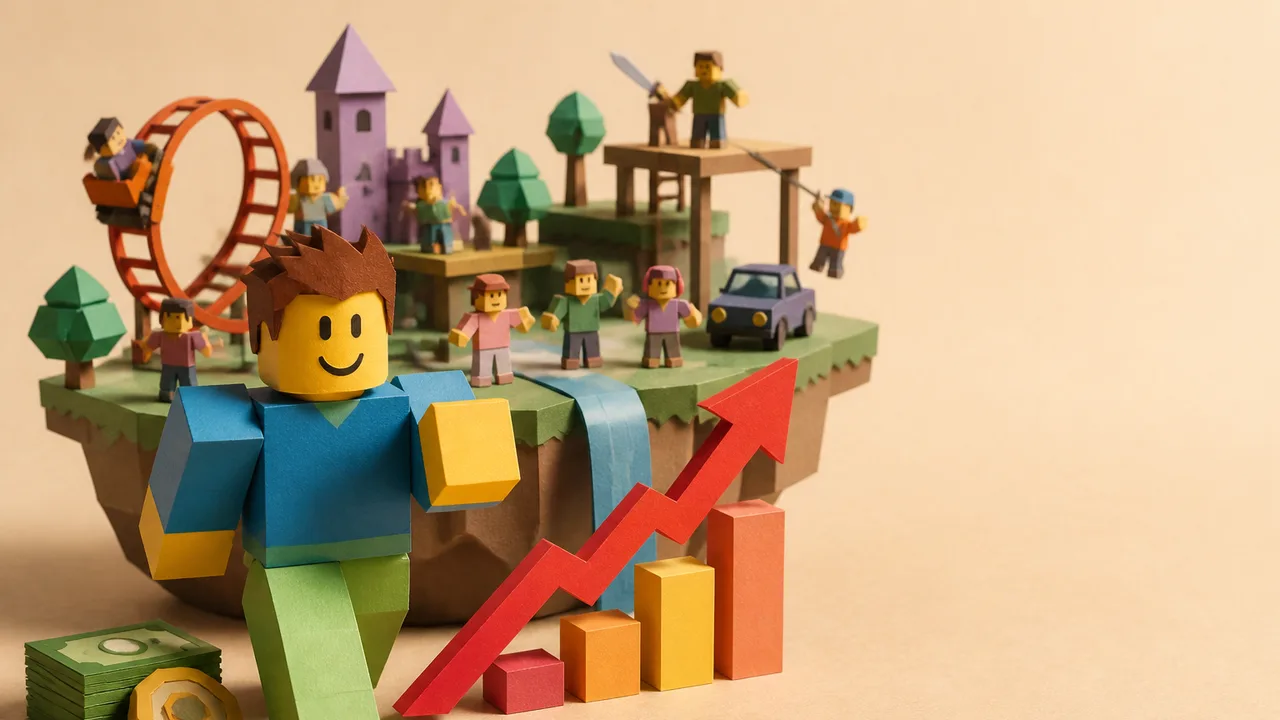
Roblox combines user-created experiences, social interaction and digital spending inside one online platform. That combination supports an ambitious investment thesis: the company could occupy a broader and more durable position in young users' online lives than a conventional games publisher.
A recent Seeking Alpha analysis presents the strongest version of that case. Users supply attention and social activity, creators supply experiences, and the platform provides distribution and a virtual economy. Each group can make the platform more attractive to the others.
The business question starts after that flywheel has been drawn. Roblox still has to convert activity into cash while funding infrastructure, paying creators, moderating content and protecting a user base that includes younger people. A network effect may explain why a platform can grow. It does not establish how much profit the platform owner will retain.
Why the Platform Label Matters
A traditional games publisher usually depends on a portfolio of titles. Development teams make the games, the publisher finances and markets them, and commercial performance can swing with the release calendar. Roblox distributes much of the creative risk across its developer community. Creators build experiences, users choose among them, and Roblox operates the system connecting the two.
That structure can broaden the catalogue without requiring Roblox to develop every experience itself. A larger selection can attract more users. More users can offer creators a larger potential audience, encouraging further development. Social connections add another retention mechanism because leaving a platform can also mean leaving friends, communities and familiar digital possessions behind.
The label also changes what investors expect. A publisher can produce hits and misses. A platform is usually valued on the prospect of recurring participation, scalable distribution and expanding monetisation. Investors granting that status will look for evidence that growth becomes more efficient over time, rather than demanding a similar rise in spending on infrastructure, safety and user acquisition.
Roblox therefore has two propositions to prove. The first concerns relevance: can it remain a place where users consistently spend time? The second concerns economics: can that time generate attractive returns after everyone required to sustain the platform has been paid?
Engagement is an Input, Not a Paycheque
Time spent on Roblox gives the company opportunities to sell digital goods, support paid experiences and develop advertising. Engagement can also improve discovery by giving the recommendation system more information about what users choose and where they remain.
Yet hours alone carry no fixed financial value. An extra hour from a user who buys virtual items has different economics from an extra hour that requires computing capacity and moderation but produces no additional spending. Advertising could monetise some of that previously unpaid attention, although it introduces questions about ad quality, privacy, age suitability and how commercial messages affect the experience.
Recommendation systems complicate the picture further. Roblox can steer traffic through ranking and discovery, giving it substantial influence over which creators gain audiences and which commercial models flourish. A recent algorithm change away from aggressively monetised experiences coincided with a $9 billion loss in market value. The reaction exposed a tightrope: investors may reward immediate spending signals, while users and creators need discovery systems that do not reduce every design choice to a checkout prompt.
A healthier recommendation environment could improve retention and content quality over a longer period. It could also weaken near-term monetisation if highly commercial experiences receive less traffic. Investors need to state which time horizon they are using before declaring either outcome a success.
Follow the Money Through the System
Bookings deserve close attention because digital-platform accounting can separate the moment a user spends money from the period when the company recognises revenue. Bookings offer a view of current purchasing activity, while revenue recognition may occur over time as virtual goods and services are consumed.
Neither measure answers the profitability question by itself. Investors should trace the full path of spending:
- How much money enters the platform through digital purchases, subscriptions, advertising or other channels?
- How much goes to payment processors, app stores and developers?
- What does Roblox spend on servers, product development, moderation, safety and administration?
- How much cash remains after maintaining the system that produced the spending?
Creator payments are central to that calculation. Paying developers more can reduce Roblox's retained share of each transaction, but weak creator economics could discourage the people supplying the platform's inventory. The company needs creators to believe that building for Roblox offers a credible return on their time, especially when those developers have other outlets for their skills.
Creator confidence appears conditional on earnings, safety policy and control over discovery, as recent coverage of developer trust found. That makes the payout rate only one part of the relationship. A creator can receive an attractive nominal share and still struggle if recommendation changes make the audience unpredictable.
Investors often describe creator payments as a cost. Economically, they also function as supply investment. The useful question is whether each dollar paid to developers produces enough high-quality content and user activity to enlarge the overall pool of spending. Cutting payouts could improve margins on paper while weakening the reason users arrive.
Safety Sits Inside the Business Model
Roblox's younger audience makes moderation and safety operating requirements, rather than optional corporate programmes. More users and more user-generated experiences create more interactions to monitor. Expansion can therefore increase both commercial opportunity and the surface area for harmful content or conduct.
Strong safety systems cost money through staffing, technology, enforcement and product design. Weak systems can impose larger costs on users while inviting reputational damage and regulatory scrutiny. Parents, regulators and advertisers may each have different thresholds for what they consider acceptable, leaving Roblox to satisfy constituencies whose incentives do not always line up.
Advertising sharpens those conflicts. Brands generally want scale, predictable placement and low reputational risk. Users want experiences that remain enjoyable. Parents may want strict controls around data and commercial persuasion. Creators want access to revenue without having their work reshaped around advertiser preferences.
Roblox can add advertising inventory faster than it can build trust around that inventory. The commercial opportunity therefore depends on controls, measurement and age-appropriate implementation, not simply on the number of impressions available.
Household Budgets Still Reach the Virtual Economy
Digital goods may exist inside a virtual economy, but the money comes from real household budgets. Spending can weaken when families face pressure or when users redirect discretionary cash toward other entertainment. The platform model offers several possible revenue streams, yet those streams can share the same underlying consumer wallet.
This exposure makes monetisation quality as important as monetisation volume. Revenue driven by a small group of heavy spenders may behave differently from broad, recurring purchases across the user base. Advertising could diversify the mix, although it brings exposure to marketing budgets and the concerns surrounding ads aimed at younger audiences.
The available source material does not provide enough current financial detail to judge how resilient each revenue stream has become. That gap should limit confidence in any valuation built mainly from engagement and network effects. A persuasive assessment needs current bookings, cash generation, cost growth and developer payments, compared across several periods rather than one strong quarter.
What Would Confirm the Thesis
Evidence for the platform case would appear through several linked developments. Bookings would grow without an equal rise in operating costs. Creator payouts would remain strong enough to support a productive developer economy. Safety and moderation spending would produce a platform that users, parents and advertisers continue to trust. New revenue sources would add spending rather than merely redirecting money already circulating through digital purchases.
Warning signs would also connect. Rising engagement paired with stagnant cash generation would suggest that attention is expensive to serve or difficult to monetise. Better margins paired with deteriorating creator economics could indicate that Roblox is retaining value at the expense of future content supply. Faster monetisation accompanied by weaker user satisfaction could trade durability for a better quarter.
Roblox's broadest opportunity comes from operating a place where people play, socialise, create and spend. Its valuation will ultimately depend on a narrower calculation: how much of each additional dollar remains after creators are rewarded, infrastructure is funded and users are protected.
More Like This

High Mortgage Rates Stall Housing Market Recovery
Three in five homes listed since January remain unsold as mortgage rates above 6% freeze out buyers. Here's what the data reveals about who pays the price.

USMCA Won't Be Renewed: What Annual Reviews Mean
The Trump administration has blocked USMCA's 16-year renewal, opting for annual reviews. Here's what that means for trade, business, and North America.
Bill Ackman's Art of Finding Invisible Money
Explore Bill Ackman's strategy of finding hidden value in companies, beyond standard metrics.

Warren Buffett's Exit Splits Power at Berkshire Hathaway
Warren Buffett's chairman exit splits power at Berkshire. What Howard Buffett's culture role and Greg Abel's cash decisions could reveal next for shareholders.

Youth Economic Inactivity Is a Structural Problem
262 million young people are NEET worldwide. Unemployment figures miss most of them. Here's what the data actually shows about youth economic disengagement.

Blackstone's Career Ladder, From Analyst to Partner
From a $90K analyst seat to Schwarzman's billion-dollar paycheck: how Blackstone's career ladder works—and why private credit is quietly rewriting it.