Warren Buffett's Exit Splits Power at Berkshire Hathaway
Warren Buffett's chairman exit splits power at Berkshire. What Howard Buffett's culture role and Greg Abel's cash decisions could reveal next for shareholders.
Written by AI. Jonathan Park
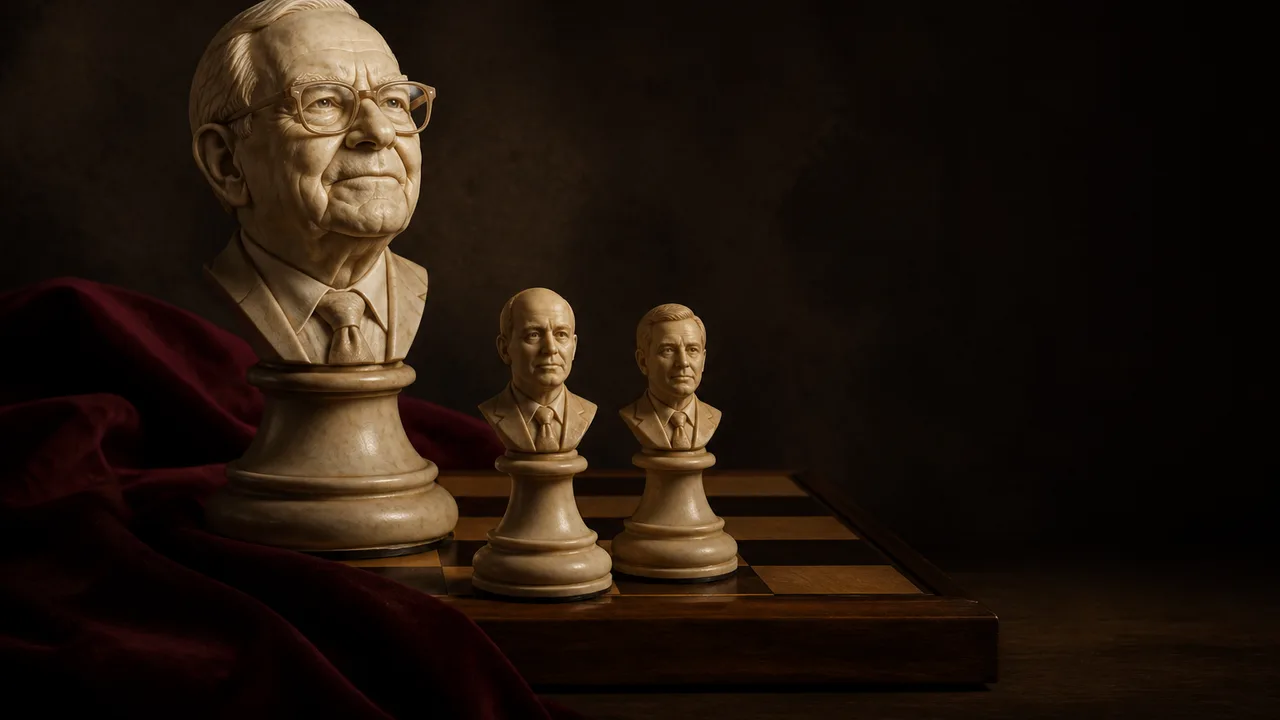
Warren Buffett stepped down as Berkshire Hathaway chairman on September 18, placing his son Howard in the chair while chief executive Greg Abel controls strategy and capital allocation.
Buffett, 96, becomes chairman emeritus and remains a director. Susan Decker stays on as lead independent director. The arrangement puts three people around the top table, each with a different brief: Abel runs the company, Howard Buffett guards its stated culture, and Warren Buffett remains available for judgment and perspective.
That division matters beyond the usual CEO-watching crowd. Berkshire owns businesses spanning insurance, railroads, energy, manufacturing and retail, and employs nearly 400,000 people. It also holds vast stakes in public companies. Decisions made in Omaha can affect insurance customers, railway workers, energy investment and hundreds of billions of dollars in shareholder capital.
The company's announcement and Buffett's shareholder letter describe an orderly succession. Buffett wrote that “Father Time always wins” and called Howard “a policy the shareholders own and hope never to claim against.” Abel said Howard would serve as guardian of Berkshire's culture and values.
Insurance language comes naturally to Berkshire. It also leaves an obvious question: What event would cause shareholders to make a claim on that policy?
A Handover Conducted in Installments
The chairman change completes another stage of a transition that Berkshire has stretched across more than a year.
Buffett announced at the May 2025 annual meeting that Abel should become CEO at the end of that year. Abel formally took charge on January 1, 2026, while Buffett retained the chair. In November 2025, Buffett had also said he would stop writing the annual report and speaking at length during the annual meeting, describing the retreat as “going quiet.” Howard Buffett, a Berkshire director since 1993, now oversees the board.
This history changes how the latest announcement should be read. The company has transferred duties in stages, with Warren Buffett remaining inside the boardroom throughout. Berkshire shares were down about 0.3% in premarket trading after the announcement. That muted move is consistent with investors seeing another planned step, although a single premarket reaction says little about how they will value the structure over time.
The transition also preserves a powerful shadow. Buffett led Berkshire from its textile-mill origins into a conglomerate valued at roughly $1.1 trillion. Under his tenure, the shares delivered a compounded annual return of 19.7%, nearly twice the S&P 500's return, according to CNBC.
Abel therefore inherits a business and a comparison that no successor can escape. Every large acquisition, repurchase or stretch of underperformance will be measured against six decades condensed into one intimidating percentage.
Abel's Test Sits in the Cash Account
Berkshire had $365.5 billion in cash, while its shares had risen just 1% during 2026 as the S&P 500 gained more than 11%. Those figures do not prove the cash caused the underperformance. Oil prices, Berkshire's business mix and investor demand for faster-growing companies also affect the comparison.
They do show why capital allocation will define Abel's tenure. Cash offers protection during a crisis and ammunition when assets become cheap. It can also become an expensive monument to indecision when markets continue rising.
Berkshire repurchased $4.5 billion of its shares during the second quarter. Buybacks can increase each remaining shareholder's claim on the business, provided the company pays a sensible price. They can also flatter per-share figures without improving the underlying operations. The relevant questions are what Abel believes Berkshire is worth, what opportunities he rejected, and whether repurchases beat those alternatives.
Howard's culture assignment intersects with those decisions. Berkshire's identity rests partly on patience, decentralized operating control and a willingness to hold cash when attractive deals are scarce. A chair defending those habits could protect Abel from pressure to spend for the sake of appearing busy. The same cultural argument could shelter excessive caution. Corporate culture is wonderfully convenient that way: it can explain discipline on Monday and inertia by Friday.
The strongest case for Howard's appointment rests on continuity. He has served on the board for more than three decades, and the stated division of responsibilities leaves operating strategy and capital decisions with Abel. Decker's continued role as lead independent director adds another governance channel.
The concern comes from the same facts. The longtime leader's son receives the chair specifically to preserve the longtime leader's values. Shareholders must decide whether that family connection supplies institutional memory or makes Berkshire slower to challenge assumptions inherited from Buffett. The title “culture guardian” does not define what Howard can block, what he should encourage or how the board will judge his performance.
Coca-Cola Shows Both the Power and Danger of Patience
Berkshire's Coca-Cola investment offers a useful comparison for the culture Howard has been asked to protect.
A hypothetical $10,000 invested in Coca-Cola at the end of 1987 grew to about $933,432 by September 17, 2026, with dividends reinvested. The same amount in PepsiCo grew to about $634,211, according to return figures published through Yahoo Finance. These are modelled investments, not Berkshire's actual profit, because its purchase timing and cost basis differ.
Coca-Cola's victory looks tidy from the far end of the chart. Living through it would have been messier. The shares suffered a 55.29% drawdown from July 1998 to March 2003, and Berkshire did not sell. Pepsi also beat Coca-Cola during some individual years. Berkshire's patience allowed the original thesis decades to compound, including long periods when the alternative looked better.
The comparison supports the idea behind a culture guardian. A board focused on short reporting periods might have pushed for an exit during the Coca-Cola decline. Buffett's Berkshire could tolerate looking wrong for years.
Its limits are equally important. A successful holding selected in 1988 cannot prove that keeping $365.5 billion available in 2026 will produce another Coca-Cola. Retrospective comparisons reward the winner that survived, while failed examples disappear from the motivational speech. Patience creates value when the original judgment remains sound. Otherwise, it extends the life of a mistake.
That distinction gives Howard's role practical content. Guarding Berkshire's culture should involve protecting Abel's room to wait while preserving the board's ability to question why he is waiting. If the chair supplies only reverence for Buffett's methods, the company risks converting an investing philosophy into a family heirloom.
The Evidence Shareholders Can Actually Watch
Ceremonial language will reveal little about whether the split works. Capital deployment will.
Future reports can show whether Berkshire's cash balance rises or falls, whether repurchases accelerate, and whether Abel completes a large acquisition. Investors can also examine whether Howard explains his oversight role in concrete terms and whether Decker's independent position remains visible when the board confronts a difficult decision.
Operating results deserve equal attention. Berkshire's railway, insurance and energy businesses cannot be managed through portfolio aphorisms. Safety investment, underwriting discipline, customer prices and spending on infrastructure will indicate whether decentralization still produces accountability under new leadership.
Buffett's continued presence complicates the evaluation. Abel can consult him, and shareholders may attribute successful decisions to Buffett while assigning failures to the successor. A clean assessment of Abel may have to wait until Berkshire makes a large decision that Buffett clearly did not direct.
The September 18 announcement gives Berkshire an operating chief, a family culture chair, a lead independent director and the former boss still seated on the board. That design could separate responsibilities without severing institutional memory. It could also blur who owns a bad decision when the first serious claim arrives.
More Like This
Chelsea Stake Sale Would Put Clearlake in Full Control
Chelsea's reported £950 million stake sale would give Clearlake full control, raising questions over spending, cash flow, stadium plans and exit timing.
Frontier-Tech Baskets: Diversified Label, Concentrated Risk
Frontier-tech baskets package AI, robotics and energy themes into one ticker. Here is why thematic diversification can hide concentration risk in the fine print.
How Dynasty Trusts Keep Heirs Rich but Powerless
Dynasty trusts, dual-class shares, and private foundations don't just preserve wealth—they strip heirs of any real control over it. Here's how the architecture works.
Druckenmiller's Bets and the Workers Behind Them
Druckenmiller's Q1 2026 portfolio shift reveals capital flows into Natera and YPF—and raises hard questions about the workers those bets depend on.

Greg Abel Takes Charge at Berkshire Hathaway
Greg Abel succeeds Warren Buffett at Berkshire Hathaway. What Alphabet's rising portfolio position tells us about where the company may be headed.

Youth Economic Inactivity Is a Structural Problem
262 million young people are NEET worldwide. Unemployment figures miss most of them. Here's what the data actually shows about youth economic disengagement.
Blackstone's Career Ladder, From Analyst to Partner
From a $90K analyst seat to Schwarzman's billion-dollar paycheck: how Blackstone's career ladder works—and why private credit is quietly rewriting it.