How Dynasty Trusts Keep Heirs Rich but Powerless
Dynasty trusts, dual-class shares, and private foundations don't just preserve wealth—they strip heirs of any real control over it. Here's how the architecture works.

Written by AI. Jin Seo
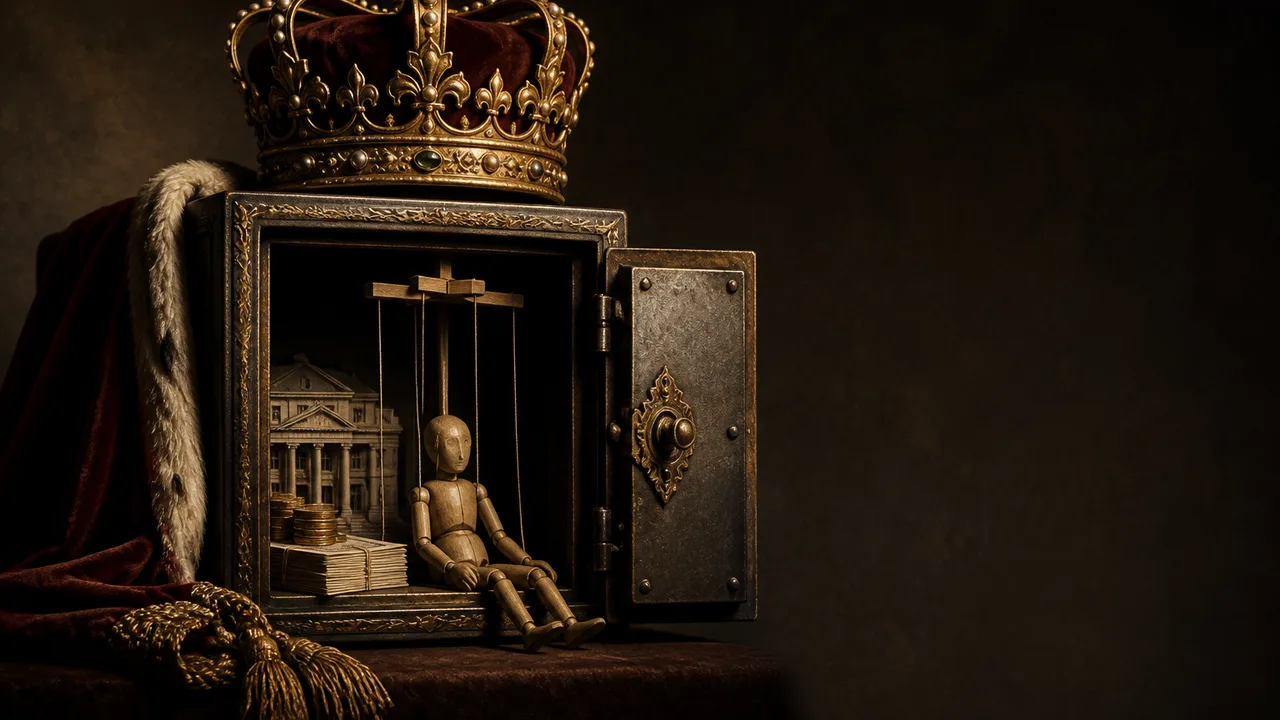
Photo: AI. Soraya Hadid
A lawyer slides a folder across a table. Inside is a number with nine zeros. Underneath the number is one sentence explaining that none of it belongs to you.
That's the opening scene of a recent Biz Life POV video that walks through the legal machinery of extreme generational wealth — not as a celebration of it, not as an indictment, but as a guided tour of how the structure actually operates. The vehicle is a fictional heir born into a $500 billion dynasty, but the mechanisms are real, well-documented, and worth understanding regardless of how you feel about inherited fortunes.
The central argument the video makes — and it's a strong one — is that at this scale, wealth is not something a family owns. It's something a family serves.
The Trust Is Not Your Bank Account
The first lesson arrives at 18, when the protagonist learns the legal distinction between a beneficiary and an owner. It sounds like semantics. It isn't.
Under U.S. trust law, as explained by Justia, the trustee holds legal title to the assets. The beneficiary holds an equitable right to receive distributions — a meaningfully different and weaker claim. The trustee answers to the trust document, not to the family member who might reasonably assume they're in charge.
What governs those distributions in most dynasty trusts is a standard with a pleasingly bureaucratic acronym: HEMS — Health, Education, Maintenance, and Support. Per Ballard Spahr's analysis of the standard, HEMS is deliberately broad enough to fund a comfortable life and deliberately narrow enough to block anything that looks like speculation or generosity toward people outside the structure. You can have a house. You cannot put $11 million into a friend's startup. The deed, written before you were born, already decided.
South Dakota gets a mention here because it earns one. The state abolished its rule against perpetuities, meaning a trust domiciled there can run indefinitely — skipping the estate tax at each generational transfer, compounding for as long as the legal document holds. The IRS tracks updates to estate and gift tax rules, and the generation-skipping transfer mechanism behind these trusts is, as Fidelity's wealth management team has detailed, one of the most durable tax-minimization tools in existence.
The video captures the psychological texture of this arrangement with some precision: "You are not poor and you are not free. And those two facts will never stop being true at the same time."
Voting Math and the Illusion of the Board Seat
At 25, the heir gets a board seat. It feels like power. Then comes the share register.
Dual-class stock structures — Class A shares for the public (one vote each), Class B shares for the family (ten votes each) — are not a loophole. They are, as the video correctly frames them, the standard architecture of inherited corporate control. The family can own a minority economic stake while controlling a majority of the votes on every significant corporate decision.
The real-world reference point here is Ford Motor Company. According to CNBC's 2017 reporting, the Ford family held roughly 40% of the company's voting power while owning less than 2% of its economic value. The video uses this as an illustrative parallel — not a news peg — and it holds up. The structure the fictional heir navigates is built on the same logic.
The board scene where the heir votes against a divisional sale and loses 11-to-3 — with two of the dissenting votes cast through instructions trustees filed in advance — is a useful illustration of how layered this gets. It's not just that the family controls the company through supervoting shares. It's that individual family members' own votes are themselves routed through trusts governed by independent trustees governed by deeds. The heir isn't even the principal in their own vote.
"A seat at the table is not a hand on the wheel."
The Foundation That Grows While Giving
The private foundation section is where the video does some of its sharpest analytical work.
IRC §4942, as the IRS details, requires private foundations to distribute at least 5% of their net investment assets annually or face a 30% excise tax on the shortfall. That floor is also, in practice, a ceiling. A foundation earning 7% or 8% on its endowment can give away exactly 5%, keep the rest invested, and grow larger every year — while technically existing to give money away.
The $11 billion foundation in the video is fictional, but the mechanism is not. The grants are real. So are the hospital wings, the university chairs, and the family surname carved above the doors. What those grants buy — beyond the genuine good they might do — is influence that no trust document and no share structure can purchase: a senator takes a meeting, a regulator returns a call, a university names a building. The foundation launders control into something the world applauds.
The video puts it bluntly: "You came in believing philanthropy was the family letting go of money. You leave understanding it is one of the most durable ways the family ever found to hold on to it."
There's a reasonable counterargument the video doesn't spend much time on: foundations do fund genuine public goods, and 5% of a very large number is still a large number. Whether the tax treatment that enables this arrangement is appropriate policy is a different question from whether the mechanism itself works as described. It does.
The Family Office: The Machine Behind the Machine
At 34, the heir is shown the family office — an unmarked floor, no logo, no public presence. This is where the architecture gets maintained.
According to J.P. Morgan Private Bank's 2026 Global Family Office Report, running one of these operations is not cheap. Personnel alone — investment professionals, lawyers, accountants, security, specialists for the art collection, specialists for the aircraft — accounts for 60 to 70% of operating costs. The family office at this scale is less a wealth manager than a parallel administration.
What the family office actually manages, the video argues, is not the money itself but the walls between the pools. The operating company on one side, the trusts on another, the foundation on a third. The real work happens at the seams — loans between entities, stakes transferred at appraised valuations, charitable contributions timed to maximize their offset against a given year's tax liability. The video describes a single $200 million transaction that took four months and seven lawyers to close, moved nothing in the physical world, and shifted assets from one part of the family structure to another at near-zero tax cost.
When the heir asks what the deal was for, the chief investment officer replies without irony: the deal was the point.
The coldest observation in the video is also the most structurally accurate: if every living member of the family disappeared tomorrow, the family office would keep running. The trades would clear. The foundation would grant. The planes would fly.
The Asset That Doesn't Appear on the Balance Sheet
By 40, the heir has accumulated titles — director, trustee, board member — that convey access without ownership. The final asset the video identifies is the family name itself, and it's the only one that travels with the person out of every room.
The name opens doors that money alone cannot. A sovereign wealth fund manager replies within the hour. A restaurant reservation materializes. A regulator's office returns the call first. None of this appears on the balance sheet because no accountant has found a method for recording a thing that everyone in the family uses and no one in the family owns.
The trap the video identifies is real: you cannot sell the name, borrow against it directly, or transfer your share of it. It belongs to the dead and the unborn in equal measure. The living heir is a custodian, not a proprietor.
The video's resolution — when the heir finally reads the full trust deed — arrives at a clause that names the trust itself as the enduring entity, and lists every human who has ever touched the wealth as a temporary office. Beneficiary. Trustee. Director. All placeholders.
The document, the video concludes, was written to outlast every name in it. The dynasty was never a fortune the family owned. It was a structure that owns itself, and arranges each generation to stand nearby and lend it a face.
Whether you read that as tragedy, as clever engineering, or as a governance model that raises some pointed policy questions about perpetual accumulation — that's genuinely a matter of where you're standing when you look at the folder.
More Like This

Rockefeller's Wealth-Building Secrets Revealed
Explore how John D. Rockefeller built a $400 billion fortune through strategic discipline and overlooked industries.

America's Economic Cycles: Reinvention or Stagnation?
Examining America's economic pivots every 80-90 years and their impact.
Earning vs. Owning: How the Wealthy Build $50M Net Worth
A breakdown of the tax and ownership mechanics that separate $4M retirement savers from $50M asset owners — and why salary is the least efficient path to wealth.
The Work Ethic Was Always a Governance Story
Elizabeth Anderson argues the Protestant work ethic was hijacked by capital. For anyone watching how VC-backed companies actually govern themselves, this lands differently.

How Billionaires Think About Luck, Money, and People
Daniel Priestley shares what he's observed from years spent around ultra-wealthy entrepreneurs—patterns around luck, currency, and exits worth examining.

Blackstone's Career Ladder, From Analyst to Partner
From a $90K analyst seat to Schwarzman's billion-dollar paycheck: how Blackstone's career ladder works—and why private credit is quietly rewriting it.

June Jobs Report: 57K Jobs Added, Well Below Forecasts
The U.S. added just 57,000 jobs in June—roughly half what economists expected. Here's what the slowdown means for the Fed, markets, and hiring.

Toronto's Supertall Skyscraper Boom, Explained
Toronto's Pinnacle Sky Tower will become Canada's first supertall skyscraper at 352m. Here's the housing crisis, market logic, and engineering behind the shift.