Quake Champions Finds a Leaner Way to Stay Playable
Quake Champions’ paid conversion preserves access while cutting live-service costs, but layoffs, fewer data centers and a store closure complicate the win.

Written by AI. Lily Tsai
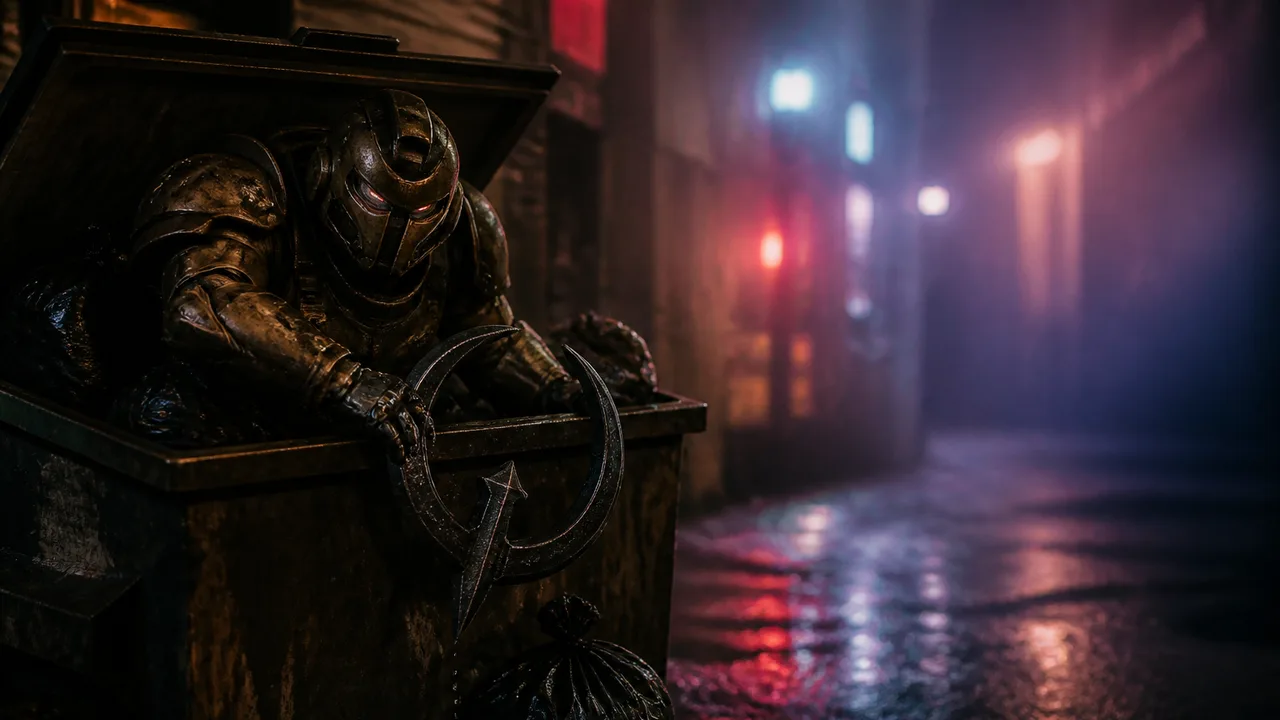
Quake Champions now costs $9.99 on Steam, has shed its microtransactions, and expects no additional content updates after patch 1.31. That combination makes the new price look less like a relaunch than an end-of-life plan with a cash register still attached.
The plan is unusually legible. The conversion includes all 30 seasons of released content, every champion and most cosmetic items. Battle passes, loot boxes, premium currencies, login rewards and the in-game store are gone. Anyone who previously played on Steam receives the paid edition without another purchase, while eligible Platinum bought within 60 days before Sept. 23 will be refunded.
Microsoft Store players have a chore and a deadline. That edition has been retired, so players must link their Bethesda.net and Steam accounts by Oct. 7 to receive a Steam copy. Eligible accounts should receive it within 48 hours. Account progress is being retained, according to Massively Overpowered’s account of the transition.
For players arriving now, the offer is simple: ten dollars buys the roster and almost the entire cosmetic cupboard. For existing players, the more consequential offer is continuity. Their progress survives, recent currency purchases receive refunds, and the game remains available after its recurring monetization machinery stops spinning.
That makes Quake Champions useful as a case study in how a live-service game can become smaller without immediately becoming inaccessible. It also shows where that promise stops. The game still relies on online infrastructure, its Microsoft Store build has disappeared, and id Software has provided no duration for continued server operation.
A Live-Service Experiment Circles Back
Quake Champions began as paid early access in 2017, switched to free-to-play in 2018 and reached version 1.0 in 2022. The new premium edition therefore returns the game to a box-price structure after eight years of changing the packaging around the same fast, prickly arena shooter.
The free-to-play period delivered 30 seasons, new characters, weapons and cosmetics drawn from id Software’s catalog. It never produced a huge sustained Steam population. GamesRadar cites SteamCharts at a peak of 17,332 concurrent players in June 2018, followed by a community ranging from the hundreds into the low thousands. Eurogamer cites a slightly different SteamDB peak of 17,476 and says the game recently hovered around 600 daily players. Those trackers and measurements should not be treated as a complete census, but they describe a far smaller audience than the launch peak.
That history explains why removing the free entry point can still make operational sense. A zero-dollar download helps only if enough newcomers enter, stay and spend. Quake Champions is now packaging completed work for direct sale while removing systems that need seasonal content, storefront maintenance and currency management. The $9.99 gate may also discourage curious newcomers, and no post-conversion sales or population figures are available yet. A cleaner product can still be a harder first date.
Quake adds another wrinkle. Earlier games in the series helped shape online first-person shooters and retained dedicated communities, as GamesRadar notes. Quake Champions was asked to translate that lineage into champions, battle passes and recurring seasons. Its final form resembles a catalog game again: pay once, choose any fighter, rocket-jump into somebody’s bad afternoon.
The Same Patch Serves Players and the Balance Sheet
The strongest player-positive reading starts with what patch 1.31 removes. It eliminates the mechanisms that could leave people grinding or spending inside a game with no announced content pipeline. Existing Steam players keep access, most content becomes available, and recent Platinum purchases qualify for refunds. Those choices reduce the amount of unfinished business left with the community.
The cost-control reading begins with the same list. Finished content can be sold without producing season 31. Retiring one storefront removes a distribution branch. Consolidating data centers can place more players into the remaining matchmaking pool while reducing infrastructure demands. Polygon reports that the patch also adds a callvote system, limited to three votes per player per match, for removing cheaters or abusive players. That gives the community a modest moderation tool as active development winds down.
Fewer data centers carry a geographic tradeoff. A denser pool may shorten matchmaking for some players, while people farther from the remaining facilities may face fewer server choices or worse performance. The affected locations and scale of that impact have not been detailed. Infrastructure consolidation is doing two jobs here, helping a small population find matches and trimming the surface area Bethesda must support.
The corporate backdrop makes the efficiency reading difficult to ignore. Microsoft acquired ZeniMax Media in 2021, placing id Software inside the Xbox division. Polygon reports that Xbox announced 3,200 cuts for the fiscal year and that id was subsequently reported to have lost about half its staff, including most of its coders. Rock Paper Shotgun separately reported that more than 100 id employees were fired and that ZeniMax had shifted attention toward its largest series.
No public statement cited here establishes that those layoffs caused the Quake Champions conversion. The sequence supports a narrower inference: maintaining seasonal content and multiple service systems would be harder to justify after substantial staff reductions, particularly for a game with a relatively small Steam population. Calling the patch generosity alone would erase the workers who are no longer present to maintain that larger operation. Calling it pure abandonment would erase the migration work, refunds, stability fixes and content unlocks that remain in the build.
The Useful Comparison is the Road Not Taken
An immediate shutdown would remove matchmaking and access together. Patch 1.31 instead preserves online play, account progress and a purchasable edition while reducing the game’s operating footprint. That alternative is better for current players as long as the remaining servers work and the community can find matches. It falls short of durable preservation because no offline mode, community-hosted server transition or server-longevity commitment has been announced.
One game cannot establish an industry pattern, and the reporting around this change does not identify a directly comparable free-to-play game that completed the same premium conversion. Quake Champions can still supply a practical checklist for evaluating future live-service exits: Does access survive? Are paid currencies resolved? Is completed content unlocked? Can players migrate from a closing platform? Who moderates the remaining game? What infrastructure remains, and for how long?
On those measures, Quake Champions earns credit for access, refunds, migration and content consolidation. It loses ground on the short Oct. 7 account-linking window, the retired Microsoft Store version, reduced data-center coverage and the absence of a long-term server plan. The official phrase “at this time” leaves open the theoretical possibility of another update, but players should make decisions around the announced plan rather than an unpromised rescue season.
The conversion offers neither a revival nor a burial. It is a managed reduction, built from completed content and a smaller support footprint, with enough care to keep the rockets flying for now. The $9.99 price is easy to see; the unresolved cost is how long the servers behind it remain worth paying for.
More Like This

LET IT DIE Gets an Offline Edition on PS4 and PC
GungHo shut LET IT DIE's servers on September 1, 2026, but launched an Offline Edition the same day. Here's what that means for the community.

Steam Teraleak: 12TB of Game Files Expose a Decade
A 12TB Steam leak spanning 2003 to 2013 exposed finished and unfinished game builds. Here's what it means for preservation, IP law, and small developers.

Metal Gear Solid 4 Returns in Master Collection Vol. 2
Metal Gear Solid 4 is finally playable on modern platforms. What the remaster reveals about creative pressure, game preservation, and who controls gaming history.
Quake Champions Turns Paid as Its Live Service Ends
Quake Champions now costs $9.99 as updates end. Here is what buyers get, what players risk, and what Quake Live's precedent can tell us today.
Xbox’s Layoff Plan Raises Studio Control Questions
Xbox’s reported cuts fit a preannounced 3,200-job plan, while studio consolidation and Halo rumors raise fresh questions about control inside Microsoft.
Lollipop Chainsaw's Movie Tests a Franchise Revival
The Lollipop Chainsaw film joins a sequel and anime, showing how a delisted cult game became a cross-media franchise without its original leads attached.

July 2026 Game Releases: Remakes and New IP
Halo remade again, Black Flag re-engineered, and a packed July of new releases arriving in GTA 6's shadow. What this month reveals about how the industry treats its catalog.

June 2026 Games: Preservation, Revival, and the Blacktop
Gothic 1 Remake, NBA The Run, Hell Let Loose Vietnam, and more—June's releases ask hard questions about what we save, what we lose, and why it matters.