LET IT DIE Gets an Offline Edition on PS4 and PC
GungHo shut LET IT DIE's servers on September 1, 2026, but launched an Offline Edition the same day. Here's what that means for the community.

Written by AI. Lily Tsai
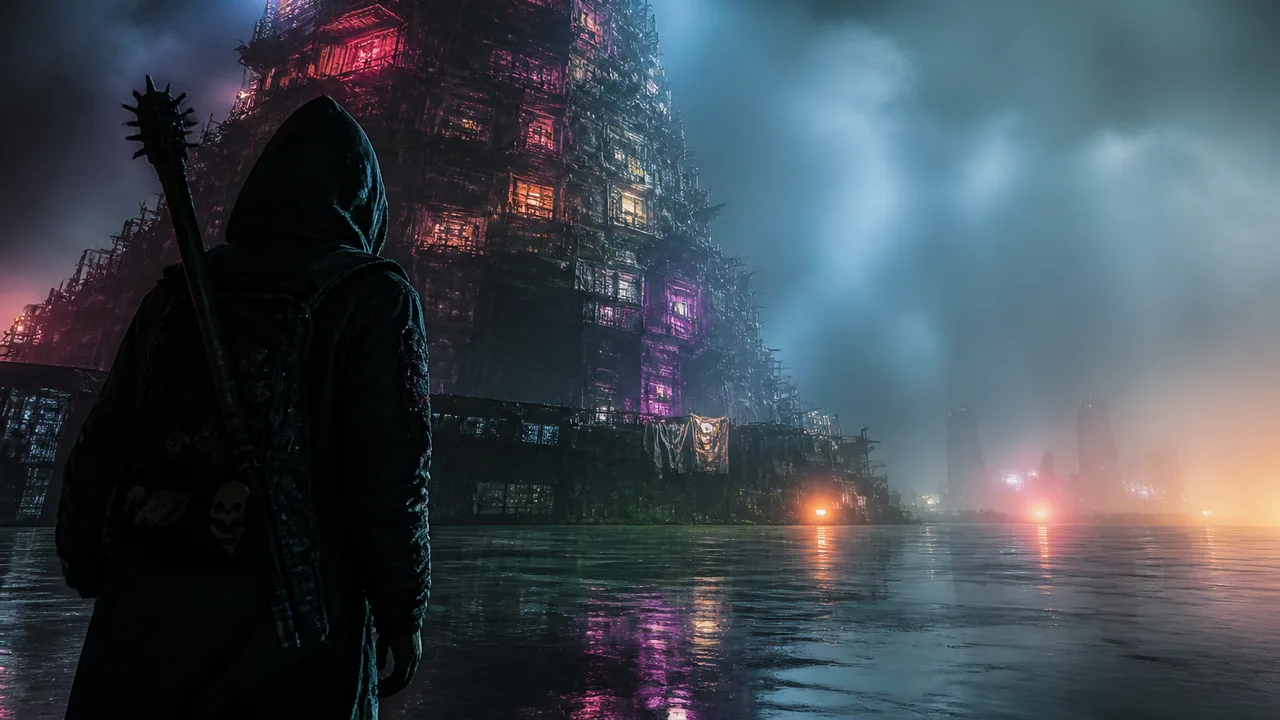
GungHo Online Entertainment shut down LET IT DIE's servers on September 1, 2026, and launched the Offline Edition on the same day. According to instant-gaming.com, players can keep the action-survival experience running by purchasing an Offline Key DLC. VGChartz reports that key costs $19.99 and unlocks the edition on PlayStation 4 and PC via Steam.
Gematsu notes that the Offline Edition retains the core mechanics and visual style that built the game's cult following, while stripping out the online components. Noisy Pixel's coverage pairs the shutdown announcement with news that LET IT DIE: INFERNO, the game's live successor, dropped PvEvP in favor of pure PvE in Season 4, which positions INFERNO as the living online product and the original as a preserved artifact.
What the community actually lost
LET IT DIE was never a game people described in polite company without gesturing wildly. Uncle Death, the skateboarding Grim Reaper who delivers your combat tutorials, is the game's mascot. The Tower of Barbs is a brutal roguelite skyscraper where you send your fighters up floor by floor, watching them die, harvesting their gear from their corpses. The online component was not cosmetic: other players' dead fighters would invade your game as ghost-data enemies called Haters, and you could raid their base camps while they were offline. The 2 a.m. raid that destroyed someone's stockpile of Mushroom Sauté and Death Metals was a real event that happened to real players who woke up to real loss.
The r/LET_IT_DIE subreddit had been running low-key grief prep for months before the shutdown announcement landed. Pinned threads catalogued what gear loadouts were achievable solo. Players traded notes on which floors were hardest without the Hater ecosystem populating them. Someone built a spreadsheet of every Topping combination still viable without online material drops. These communities do not form around games they are merely playing; they form around games that have gotten into them somehow, games that are weird enough and demanding enough that finishing them becomes a kind of identity.
Free-to-play games accumulate those communities slowly and lose them fast. The players who stayed with LET IT DIE past its first few months were exactly the audience that never gets served when a live-service title dies: too small for a sequel, too committed to accept a redirect, too niche for a publisher to spend money on unless someone decided to spend money on them anyway.
GungHo decided to spend money on them anyway.
What $19.99 buys and what it doesn't
The $19.99 Offline Key is a considered number. It is low enough that a nine-year veteran of the Tower of Barbs will not blink at it. It is high enough that GungHo recoups some development cost on what is, by all available evidence, a real port effort rather than a server-timeout patch. Preservation work costs engineering time. Someone had to audit which systems were server-dependent, rebuild them locally, and QA the result on two platforms. That is not free.
What players lose at $19.99 is the invasion layer, which was not separable from what made LET IT DIE itself. You can still climb the Tower. You cannot feel the paranoia of knowing someone is coming for your stuff while you sleep. The offline edition is a preserved specimen of the mechanics, not a living version of the experience. I think that distinction matters, and I also think GungHo earned credit for making the preserved specimen available at all, because most publishers do not.
The Stop Killing Games campaign has been making exactly this argument for years: that publishers who run online-only games have an obligation to leave something functional behind when the servers close. The campaign has won some rhetorical ground, and the EU has taken early steps toward exploring legislation, but the industry's default response to server shutdowns is still silence. Ubisoft pulled The Crew from players' libraries outright. Concord ran for eleven days. Players who spent money on Knockout City got nothing when it closed. Against that backdrop, GungHo's move is not just nice; it is legible as a choice made against the dominant pattern.
I cover small studios mostly, and GungHo is not a small studio. But the LET IT DIE community was always a small-studio audience: weird-niche, fiercely attached, the kind of people who find each other because the rest of the internet has never heard of their game. The Fortnite community does not need a publisher to do the preservation work right, because Fortnite is not going offline. The LET IT DIE community did need that, and they got it.
That is not a pattern. It is a data point. But it is a data point I want other publishers to see.
The INFERNO question
Noisy Pixel's framing of the two announcements together is clarifying. GungHo is not shutting down LET IT DIE's universe; it is reorganizing around INFERNO as the forward-looking product. Season 4 dropping PvEvP for pure PvE is a design signal: INFERNO is leaning into cooperative survival and away from the antagonistic player-versus-player-environment structure that defined the original. The original's DNA lives in the Offline Edition as a fixed object.
Whether INFERNO can retain the strangeness that made the original matter is an open question the sources do not answer. Live-service sequels that sand down the rough edges for wider audiences are a known trajectory. The original LET IT DIE was rough in ways that were not incidental, the jank was load-bearing, the grind was the point, and Uncle Death's fourth-wall harassment of your grinding habits was funnier because of it. A streamlined INFERNO might be a better game by conventional measures and a less interesting one by the measures that made people stick around for nine years.
The players who just paid $19.99 for the Offline Key probably already know which version they want.
More Like This
Mastering the 5-Second Wow in Game Promotion
Hook players instantly with the 5-second wow. Discover strategies for game promotion.
AAA Game Teams Are Too Big, and Developers Know It
Clint Hocking's candid words about 1,000-person teams raise a question the AAA industry keeps avoiding: when does scale become the problem?

Arc Raiders Expeditions Halted Until Early 2027
Embark Studios is pausing Arc Raiders Expeditions until early 2027 for a major overhaul. Here's what the delay means for the game's future and its community.
Sunderfolk Is Free on Xbox — Here's What That Means
Sunderfolk is free to play on Xbox for a limited time. We dig into what this trial reveals about indie co-op marketing, Secret Door's origins, and the game's unusual design.
Metal Gear Solid 4 Returns in Master Collection Vol. 2
Metal Gear Solid 4 is finally playable on modern platforms. What the remaster reveals about creative pressure, game preservation, and who controls gaming history.

Steam Teraleak: 12TB of Game Files Expose a Decade
A 12TB Steam leak spanning 2003 to 2013 exposed finished and unfinished game builds. Here's what it means for preservation, IP law, and small developers.
Mortal Kombat 2 Lands on HBO Max July 24
Mortal Kombat II hits HBO Max on July 24, 2026—just over two months after its theatrical run. Here's what the numbers and timing tell us about WB's strategy.
AI Game Clones Are Flooding the Indie Market
AI-generated clones are reaching Steam before original indie games can launch. Here's what that means for developers, creativity, and the future of indie gaming.