Lollipop Chainsaw's Movie Tests a Franchise Revival
The Lollipop Chainsaw film joins a sequel and anime, showing how a delisted cult game became a cross-media franchise without its original leads attached.

Written by AI. Sarah O'Brien
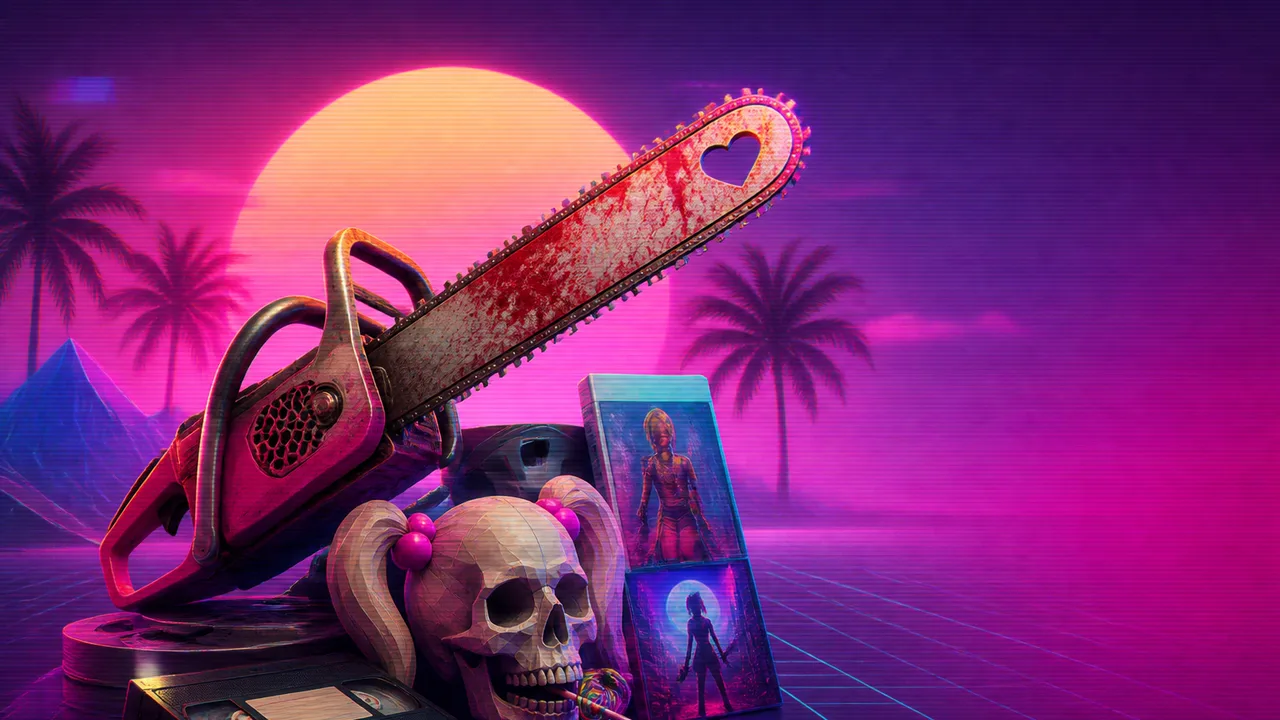
Dragami Games has licensed Lollipop Chainsaw for a live-action feature film, giving Juliet Starling another school full of zombies to dismember 14 years after her original game arrived.
The film is planned as an R-rated action comedy and a prequel to the 2012 game. Juliet will fight to save her friends and family during the outbreak at San Romero High while keeping boyfriend Nick close, a task that fans know eventually involves his still-chatty severed head. The announced production team includes producers Joe Teng, Robert Franke, Takafumi Yuki, Kirk Shaw and Patricio Rabuffetti. No cast or release date has been disclosed.
Dragami president Shohei Sato described the film as the franchise's next step. Producer Robert Franke said it would retain the game's “attitude, irreverence, and glorious excess” while working for people who have never played it. The pitch recognizes the adaptation problem: Lollipop Chainsaw has an identifiable surface, all pom-poms, rainbows and arterial spray, but its identity came from a collaboration that the film announcement does not reproduce.
Neither original creative lead Goichi Suda, better known as Suda51, nor co-writer James Gunn was named in the announcement. That establishes their absence from the announced team, rather than proving either person declined, objected or could never become involved. At this stage, the film also lacks an announced director and major studio partner.
A Revival Built Through Ownership
Grasshopper Manufacture developed the original Lollipop Chainsaw, with Suda providing creative leadership and Gunn contributing to the script. Kadokawa Games and Warner Bros. Interactive Entertainment published it in 2012 for PlayStation 3 and Xbox 360. Contemporary reviews were mixed, yet its collision of American high-school horror, Japanese action design and wilfully disreputable comedy gave it a durable cult audience.
Its route back was a corporate rescue operation. In 2022, former Kadokawa Games executives Yoshimi Yasuda and Satoshi Fuyuno formed Dragami Games. Game Developer reported at the time that the new company purchased the Lollipop Chainsaw intellectual property from Kadokawa as it took over sales of 15 Kadokawa titles.
That transaction solved one problem, ownership, while exposing another. The original contained 15 licensed music tracks. Yasuda said the new version would retain only a few licensed songs and use newly composed music elsewhere. Game Developer reported that expired music licences were the likely reason the original disappeared from digital stores around 2018, although the precise cause of the delisting was not confirmed.
Lollipop Chainsaw RePOP returned the game to current hardware in September 2024, followed by additional platform versions. It widened legal access while changing part of the historical object. A remaster with replacement music can preserve play structure, characters and much of the audiovisual design; it cannot stand as a complete substitute for the release people bought in 2012. This is why preservation work keeps colliding with contracts drafted for a product's first commercial life rather than its cultural afterlife.
The same rights purchase now supports a much larger programme. Dragami and Nada Holdings are working on an anime and Lollipop Chainsaw 2 Back2Back, while the feature film has been licensed to an international production group. A report carrying Deadline's account described the movie as part of a “new model” for globalizing Asian franchises. The sequence is clear: reacquire an unavailable property, restore it to sale, then spread it across several media.
That model can rescue a dormant game from commercial limbo. It also separates ownership from authorship. Copyright gives Dragami the capacity to commission new Lollipop Chainsaw projects; audiences will decide whether chainsaws, cheerleading and splatter are enough to carry the identity assembled by the original team.
Creator Absence is Only One Test
The new game offers a useful caution against reducing that question to two famous names. Back2Back is being developed by Hajime Tabata's JP Universe for PlayStation 5, with release planned for 2027. Original co-writer Masahiro Yuki and character artist NekoshowguN are returning, even though Suda and Gunn have not been listed among its staff.
Continuity therefore exists below the headline level. One critic who played an early Tokyo Game Show build also thought the developers understood the series' humour and comic-book presentation. His hands-on account described slow, floaty combat, absent dialogue and a demonstration missing sound effects, although he believed the sound failure was a bug in his roughly 10-minute session. He repeatedly stressed that the build was unfinished and could be a year or more from release.
One early demonstration cannot predict the finished sequel, much less the quality of a separately produced movie. It does reveal the execution risk created when several revival projects are announced before any has demonstrated a finished creative direction. Dragami is asking audiences to imagine a coherent franchise while showing them fragments at sharply different stages of production.
Nada's own framing adds another consideration. In July 2025, the company said the new game would avoid “excessive creative restrictions in the name of DEI,” without explaining how that policy would affect its design. The film announcement does not say that this posture applies to the adaptation. For prospective players, the finished writing and character work will provide more information than an undefined corporate slogan.
The Prequel is Becoming a Franchise Tool
Bandai Namco offers a nearby comparison. Ahead of Ace Combat 8: Wings of Theve, the publisher launched Hour Zero, a four-episode live-action prequel designed to reveal the story leading into the new game.
Both projects use live action to give a Japanese game property an entry point beyond the console. Their scale and purpose differ. Hour Zero is a short series attached to an imminent eighth mainline game, so its job is closely tied to one launch. Lollipop Chainsaw is pursuing a full feature with no announced date while a sequel and anime are also in development. Its film must introduce Juliet to newcomers, satisfy an existing cult audience and help establish a franchise infrastructure that did not exist during the original release.
That makes the movie announcement easier to evaluate through three questions than through promises about “spirit.” Who controls the rights? Dragami. Who has been named to the creative team? An international producer group, with no director, cast, Suda or Gunn announced. What finished work demonstrates the new custodians' interpretation? So far, a remaster that broadened access while attracting criticism for its launch condition, plus a sequel build its own sympathetic previewer considered far too early for display.
None of those facts determines the film's quality. They describe a project whose commercial architecture is more developed than its publicly identified creative core. The chainsaw survived ownership limbo; whether its voice survives the franchise machinery is the question the film must answer.
More Like This
Resident Evil Finds a New Route From Game to Screen
Early reviews praise Zach Cregger's Resident Evil for translating survival horror to film while leaving room for reinvention, friction and fan debate.
The Last of Us Part 2 Mod Cancellation: Who Owns a Finished Game?
Sony reportedly asked a fan PvP mod for The Last of Us Part 2 on PC to stay private weeks before launch. What the episode reveals about modding, control, and preservation.
GTA 6's Deliberate Miss Mechanic Changes the Series
GTA 6 lets players deliberately miss shots to avoid killing cops and civilians. What this mechanic means now—and what it will mean when the servers go dark.
Lollipop Chainsaw's New Game Debuts at TGS 2026
Dragami Games brings a new Lollipop Chainsaw title to Tokyo Game Show 2026, complete with a world premiere demo and a self-described DEI-free stance.
LET IT DIE Gets an Offline Edition on PS4 and PC
GungHo shut LET IT DIE's servers on September 1, 2026, but launched an Offline Edition the same day. Here's what that means for the community.

Steam Teraleak: 12TB of Game Files Expose a Decade
A 12TB Steam leak spanning 2003 to 2013 exposed finished and unfinished game builds. Here's what it means for preservation, IP law, and small developers.
What Minecraft 26.2 Removes and What You Can Keep
Minecraft 26.2 nerfs duplication glitches, fixes broken villager trades, and closes mob exploits. Here's what changes and what carries over.
WoW Midnight's Economy and the Memory Stored in Icons
A WoW streamer's gold-making stream revealed something unexpected: twenty years of item iconography living as folk knowledge inside a player community.