Orbital Data Centers Resurface Amid AI Siting Backlash
After election wins in AI buildout areas, orbital data centers are back in the conversation. The idea faces hard questions about cooling, cost and local politics.

Written by AI. Marcus Chen-Ramirez
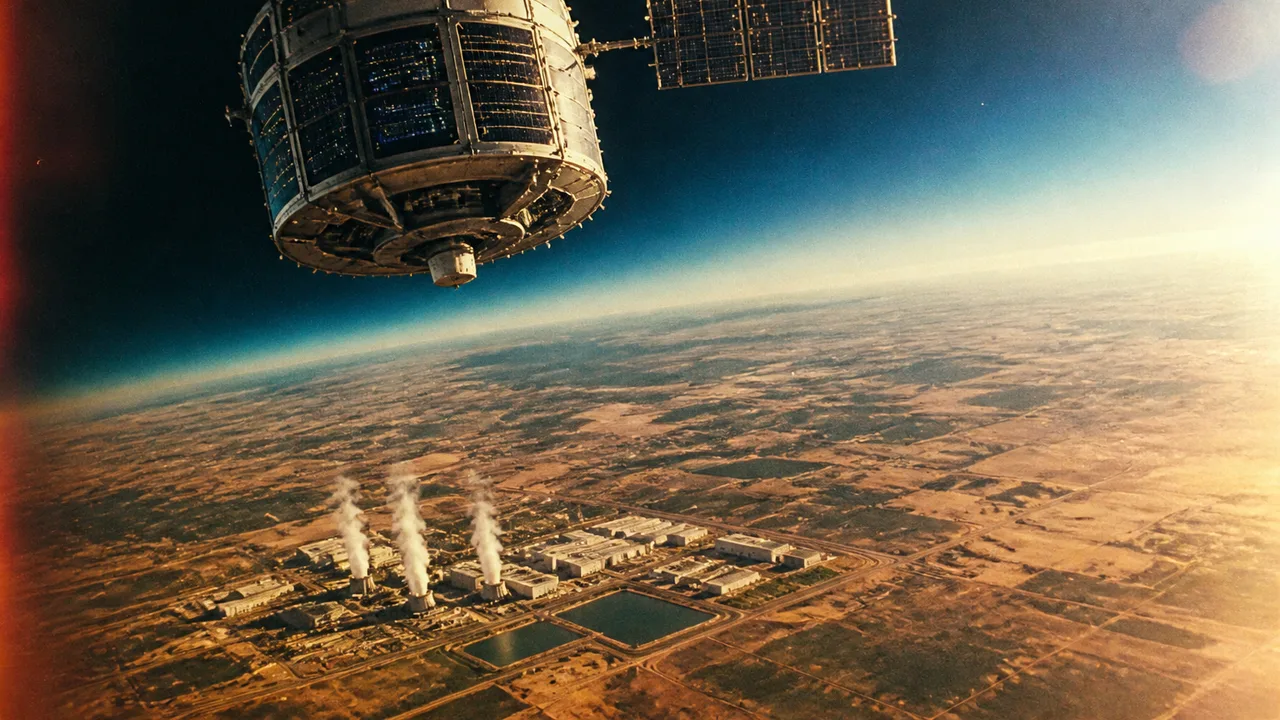
After Democratic wins in Texas and other AI infrastructure hot spots, some data-center advocates floated low Earth orbit as a place to put computing facilities. The orbital idea came without project specifications, a timeline or cost estimates that would allow a comparison with a facility on the ground.
That leaves two stories moving at very different speeds. One concerns elections and the local decisions that can slow or reshape a data-center project. The other concerns whether a large computer in space could deliver useful work at a price anyone would pay. An orbital proposal may be a response to the first story; it still has to answer the second.
Why Local Elections Reach the Server Room
A data center takes up land, draws electricity, needs cooling and requires connections to communications networks. Each requirement creates decisions outside the developer's control. Utilities plan capacity and decide how costs are allocated. Local officials weigh zoning and permits. Residents ask what happens to water supplies, roads, tax revenue and power bills.
The post-election backlash facing the AI data-center boom has brought those questions into sharper political focus. Texas has been a prominent center of the proposed buildout, and its political outlook for data centers is now uncertain. An election result, though, is not a permit denial. Officials still have to make decisions about individual projects, and voters who question a proposed facility may disagree about what terms would make one acceptable.
Those terms can be consequential. A developer might offer to pay for grid upgrades, use a different cooling design or build on a different site. A community might decide that no such offer addresses its concerns. The outcome depends on a project's demands and the local institutions with authority over it, rather than a single national verdict on AI.
That is why rural opposition deserves more attention than a simple partisan label allows. The people weighing a project may want investment and still object to its water use or the terms of its power connection. Developers, meanwhile, need enough certainty to buy equipment, arrange electricity and begin construction. Politics enters the spreadsheet long before the first server arrives.
The Strongest Case for Going Up
The appeal of orbit is straightforward: a computing facility there would not require a large parcel of land in a town considering a data-center permit. Solar panels could supply power. Some workloads might benefit from processing information near the satellites that collect it, then sending a smaller result to Earth. If the data begins in orbit, moving the calculation closer to it could reduce the amount that needs to travel to the ground.
Those possibilities deserve an engineering assessment rather than a reflexive joke about putting the cloud above the clouds. They also describe different products. Processing satellite observations near their source is one proposition. Moving a large share of today's terrestrial AI training or consumer services into orbit is another, with far greater demands for power, cooling, communications and hardware maintenance.
A useful proposal would identify the workload first. How much information must reach the computer? How quickly must a result return? How much equipment must operate together? A small orbital system serving satellites could answer those questions differently from a facility expected to substitute for a ground-based AI cluster. Calling both a “space data center” conceals the design decision investors and customers would actually have to make.
Space Changes the Cooling Bill
Computers turn much of the electricity they use into heat. On Earth, operators can move that heat through air or liquid and release it into the surrounding environment, subject to the costs and local constraints of the cooling system. In a vacuum, a spacecraft has no outside air to carry heat away. It must move heat to radiator surfaces that release energy by radiation.
Radiators take up area and add mass. They must work alongside solar panels, power storage, computing equipment and the structure holding everything together. More computing power means more heat to reject. The cooling and bandwidth problems therefore grow with the ambition of the facility. Cheaper launches could help get equipment into orbit, but they would not eliminate the need to power it or get rid of its heat.
Communication creates another dividing line between workloads. A service that repeatedly exchanges large amounts of data with users on Earth needs a reliable path between the orbital computer and ground networks. The path's capacity and delay would become part of the service customers buy. For a workload that can process information already in space and send down a compact answer, those constraints may look different. The location of the data matters as much as the location of the processors.
Then comes upkeep. Data-center operators on Earth can replace a failed component or install newer chips without launching a spacecraft. In orbit, operators would need to design for failure, repair or replacement from the start. Launches and eventual disposal would also have to be included in the cost of delivering each unit of computing. A comparison based only on the price of electricity would miss much of the business.
Which Costs Move, and Which Stay?
An orbital facility could avoid some land-use disputes around the computer itself. It would still depend on ground infrastructure: launches, communications links and customers who can get data to and from the system. Its operators would face questions about use of orbit and what happens to hardware at the end of its life. Moving the servers changes who handles those questions; it does not make infrastructure independent of public decisions.
The politics cuts in more than one direction. If communities want the benefits of development on different terms, improving terrestrial projects may be faster than building a new orbital industry. Developers could also decide that uncertainty around permits and utility arrangements makes an expensive alternative worth exploring. Neither possibility requires assuming every Democratic victory blocks construction or every orbital concept is fantasy.
The next useful disclosure would look less like a destination and more like a specification: the intended workload, power supplied to the processors, heat rejected by the cooling system, data sent to and from Earth, expected hardware life and total cost per unit of computing. Those figures would let customers compare an orbital service with a ground facility. Until then, elected officials and communities will keep deciding where terrestrial capacity gets built, while orbit remains an idea waiting for a workable budget.
More Like This

South Korea's 2027 AI Budget Tests Its Sovereign Ambition
South Korea proposes 21.3 trillion won for AI in 2027. Its sovereign model ambition hinges on spending choices, computing access and measurable public results.
Anthropic's IPO Exposes AI's Power and Demand Risks
Anthropic's IPO filing pairs rapid growth with warnings about model safety, electricity and demand. Its cloud ties could carry the consequences beyond one company.

AI Data Center Expansion Confronts Political Backlash
A new poll finds 61% of likely voters oppose AI data centers, exposing political risks around power, water, permits, tax breaks and local community trust.

Google's Suncatcher Is an Orbital AI Hardware Test
Google's Project Suncatcher will test four AI chips in orbit. Cooling, laser links and launch costs will decide whether orbital computing can scale at all.

Data Center Backlash Is Missing the Climate Question
Data center opposition is reshaping projects over water, bills and noise, while climate outcomes depend on separate grid, generation and energy rules.

Alibaba’s Zhenwu V900 Claims Still Need More Evidence
Alibaba says its Zhenwu V900 triples prior performance. Disclosed specs, Huawei comparisons and cloud plans show what can and cannot yet be verified.

AI Agent Hallucinations: Causes, Risks, and Fixes
AI agents don't just hallucinate—they act on it. Here's what causes agentic AI errors, why they cascade, and what system design can actually do about them.

How to Structure Content So AI Search Cites Your Brand
Brian Dean's four-part framework for getting cited by ChatGPT, Gemini, and Claude—without chasing tactics that expire in three weeks.