Anthropic's IPO Exposes AI's Power and Demand Risks
Anthropic's IPO filing pairs rapid growth with warnings about model safety, electricity and demand. Its cloud ties could carry the consequences beyond one company.

Written by AI. Marcus Chen-Ramirez
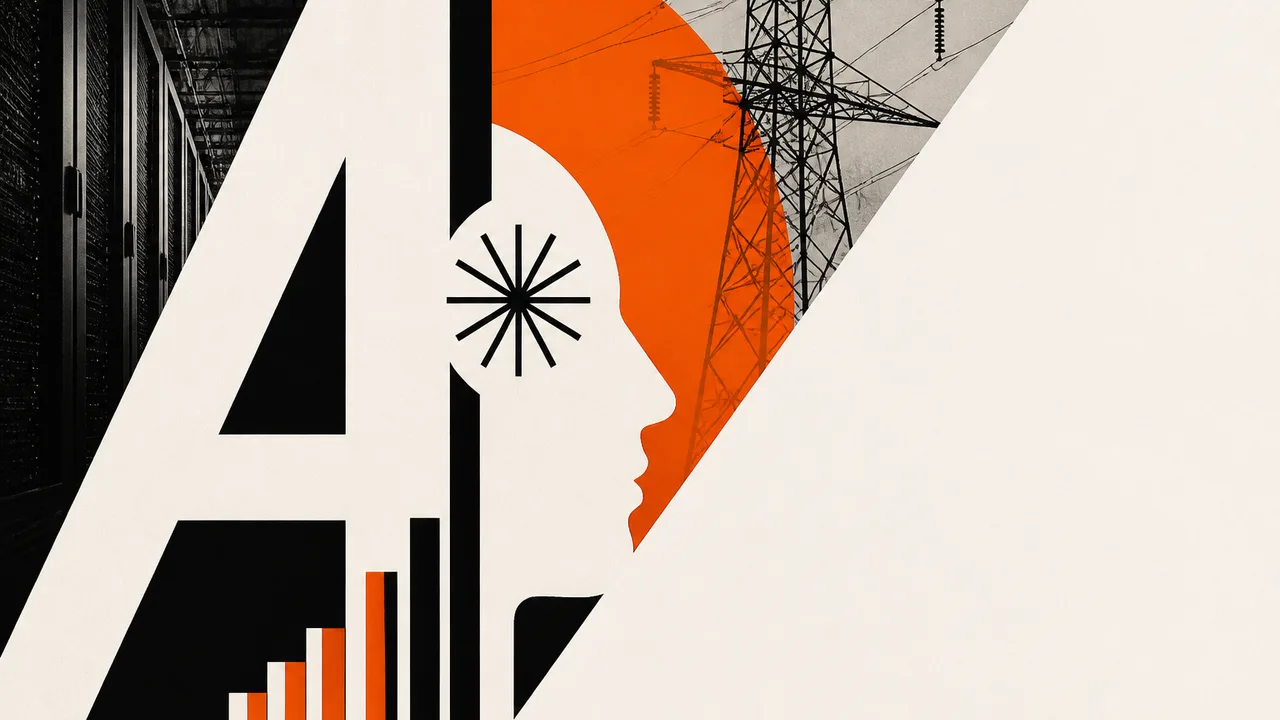
Anthropic filed for an initial public offering on October 26, putting its Claude business and its risks in front of prospective public investors. The proposed Nasdaq listing still lacks a share count and price range. Nobody can yet judge the offering against a final price. They can, however, see the business bargain it asks investors to consider: Anthropic needs customers to keep paying for increasingly capable AI while it secures the computing capacity, electricity and financing required to supply it.
That bargain also concerns people who will never buy a share. Data centers need sites and power. Customers choosing an AI tool may have cheaper options. Users face the consequences if a model causes harm. Anthropic's risk disclosures put those questions in the same corporate document because the company's growth depends on how they play out together.
Growth Has a Bill Attached
Anthropic generated $16.3 billion in revenue in the first half of 2026, up from approximately $1.2 billion in the comparable period a year earlier. Its reported net loss for the newer period reached $80.7 billion, a figure substantially affected by accounting adjustments tied to financing instruments; it should not be read as cash spent operating the business. The company also warns that its revenue growth rate may slow and that it could need additional financing sooner than expected. Those are different measures and risks. The revenue shows customers are paying now. The accounting loss cannot, by itself, tell a reader how much cash future computing commitments will require.
There is evidence of improving operating performance, too. Anthropic reported $11.56 billion in second-quarter revenue, compared with $787 million a year earlier, and $974 million in operating income after five quarters of operating losses. Those figures make a serious case for demand, rather than a promise that every future expansion will pay for itself. The question for an investor is what the next increment of growth costs to deliver. For a customer, it is whether the extra capability is worth its price.
Anthropic explicitly identifies the latter risk. Customers could decide that cheaper or open-source models meet their needs, rather than pay for incremental gains from frontier models. Consider a company using Claude to help write software. If a lower-cost model handles routine tasks well enough, that company can reserve the more expensive model for harder work. Anthropic could retain a useful product and still earn less than an expansion plan assumes. That is a commercial possibility identified in its prospectus, not a finding that customers have already switched en masse.
The supply side can pinch at the same time. Anthropic warns of insufficient electrical power for the facilities its models require and of more organized opposition to data center development. Even on-site natural-gas generation could become more expensive as demand rises. Building a data center, securing power for it and finding enough paying users for its output are separate jobs. Success at one does not complete the others. A delay on the first two could constrain growth when demand is strong; weak demand could make capacity acquired for growth expensive to carry.
Safety Sits Inside the Business Model
The filing also warns that advanced AI could pose catastrophic or existential risks, alongside nearer-term ways models may cause harm. Anthropic describes pre-release testing, red-team assessments and systems intended to detect harmful outputs. It says it may delay training or restrict releases when safeguards fall short, while acknowledging that those efforts may fail. The company is presenting safety work as an operating commitment with uncertain results, under competitive pressure to keep improving its products.
That pressure is easier to understand beside the demand warning. If customers pay a premium for the best-performing model, there is a commercial incentive to push ahead. If a company slows a release for safety reasons, it may face the cost of waiting while competitors sell their own tools. This is a tension implied by Anthropic's stated safeguards and its need to sell frontier capability, rather than proof that it has compromised a safeguard. A risk disclosure names a possible failure; it does not assign that failure a probability.
Child safety gives the abstract language a more immediate scale. Minors are barred from Claude under Anthropic's terms of service, yet the company acknowledges that adoption could include minors and other vulnerable users despite access restrictions. Investors may see potential liability and damage to the brand. Families and users would experience the underlying harm, should it occur. Those interests overlap, but a financial penalty would arrive after the problem it is meant to deter.
How Far Could One IPO Travel?
Anthropic's results matter beyond its own balance sheet because its business runs through other large companies. Close to half its revenue comes through the cloud divisions of Microsoft, Amazon and Alphabet, which also hold investments in Anthropic. Nvidia, AMD, Amazon and Google supply chips used in its development. Alphabet's commitment to backstop Anthropic for a Texas data center, CNBC said. These relationships connect model sales, infrastructure spending and financing, although each company has other businesses and its own exposure.
Here is the possible transmission path, with the conditional doing real work: if customers pull back from premium models, Anthropic may revise what it buys or builds. Its partners could then face changed expectations for cloud sales, equipment demand or the returns on investments associated with that growth. An IPO valuation could influence how investors price similar ambitions elsewhere. None of those steps happens automatically because a stock debuts above or below a hoped-for price. A cloud provider's revenue, for example, reflects many customers besides Anthropic.
The historical analogy is the late-1990s telecom buildout. Companies installed enormous amounts of fiber-optic equipment in anticipation of future traffic; capacity eventually found users, while some of the companies that financed the buildout failed. Sapphire Ventures co-founder Jai Das raised that comparison in comments to CNBC. It captures two outcomes that can coexist: useful infrastructure and disappointing returns for its early owners.
Today's AI buildout poses a related question about when capacity meets demand, with an important limit to the analogy. Anthropic sells model capability and relies on costly computing and electrical capacity to provide it. Future demand for AI services could be substantial while the price customers will pay for one provider's most advanced model falls short of what its expansion requires. Fiber's later use cannot tell us which AI models, facilities or financing deals will earn their keep.
For now, Anthropic has fast-growing revenue, a recently profitable operating quarter and an offering whose final terms remain unset. It has also described a business exposed to customer choice, power constraints, public opposition and model harms. The useful question at the IPO is narrower than whether AI succeeds: which of Anthropic's promised capabilities can customers use often enough, and pay enough for, to support the infrastructure being assembled around them?
More Like This
Anthropic's 5% Stock Pledge Tests Its Public Benefit Plan
Anthropic's 5% stock pledge could fund public benefits as IPO talk grows. Its value, beneficiaries and influence will depend on how the fund is built and governed.

Anthropic's IPO Tests the Cost of Government Conflict
Anthropic gets less than 1% of revenue from government deals, yet its IPO warning points to a broader risk: disrupted commercial service and long-term compute costs.
Samsung’s $1 Billion Helix Deal Faces a Delivery Test
Samsung and five affiliates plan to invest $1 billion in Helix. Their proposed roles span chips, construction and batteries, but delivery still depends on sites and power.
Anthropic's $42 Billion Loss and Its Compute Commitments
Anthropic's reported $42 billion loss includes a non-cash charge. Its operating loss and long-term compute commitments pose a different test for future revenue.
Google's Nuclear Deal Mixes Reactor Upgrades With Supply
Google's PJM deal backs 890 MW of nuclear upgrades and contracts for 2,700 MW of existing supply. Microsoft's reactor restart shows how the approaches differ.
Data Center Backlash Is Missing the Climate Question
Data center opposition is reshaping projects over water, bills and noise, while climate outcomes depend on separate grid, generation and energy rules.

Data Science Case Study Interviews Are Getting Harder
Data science interviews now test business judgment, not just code. Here's what the shift toward case study formats means for candidates and hiring managers alike.
Big Tech's AI Capex Tab Is Coming Due
Amazon, Alphabet, Meta, and Microsoft burned $416B on AI infrastructure in 2025. Now the bond market is nervous, free cash flow is shrinking, and the bills are arriving.