Samsung’s $1 Billion Helix Deal Faces a Delivery Test
Samsung and five affiliates plan to invest $1 billion in Helix. Their proposed roles span chips, construction and batteries, but delivery still depends on sites and power.

Written by AI. Marcus Chen-Ramirez
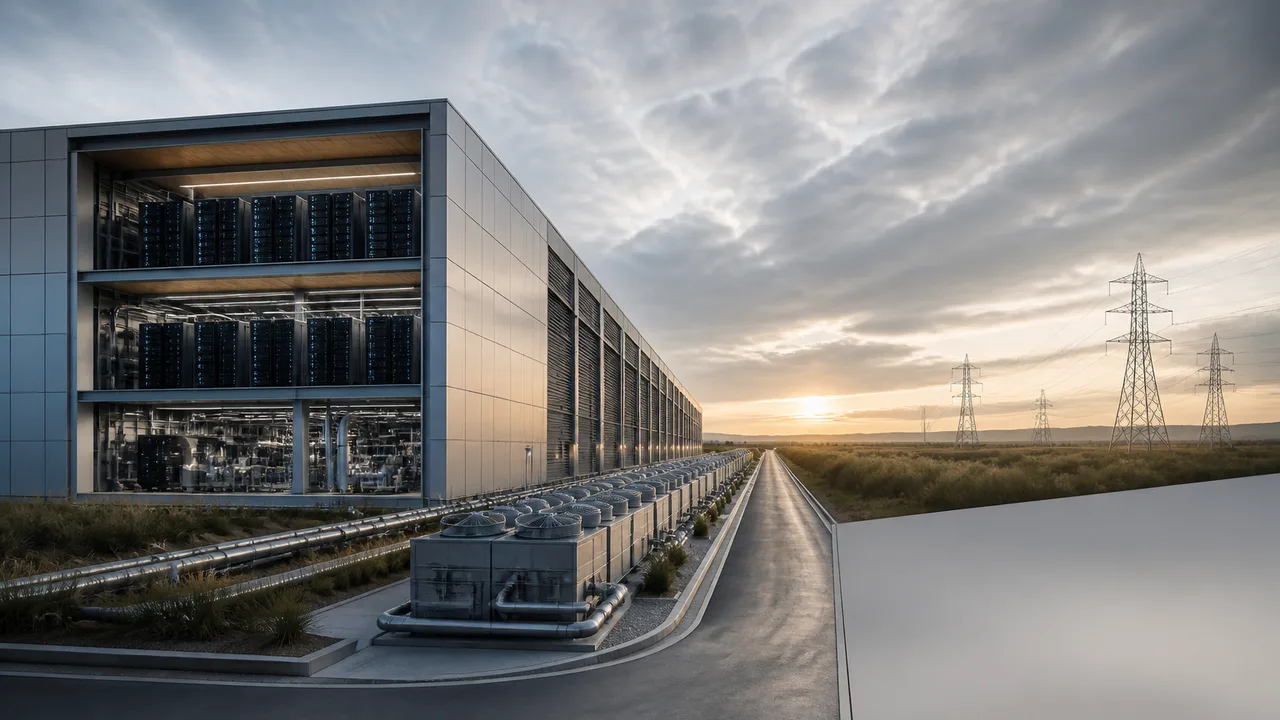
Samsung Electronics and five affiliates plan to invest a combined $1 billion in Helix Digital Infrastructure, a KKR-launched company pursuing AI data centers. Samsung Electronics accounts for $500 million of the proposed investment, with the other five companies contributing the rest. The companies also propose to connect Samsung’s chips, cooling equipment, construction and backup batteries to Helix’s work assembling sites and power for large AI customers.
The announcement names six Samsung investors, but describes delivery jobs for only three. Samsung SDS and two Samsung insurers are in the investor group without equally defined roles in building a facility. The described package gives no site, grid-connection date or quantity of power secured for a named project. A prospective customer can see a roster of potential suppliers; it cannot yet use those details to put an opening date on a calendar.
Six Investors, Several Jobs
The six companies are Electronics, construction firm Samsung C&T, IT services company Samsung SDS, battery maker Samsung SDI, and insurers Samsung Life and Samsung Fire & Marine. Under the roles described for the partnership, Electronics would make chips and cooling systems, C&T would build sites, and SDI would provide backup batteries. SDS and the insurers may have useful work to do, but their presence in the investment group does not, by itself, assign them a delivery task. Counting investors is easier than establishing who must deliver what at a prospective data center.
Helix, led by former Amazon Web Services head Adam Selipsky, aims to serve large cloud and AI companies by arranging more than a building. Its intended work includes sites, grid connections and fiber links, alongside power supply. It is targeting data-center deployment and the underlying power infrastructure. That remit gives Samsung’s proposed roles a purpose beyond separate equipment sales: a developer choosing a site could involve its builder and cooling supplier while designing the facility.
Here is the strongest case for putting those companies around one table. Construction decisions affect where equipment can go; cooling decisions affect the space and electrical provisions the building needs. If Helix and the Samsung suppliers plan for the same facility, they could settle those specifications together and coordinate orders. A customer might face fewer handoffs between the developer, builder and equipment providers. Whether that would shorten a build depends on the assignments and timetable for an actual project. The announced roles do not settle either question.
The arrangement also gives Samsung two possible interests in Helix: a stake in the developer and a route for its businesses to supply projects. Helix could gain access to construction and equipment suppliers early in planning. A prospective customer would still want to know whether an affiliate’s product suits the design, price and delivery schedule. Those questions become sharper when a supplier’s parent is also an investor. An investment commitment alone does not tell a customer how Helix would choose suppliers for an individual site.
There is a practical limit to the appeal of coordination. Even suppliers that agree on a design need a place to build it and a way to power it. Helix’s plan addresses those tasks together, which could help prevent a facility from being designed around equipment it cannot accommodate. Whether the plan succeeds will be decided project by project, where schedules and contracts can be tested rather than inferred from the number of companies at the table.
Helix Had a Power Strategy Before Samsung
KKR launched Helix with more than $10 billion in capital commitments from founding investors KKR, the Kuwait Investment Authority, Nvidia and US power company Vistra. Nvidia is a strategic partner, while Vistra is Helix’s preferred power supplier. Samsung’s planned investment would add prospective builders and equipment providers to a platform already organized around financing, computing infrastructure and energy. It would join the earlier commitments, rather than create the platform from scratch.
Helix intends to pursue energy through direct investments and arrangements with developers such as Vistra. Power was part of the plan before Samsung’s builder and battery maker entered it. But Vistra’s preferred-supplier status does not specify the electricity available to a given facility. A developer can line up equipment and a contractor while the amount of power and the timing of a grid connection remain unresolved. Helix’s broad remit puts those dependencies under one proposed package; it does not make any one site grid-ready.
The funding history also changes how to read the $1 billion figure. KKR describes the founding investors’ earlier commitments as exceeding $10 billion, while Samsung’s investment is an additional commitment. Those are amounts committed to a company, not measurements of data-center capacity. Without a site-level power arrangement or commissioning schedule, neither figure says when a cloud customer could run equipment. Capital may help Helix pursue projects, but customers ultimately need facilities with electricity, cooling and installed systems operating together.
Samsung says the agreement would move it toward a role in determining how AI infrastructure gets built. Construction and cooling offer a plausible route into those decisions: a facility designed around one cooling approach may need different equipment layouts and electrical provisions from another. That influence would depend on Helix awarding Samsung affiliates work on particular projects. The announced roles do not identify which projects they would supply or the terms of those orders.
The Narrower Supplier Problem
Amazon and Wiwynn are expanding Wiwynn’s manufacturing facility in Socorro, Texas. It manufactures and integrates server systems and racks used in Amazon’s data centers. The expansion concerns a defined hardware-supply task for an established cloud operator. Helix’s proposed arrangement spans development, construction and equipment supply for prospective facilities. The Texas factory offers no prediction about when Helix could open a site; it illustrates how a supplier’s job can be specified when the cloud customer and the hardware it needs are already identified.
The comparison has limits. Wiwynn’s factory expansion is an investment in manufacturing capacity, while the Samsung commitment is an investment in a developer with several potential supplier relationships. The money comes from different parties and addresses different stages of deployment. Wiwynn’s additional manufacturing capacity would still have to become servers installed in a working data center. Helix starts further back in the chain described here, with the site and power supply among the things it aims to arrange.
Helix’s wider approach could help the parties spot a mismatch early, such as a building schedule running ahead of an equipment order or grid connection. It also gives customers more dependencies to examine before they can put a deployment date on a calendar. A useful sign of progress would be a named project with defined supplier assignments, a construction timetable and a credible route to electricity. Those details would let a customer judge the proposed coordination by a facility rather than a corporate roster.
Samsung C&T could eventually finish a building while a grid connection remains unresolved; Samsung Electronics could be ready to ship equipment before there is a facility prepared to run it. Those are possibilities, not reported delays. For now, the announced roles and investment amounts cannot be translated into an opening date. The investors have named much of the team. The next question is where that team can switch on a customer’s hardware.
More Like This

AI Data Center Expansion Confronts Political Backlash
A new poll finds 61% of likely voters oppose AI data centers, exposing political risks around power, water, permits, tax breaks and local community trust.

Rural America's Revolt Against AI Data Centers
Bipartisan opposition to AI data centers is reshaping local politics across America. From Utah to Georgia, communities are fighting back over water, power, and broken promises.

AI Agents Could Use 100x More Energy Than Chatbots. Here's Why
Agentic AI runs one request through many model calls, searches and retries. New research says the energy cost can be over 100 times a chatbot query's.

Oracle’s Project Jupiter Notice Shifts AI Delay Risk
Oracle’s Project Jupiter notice shows how pipeline delays, local opposition and strained credit markets collide across the costly AI buildout.

Micron's AI Memory Boom Faces an Old Cycle Question
Micron's memory rally runs on AI data center demand and tight supply. Here is what would have to hold for the good times to last, and what to watch.
Google's €13 Billion Finland Bet: What It Buys and What It Risks
Google plans its largest European investment ever: €13 billion in Finnish AI data centers. What Finland gains, what it pays, and how to judge the deal.

Gemini Nano Gets Faster on Pixel Without Retraining
Google's frozen Multi-Token Prediction retrofits speed gains onto existing Gemini Nano models—no retraining needed. Here's what that means for on-device AI.

Google's Open Knowledge Format for AI Agents
Google's Open Knowledge Format promises to fix how AI agents navigate knowledge bases. Here's what it actually does, what it doesn't, and why the structure matters more than the tool.