Google's €13 Billion Finland Bet: What It Buys and What It Risks
Google plans its largest European investment ever: €13 billion in Finnish AI data centers. What Finland gains, what it pays, and how to judge the deal.

Written by AI. Raj Mehta
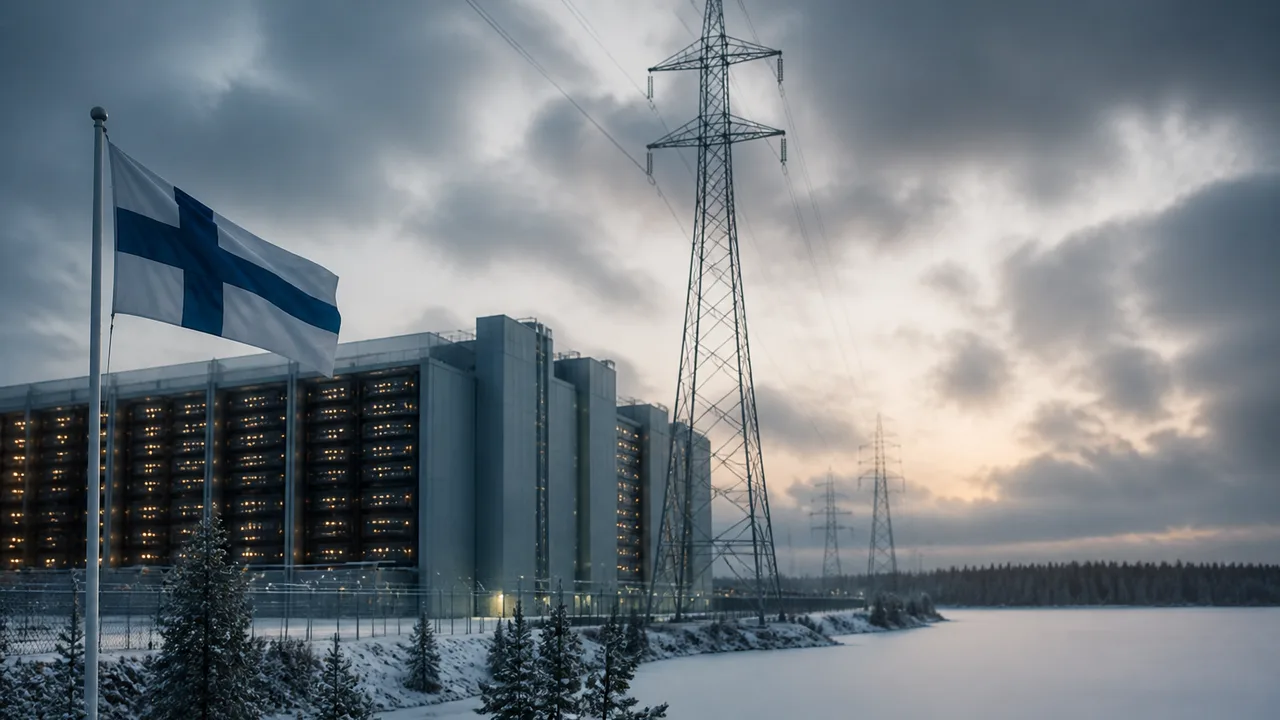
Google announced on September 9, 2026 that it will invest €13 billion, roughly $15 billion, in AI infrastructure in Finland, the company's largest single investment in Europe, according to CNBC. The money will go to four data centre sites over two years, and the reporting around the announcement flags the two resources that make Finland attractive: nuclear and wind power, per The Next Web.
The number deserves unpacking before anyone celebrates or panics. €13 billion is a headline, and headlines in this industry are calibrated for headlines. What follows is a look at why Finland won the bid, what the money actually buys, who pays the bills that don't appear in the press release, and how a government should judge whether the deal was worth it.
Why Finland, Specifically
Data centers are, at bottom, machines for converting electricity into heat. Cooling can consume a large share of a facility's energy budget, so location matters enormously. Finland's climate does part of the work for free: cold air and cold water reduce the cost of keeping servers from cooking themselves.
The second attraction is power. Finland's grid is comparatively robust, and the country has both nuclear capacity and a fast-growing wind sector, which The Next Web ties directly to the investment. AI workloads are power-hungry in a way older cloud computing was not; training and serving large models demands sustained, reliable megawatts, and hyperscalers increasingly pick countries the way shipping companies once picked coaling stations.
The third is market access. Finland sits inside the European Union's single market and its data-protection framework. For a company whose European business depends on regulatory goodwill, building infrastructure on EU soil is partly a political hedge. Local compute capacity gives Google a talking point in Brussels, where officials have been scrutinizing American tech firms' dependence on non-EU infrastructure.
YLE, Finland's national broadcaster, reports the figure as an additional investment, building on capacity Google already operates in the country. That matters: this is an expansion by an incumbent, with existing sites, staff, and grid connections, rather than a greenfield gamble.
What €13 Billion Actually Buys
Data center capex splits into land and shells, servers and accelerators, networking, and the power infrastructure to feed it all. The most expensive component in AI facilities is the computing hardware itself: GPU-class accelerators and the specialized interconnects that let thousands of chips train a single model together. A large fraction of Google's €13 billion will flow to hardware suppliers, several of them American and Taiwanese, before a single Finnish electrician is hired.
That is normal in this industry, but it shapes the local arithmetic. The Finnish share of the investment arrives through construction jobs, ongoing facilities and security work, grid fees, taxes, and the multiplier from workers spending wages locally. Studies of comparable projects have generally found data centers create few permanent direct jobs once built; a hyperscale campus might employ a few hundred people to run what cost billions.
The counterargument, made by proponents in Finland and elsewhere, runs through indirect effects: anchor-tenant credibility for further tech investment, training pipelines for engineers, cheaper local access to cloud capacity, and tax revenue over the facilities' lifetime. Whether those materialize depends on terms that are, so far, not public.
The Bills Nobody Puts in the Press Release
Three public costs deserve scrutiny.
First, electricity. Data centers of this scale can consume as much power as mid-sized cities. Finland's supply is currently adequate, but new demand of this size raises questions about whether Finnish households and industries will face upward pressure on prices during tight supply periods, and who bears the cost of grid upgrades triggered by the new load.
Second, water. Even in cold climates, large facilities draw on water for cooling. Finnish lakes and groundwater are abundant by global standards, but abundance is not infinity, and local competition for water tends to surface only after the facility is running.
Third, the terms. Across Europe and North America, hyperscalers have negotiated tax abatements, discounted power, and expedited permitting. Each concession transfers value from the public to the investor. The Finnish government has not published the full details of any incentives attached to this deal, and the reporting so far, from Quartz, Yahoo Finance, and The Tech Buzz, focuses on the headline figure rather than the fine print. Until those terms surface, the national ledger on this deal cannot be closed.
The Demand Question Hanging over Everything
The biggest financial risk here sits on Google's side of the table, and it is worth spelling out because it affects Finland too. The current buildout of AI infrastructure rests on forecasts that demand for AI computing will keep compounding. If those forecasts hold, capacity built today earns returns for a decade. If they overshoot, as capacity forecasts sometimes do, the industry is left with underused assets and writedowns, and the host countries are left with facilities whose promised ecosystem benefits never quite arrive.
This pattern has precedents. Fiber-optic overbuild in the late 1990s left dark cables across ocean floors for years. The lesson is not that big infrastructure bets fail; many pay off handsomely. The lesson is that the size of a bet says nothing about the accuracy of the forecast behind it. €13 billion is a statement of conviction, not evidence.
For Finland, the exposure is asymmetric but real. Google bears most of the financial risk. Finland bears the land-use, energy-system, and opportunity risks: grid capacity and sites committed to one use, and one customer, for years.
How to Judge the Deal
A useful scorecard for Finnish policymakers, and for readers tracking this story, would include: the actual incentive package and its cost to the tax base; the power-purchase terms and whether Finnish ratepayers are insulated from price effects; grid-upgrade costs and who pays them; local hiring and training commitments with numbers attached; and whether Google's Finnish capacity serves European customers in ways that build domestic technical capability, or simply processes other people's workloads through a very cold building.
None of these questions is answered by a €13 billion press release. Most will be answered, or dodged, over the two-year construction window.
The Nordic countries have been here before, in a different register: they built industrial policy around forestry, then telecoms, each time betting national infrastructure on a global demand curve. Those bets mostly paid. The current bet is larger, faster, and made by a foreign company whose planning horizon is its own. Finland's negotiators knew all this when they signed. Whether they got good terms is the question the next two years should be answering in public.
More Like This

Brand Authority Is Pricing Power—and Finance Knows It
Ryan Deiss's five brand "authority triggers" map onto real financial metrics. A global markets reporter translates what that actually means for valuations and beyond.

AI Data Centers Are Pushing Up Memory Chip Prices
AI data centers are redirecting chip production away from consumer electronics, driving up prices for laptops, cameras, gaming consoles, and professional storage gear.

GameStop's $56B eBay Bid: What the Math Actually Says
GameStop bid $56B for eBay despite a $12B market cap. We broke down the financing—shares that don't exist, a non-binding bank letter, and a CEO incentive worth examining.
Inner Mongolia Is Now the Engine of China's AI Boom
Ulanqab, Inner Mongolia has become China's hottest AI data center hub. Here's what's driving the boom—and what it means for the global AI race.

Verda Raises €124M to Build European AI Cloud
Helsinki's Verda has stacked €124M in funding across two raises to build AI cloud infrastructure on clean Nordic power. Here's what the capital structure signals.

Page Studio: Streamlining Digital Presence
Explore how Page Studio's features impact businesses globally, enhancing web design efficiency.

Trump's Generic Drug Tariffs: Reshoring or Price Shock?
Trump plans 100% tariffs on generic drug imports from 2028, rising to 200% in 2029. What that means for drug prices, supply chains, and India's pharma industry.

McDonald's Rare Footprint Across Africa, Explained
McDonald's operates in just four African countries. Corruption, cold-chain failures, and the wrong potato explain more than you'd expect.