The Kesh Temple Hymn: Humanity's Oldest Sacred Text
Written around 2600 BCE, the Kesh Temple Hymn is among the oldest surviving literature on Earth. Here's what it tells us about faith, power, and memory.

Written by AI. David Oyelaran
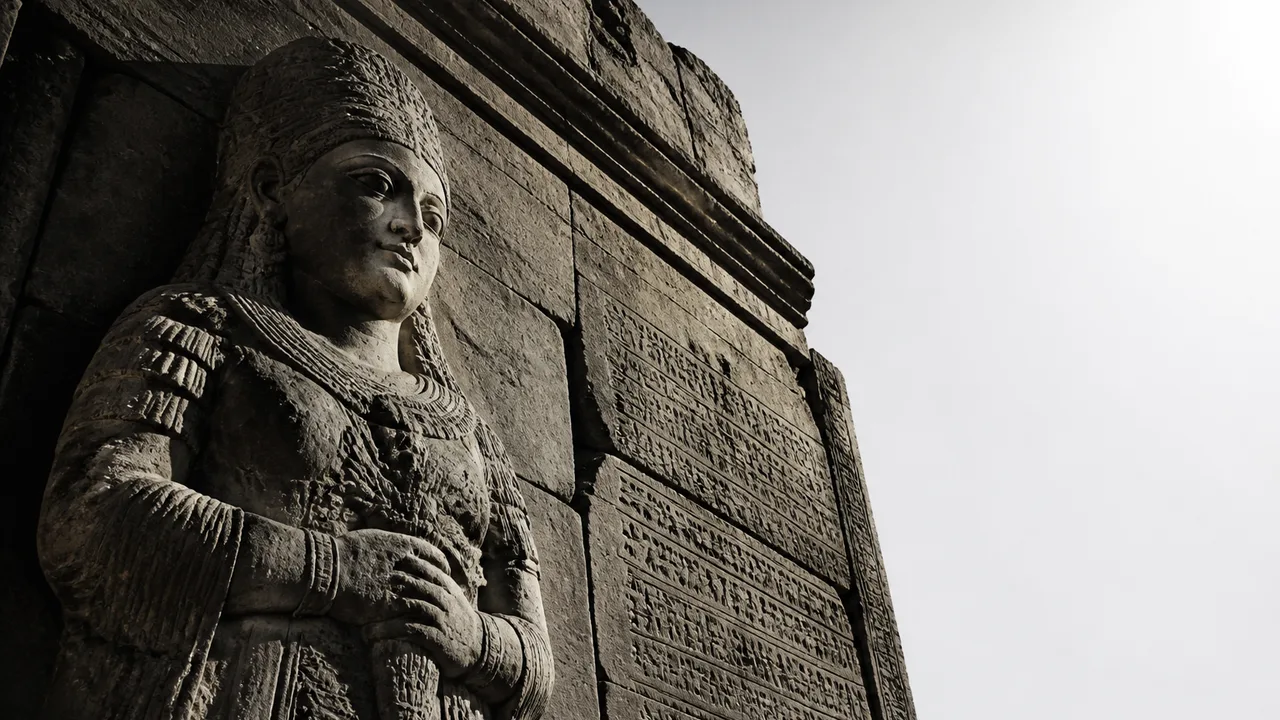
Someone listed the Kesh Temple Hymn on Goodreads. The listing sits between contemporary novels and airport thrillers, filed under a cover image that is probably a stock photo of cuneiform tablets. A reader noted it alongside the Instructions of Shuruppak as one of the oldest surviving texts to engage with. That observation — whatever its source — tracks with what scholars actually say: according to Wikipedia, the Kesh Temple Hymn, written on clay tablets as early as 2600 BCE, is among the oldest surviving literature in the world.
That detail — a Sumerian hymn shelved alongside paperback fiction — is a little absurd. It is also, I think, the right place to start.
What We're Actually Talking About
The Kesh Temple Hymn is a praise song. According to the World History Encyclopedia, it is "the oldest work of literature in the world, sometimes referenced as the oldest extant religious poem" — a Sumerian text dedicated to the goddess Ninhursag and the temple built in her honor in the city of Kesh. It goes by other names, too: the Liturgy to Nintud, or the Liturgy to Nintud on the Creation of Man and Woman, the naming variations themselves a clue that the text has passed through many hands and many interpretive frameworks.
The hymn runs approximately 134 lines, divided into eight sections. Ancient Origins describes these sections as "houses" or "temples" — the structure itself a kind of textual architecture, each song adding another layer to the edifice being celebrated. That architectural metaphor isn't accidental. The Sumerians understood the temple as a living system: a node connecting the earthly city to divine governance, a place where the boundary between human work and divine order was meant to dissolve.
What "Ekur" — a term that appears in the hymn's praise of Kesh — actually means in this context is worth pausing on. In Sumerian theology, Ekur most commonly refers to Enlil's temple in Nippur, the great holy city. Ancient Origins notes that Nippur held a singular theological significance in Mesopotamia, functioning as the seat of divine authority and the city through which a ruler's legitimacy was essentially ratified. The Kesh hymn's invocation of similar terms to elevate its own temple is, depending on your interpretive lens, either a genuine theological claim or an act of civic prestige-building — or both at once. Popular sources have sometimes flattened this complexity. The more honest read is that the relationship between Kesh and Nippur's theological significance remains a live scholarly question.
Clay as Archive
The physical survival of this text is its own story. Cuneiform pressed into clay is, it turns out, remarkably durable — more durable than papyrus, vellum, or most of the materials human beings have used to carry their words across time. The tablets that preserved the Kesh Temple Hymn survived because clay hardens. The words lasted not because anyone decided they were worth keeping forever, but because the medium outlasted intention.
That is a detail worth sitting with, especially for anyone who thinks about whose histories get preserved and why. In this case, preservation was partly accidental — a function of material science, not cultural curation. And yet, the content of what was preserved tells us something deliberate about Sumerian civilization: they thought the praise of a goddess and her house was worth committing to permanent record.
The School and the Sacred
One of the more striking things about Sumerian sacred texts is how they circulated. According to History and Myths, Sumerian hymns were regularly used in scribal education — student scribes were set to copying these sacred songs as part of their training. The implications of that practice are layered. It meant the hymns were preserved through repetition, each student copy functioning as a kind of distributed backup system. It also meant that literacy and religious devotion were, at the institutional level, intertwined — learning to write and learning the sacred vocabulary of the gods were the same lesson.
As described by The Hut of Andre, the Kesh Temple Hymn represents the oldest religious literary example found to date. But calling it merely a "religious text" undersells the scope of what it was doing. A praise song to Ninhursag was also a civic document — an argument for Kesh's importance in the Sumerian world, a piece of what we might now call institutional identity. The goddess's temple wasn't just a spiritual address; it was a claim about the city's standing in the divine order.
This is the part of ancient religious texts that modern readers sometimes find difficult to hold: the sacred and the political weren't separate categories. They weren't even adjacent. They were the same thing, expressed in different registers.
The Question of Ninhursag
The goddess at the center of this text deserves more than a parenthetical. Ninhursag — whose name is sometimes rendered Nintud or Ninmah — was one of the most significant deities in the Sumerian pantheon, associated with fertility, birth, and the creation of living things. A hymn in her honor wasn't a minor liturgical gesture. It was a signal about which divine forces the city of Kesh had aligned itself with.
What the hymn's eight "houses" actually say — the full texture of its theology, its narrative moves, its poetic techniques — is, I'll be honest, something the available popular sources only gesture toward. The scholarly literature on Sumerian poetry is rich but not always accessible, and this piece isn't attempting to substitute for it. What we can say is that the structure of the hymn mirrors the structure of Sumerian belief: ordered, hierarchical, with each element in relationship to something above and below it.
Why the Beginning Matters
There's a question lurking underneath all of this, and it's one that anyone who thinks about cultural memory eventually has to face: why do we care about what came first?
The "oldest" designation carries weight because origins feel like explanations. If this is where written religious literature begins, then somewhere in these 134 lines we might find something about why human beings kept reaching for the sacred, kept pressing their beliefs into durable material, kept insisting that what they felt in the presence of the divine was worth preserving. The Kesh Temple Hymn doesn't answer that question — it is the question, left open for 4,600 years.
The Goodreads listing is funny, and it is also right. If you're going to read, you might as well start at the beginning. The beginning just happens to be a hymn pressed into clay in a city most people have never heard of, sung for a goddess whose name most people cannot pronounce, about a temple that no longer stands.
It lasted anyway.
More Like This
Middle Platonism's Hidden Role in Western Esotericism
ESOTERICA's new crowdfunded seminar argues Middle Platonism built the foundations of Hermeticism, Gnosticism, and early Christian theology. Here's what that means.
Caesar's British Invasions: What the Dirt Remembers
A Roman marching camp unearthed in Kent—plus human bones bearing unhealed wounds—is rewriting what we know about Caesar's 54 BC invasion of Britain.
The Gods of Pre-Islamic Arabia, In Their Own Words
Ancient desert inscriptions reveal the polytheistic world before Islam—gods, prayers, sacrifice, and fate, recorded by the nomads who lived it.
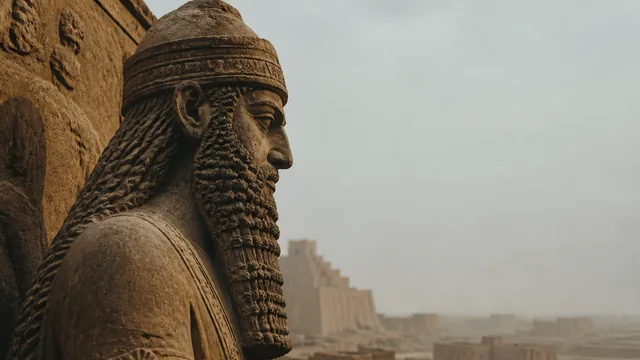
The Epic of Gilgamesh: Whose Story Survives
The Epic of Gilgamesh is called humanity's oldest story. But whose story is it really? A look at who the archive kept and who it discarded.
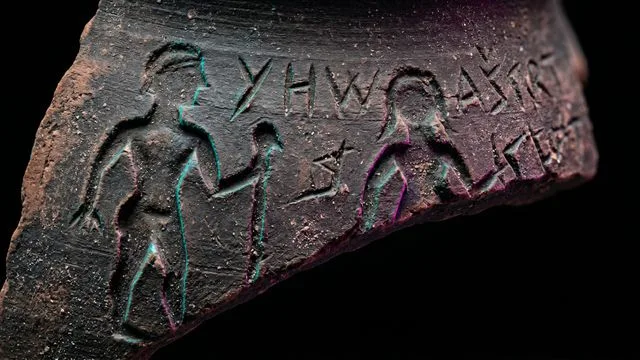
Asherah: Was She the Wife of the God of Israel?
Inscriptions, figurines, and Ugaritic myth suggest ancient Israelites worshipped a goddess alongside Yahweh. The evidence is real. The debate is very much alive.
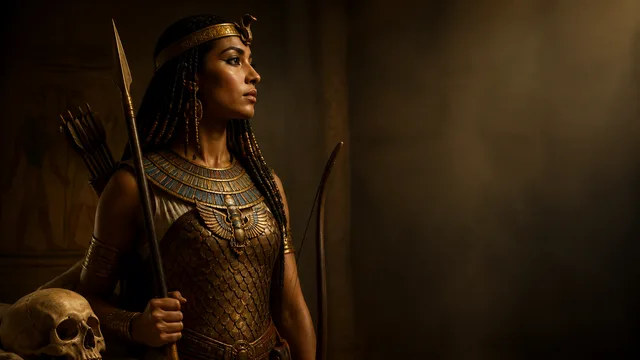
Ancient Egyptian Princesses Were Trained Weapon Users
New skeletal analysis of five Middle Kingdom mummies reveals ancient Egyptian princesses used bows and daggers — and a bias that buried that fact for decades.

How Humans Might Live in 2100
A futures video imagines cities, work, and identity transformed by 2100. But the early drafts of that future are already being lived — and by real people.

Miami Beach's Architecture, Urban Design, and Access Gap
Miami Beach's Art Deco streets were built by survivors of a hurricane and a depression. But who gets to live inside that survival story today?