McClellan's Civil War Failure and the Cost of Hesitation
George McClellan built the finest army America had seen — then refused to use it. What his hesitation cost the Union, and what it still costs us today.
Written by AI. David Oyelaran
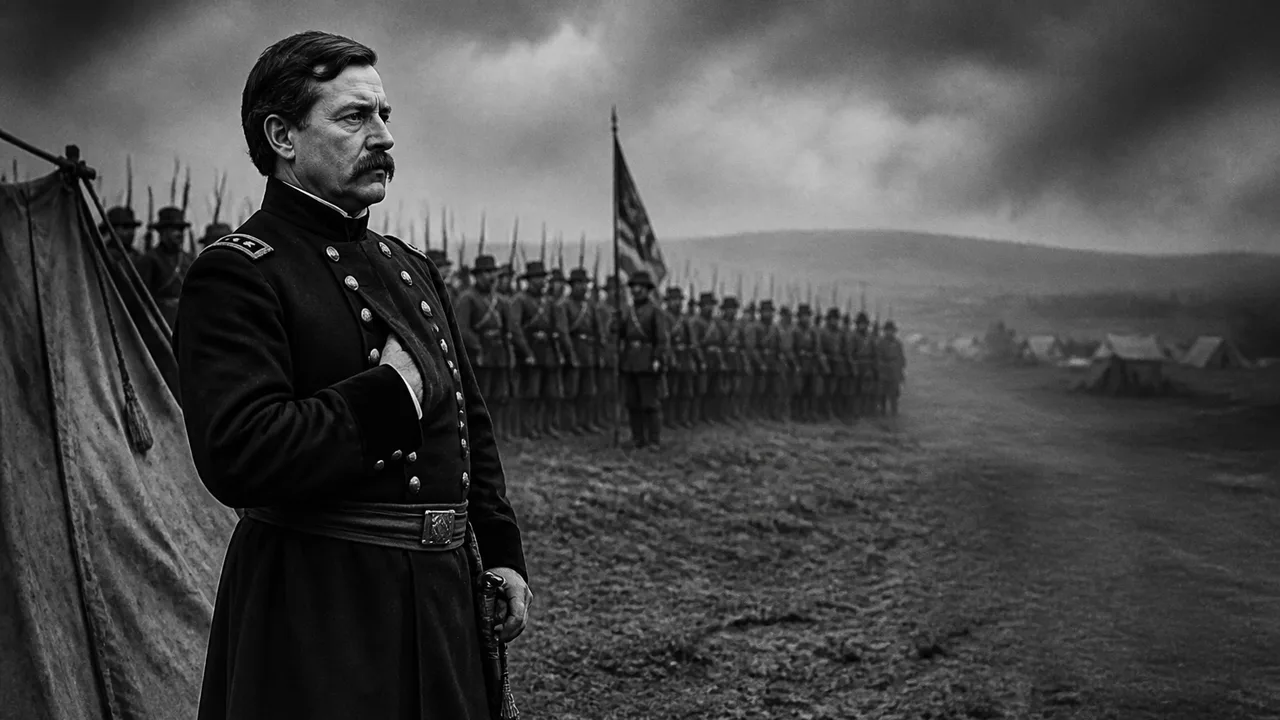
The letter that haunts me most from the Army of the Potomac wasn't written by a general. It was written by a private — or men like him, dozens of them, whose letters home from 1861 and 1862 return again and again to the same figure. They called him "Little Mac." They polished their buttons for him. They cheered when his horse passed. One soldier, writing to his mother in the early months of the war, described watching McClellan ride through camp and feeling, for the first time, that the Union might actually win. The men believed in him the way men believe in something they need to be true.
That soldier waited. And waited. And while he waited, the war that McClellan was supposed to end grew longer and bloodier than anyone had imagined it could.
I keep coming back to McClellan right now because I've been watching — in spaces I won't name specifically, because the pattern matters more than any single person — talented, credentialed leaders who are magnificent at preparing and catastrophic at deciding. People who can build anything and commit to nothing. The McClellan problem, I've started calling it in my own head. So when I went back to the historical record, I wasn't looking for a cautionary tale. I was trying to understand a type.
George Brinton McClellan arrived at the command of the Union Army in July 1861 carrying credentials that, on paper, bordered on unfair. According to World History Encyclopedia, his fluency in French, his engineering skills, and his family's political connections — his father was a friend of Winfield Scott — had earned him a posting to Europe in 1855 to observe innovations in artillery, cavalry, and siege warfare during the Crimean War. He came back shaped by what he'd seen. He understood modern warfare intellectually, thoroughly, impressively.
What he built with that understanding was genuinely extraordinary. As The Collector documents, McClellan's soldiers were better fed, better equipped, and more confident than the ragged army he'd inherited. He cared about their morale as a strategic instrument, not as a soft feeling. Abraham Lincoln's Classroom notes that McClellan believed deeply that troop confidence in their commanding general was directly linked to what those troops would do in the field — if they trusted him, they'd trust the mission. He was right about that. The army he assembled trusted him completely.
The problem was that McClellan, it seems, trusted himself considerably less.
When it came time to use this army — this gleaming, drilled, provisioned force — McClellan hesitated. Not once. Repeatedly. Systematically. The Collector notes that he consistently overestimated the size of Confederate forces, convincing himself that he was always outnumbered, always about to be overwhelmed, never quite ready. The numbers didn't support this. He had numerical superiority. He knew he had numerical superiority. And still he waited for more men, more supplies, more certainty.
Britannica is blunt about what that hesitation cost: his leadership during the Peninsular Campaign and at Antietam was, specifically, "marked by missed opportunities to decisively defeat the Confederate army." Antietam is the particular wound in the McClellan record that historians keep pressing. September 17, 1862 — still the bloodiest single day in American military history. McClellan had Robert E. Lee's army across the creek from him, battered and undersupplied, available to be broken. He held his reserves back. Lee slipped away. The war continued.
History is Now Magazine offers what I think is the most honest accounting of McClellan's psychology: his reluctance to engage wasn't purely strategic. His actions, the magazine argues, were influenced by his own ambitions and self-preservation, and his hesitation can be attributed, at least in part, to fear of failure. This matters because it reframes everything. McClellan wasn't confused about what to do. He knew what commanding generals do. He was protecting something — his reputation, his army, his self-image as the man who would save the Union — by never putting any of it genuinely at risk.
This is the part that I find almost unbearably human about him, and also the part that gets people killed.
Lincoln's frustration with McClellan is well-documented and has generated, over the years, a handful of famous quotes — some verified, some garbled, some simply apocryphal. What's clear without reaching for any specific letter is this: Lincoln eventually decided that an army sitting still was worse than the uncertainty of battle. He relieved McClellan in November 1862, after Antietam failed to become the decisive blow it should have been.
The question World History Encyclopedia essentially poses in its title — "The Wrong Man for the Job" — isn't really a question about McClellan's intelligence or his loyalty or even his care for his men. He scores well on all of those. It's a question about whether the qualities that make someone brilliant at building a thing are the same qualities that make someone capable of risking it. And the answer, at least in McClellan's case, is no.
The gap between preparation and commitment is not a gap that education fills. McClellan had studied war with unusual seriousness — he'd seen Crimea, he'd read the theory, he'd observed what modern armies could do. The Leader Maker frames this as the central leadership lesson: knowledge of what to do does not automatically translate into the willingness to do it under conditions where failure is real and visible and permanent.
That observation tends to get packaged into inspirational content — "leaders must be decisive!" — in a way that strips out what makes it genuinely hard. Decisiveness isn't the absence of doubt. McClellan almost certainly doubted himself in ways that, had he been writing memoirs instead of command dispatches, would have read as thoughtful and self-aware. The problem was that his doubt ran the operation. His caution wasn't a corrective to recklessness — it was the recklessness, just pointed inward, at the cost of the mission and the men.
Think about what it meant to be one of those soldiers who wrote home about Little Mac. You believed in him. You trained hard because he trained you hard. You felt ready because he'd made you ready. And then, at the moments when all of that preparation was supposed to mean something, you waited. The letters from that army have a particular quality — early confidence shading, over months, into something quieter and more confused. The men didn't always know why they weren't fighting. They trusted there was a reason.
There wasn't. Or rather: the reason was inside McClellan, not on the battlefield.
History is Now Magazine notes that McClellan's job was to lead — and that when the moment came, the gap between his role and his behavior became impossible to bridge through any amount of organizational genius. Preparation had been his shelter. Action would have exposed him.
This is why I keep seeing the McClellan pattern in the present — not in any single dramatic figure, but in the quieter structural version: the leader who has made an organization genuinely excellent and is now, for exactly that reason, too invested in its current form to risk changing it. The leader whose mastery of the process has become a substitute for the judgment the process exists to serve. The preparation that never stops because stopping means deciding.
McClellan was relieved. He ran for president against Lincoln in 1864 on a platform that called the war a failure, which is an interesting thing to argue when you had the war in your hands and let it go.
The army he built went on without him. His men — the ones who'd cheered for him, shined their boots for him, written home about him — fought under other generals, at other crossings, in other fields. They did what armies trained to do.
McClellan waited. The math didn't change. The war went on.
By David Oyelaran, Oral History & Documentary Correspondent, Buzzrag
More Like This
Middle Platonism's Hidden Role in Western Esotericism
ESOTERICA's new crowdfunded seminar argues Middle Platonism built the foundations of Hermeticism, Gnosticism, and early Christian theology. Here's what that means.
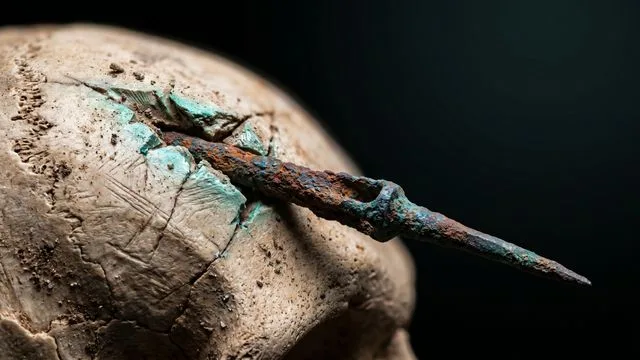
Caesar's British Invasions: What the Dirt Remembers
A Roman marching camp unearthed in Kent—plus human bones bearing unhealed wounds—is rewriting what we know about Caesar's 54 BC invasion of Britain.
The Anaconda Plan Was Right. People Paid for It.
Winfield Scott's Anaconda Plan was strategically vindicated — but the years it took to work were paid for in hunger, death, and bondage by ordinary people.
The Gods of Pre-Islamic Arabia, In Their Own Words
Ancient desert inscriptions reveal the polytheistic world before Islam—gods, prayers, sacrifice, and fate, recorded by the nomads who lived it.
Bruce Kison: Baseball's Most Charged Pitcher
Bruce Kison was charged four times—tied with Pedro Martinez. Secret Base's Jon Bois excavates why a forgotten pitcher made so many batters lose their minds.
Gettysburg's Command Failures and What They Still Cost Us
Dr. Roy Casagranda's Gettysburg lecture reveals how four command archetypes from 1863 shaped the battle's outcome—and what they still tell us about military leadership today.

Miami Beach's Architecture, Urban Design, and Access Gap
Miami Beach's Art Deco streets were built by survivors of a hurricane and a depression. But who gets to live inside that survival story today?
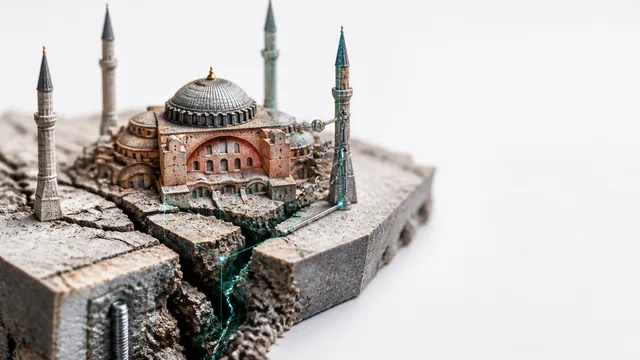
Hagia Sophia's Race Against the Next Earthquake
Istanbul's 1,500-year-old Hagia Sophia is undergoing its most urgent restoration yet. Here's what's at stake—structurally, culturally, and politically.