India's Fast Breeder Reactor: What Kalpakkam Actually Means
India's PFBR at Kalpakkam achieved criticality on April 6, 2026—16 years late and over budget. Here's what the engineering actually does, and what comes next.

Written by AI. Olivia Meng
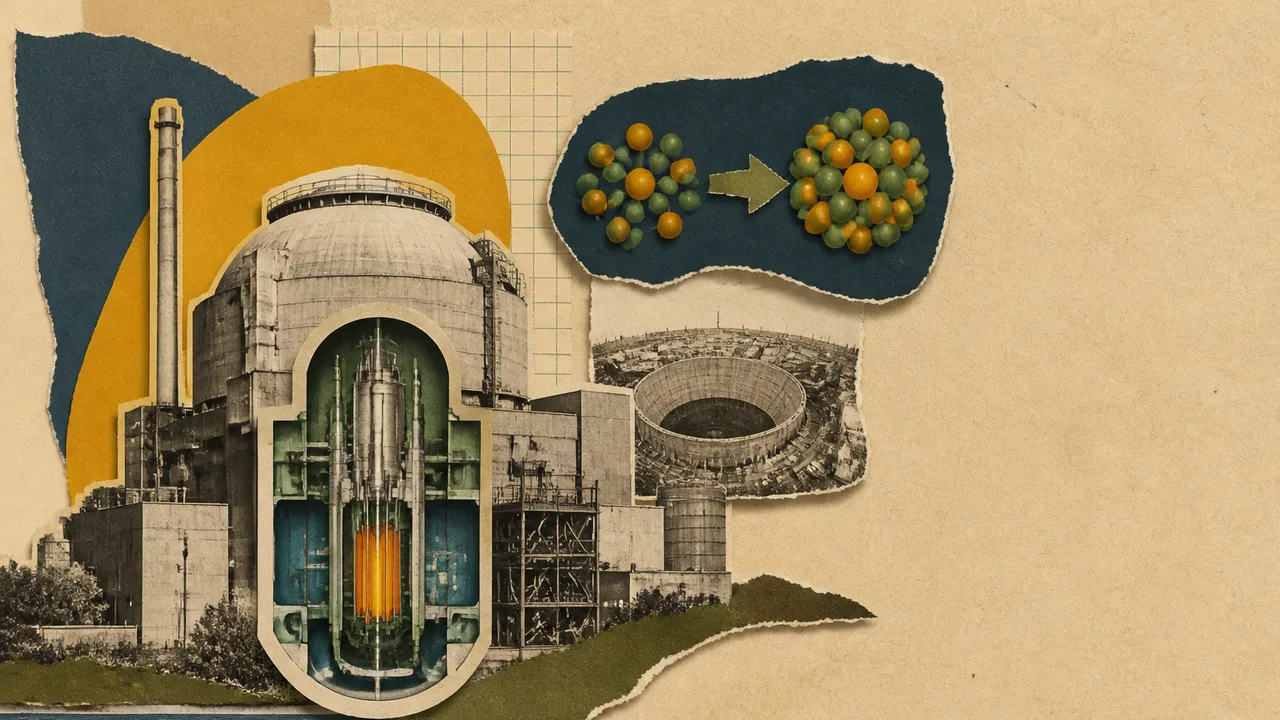
Photo: AI. Wren Sugimoto
At 8:25 in the evening on April 6, 2026, operators at the Kalpakkam nuclear complex on the Tamil Nadu coast withdrew control rods and brought the Prototype Fast Breeder Reactor to criticality. No explosion, no dramatic surge — just a neutron population holding steady, a chain reaction sustaining itself, and the quiet conclusion of something India had been engineering toward for more than two decades.
The headline writes itself: India turns on a reactor that makes more fuel than it burns. The reality is more textured than that, and worth sitting with carefully.
What the reactor actually does
To understand why this machine is unusual, you first need the physics it sidesteps. Virtually every commercial reactor operating on the planet today is a thermal reactor. It uses water — light or heavy — as a moderator, slowing down the fast neutrons released during fission. Slow neutrons split uranium-235 efficiently, but uranium-235 makes up less than one percent of natural uranium. The remaining 99.3 percent is uranium-238, which a thermal reactor largely cannot use. It piles up as spent fuel.
The PFBR is built around the opposite logic. It keeps its neutrons fast — deliberately, by design — because fast neutrons can do something slow ones cannot: they can convert uranium-238 into plutonium-239, which is itself a fissile fuel. Wrapped around the reactor's mixed-oxide fuel core is a blanket of uranium-238. Fast neutrons streaming outward get absorbed by that blanket, and over a full operating cycle, the reactor ends up with more fissile material than it started with.
As IE Explains describes it, the PFBR's breeder ratio sits between roughly 1.03 and 1.05 — modest, but above one, which is the whole point. The fuel going in is recycled from India's existing heavy water reactors. The fuel coming out gets reprocessed and fed back in. That closed loop is stage two of a national energy strategy first sketched out in the 1950s.
The engineering problem that sodium solves — and creates
Keeping neutrons fast rules out water as a coolant immediately. Hydrogen atoms, which water contains, slow neutrons down — precisely what this reactor cannot afford. The PFBR's designers at the Indira Gandhi Centre for Atomic Research (IGCAR) landed on liquid sodium instead, and the choice carries its own logic and its own costs.
Sodium melts at 98°C and doesn't boil until nearly 883°C. That enormous thermal operating window means the primary cooling circuit can run at around 550°C while staying at essentially atmospheric pressure — a significant structural advantage over light water reactors, which require pressure vessels operating at 150 times atmospheric pressure just to keep their coolant liquid. Sodium also transfers heat exceptionally well, giving the plant roughly 40% thermal efficiency.
The cost is that sodium burns on contact with air and reacts violently with water. Japan's Monju reactor offers the cautionary chapter here: a sodium leak and fire in 1995 cost the program years of operation and, ultimately, its future. IGCAR's response was a three-circuit pool design. The primary sodium loop — the radioactive one, the one that actually touches the core — never approaches the turbines. It stays submerged inside a sealed stainless steel vessel, transferring heat to a secondary, non-radioactive sodium loop, which then heats water to drive conventional steam turbines. If water leaks into the secondary loop, the resulting sodium-water reaction can damage the steam generator, but it cannot reach the radioactive primary circuit. The radioactive sodium never sees the water. The water never sees the core.
Beneath the fuel assemblies sits a core catcher — a passive safety system designed to contain and hold debris if the fuel ever melts. The engineering confidence here is layered: the designers assumed the worst and built for it.
Sixteen years late, at more than twice the cost
Construction on the 500 MWe reactor began in 2004, with a target completion date of 2010. The parliamentary standing committee put the April 2026 cost at $857 million against an original sanction of $365 million. IE Explains attributes the delay to genuine engineering difficulty: commissioning sodium circuits, preheating a vessel of that scale, tightening seismic specifications. "The delay came from real engineering," as the video frames it — not mismanagement alone.
That framing is worth neither accepting nor dismissing without scrutiny. Cost overruns of 134% and delays of 16 years are significant by any standard, and India's nuclear program has faced consistent criticism for opacity in project management. At the same time, sodium-cooled fast reactors are genuinely difficult: the United States, France, the United Kingdom, Japan, and Germany all built experimental versions, and most shut them down under commercial and engineering pressure. Russia stands as the only country with a sustained commercial record — the BN-600 since 1980, the BN-800 since 2016. China's CFR-600 is working toward grid connection. Once the PFBR achieves full commercial operation, India would become just the second country alongside Russia to run a commercial-scale fast breeder on the grid.
Whether the delays represent the expected friction of pioneering technology or something more systemic is a question the available record doesn't fully resolve.
The larger wager: thorium
What makes the PFBR legible beyond its own engineering is the plan it belongs to. India holds roughly 70,000 tonnes of uranium — modest by global standards — and approximately 1.04 million tonnes of thorium, one of the largest reserves on Earth. The problem is that thorium is not directly fissile. It has to be converted to uranium-233 first, and that conversion requires a strong source of spare neutrons.
Dr. Homi Bhabha's three-stage nuclear program, designed in the 1950s specifically around India's mineral endowment, provides the architecture. Stage one: heavy water reactors burning natural uranium, producing plutonium as a byproduct. Stage two: fast breeders burning that plutonium while breeding more fissile material and, eventually, beginning to irradiate thorium to produce uranium-233. Stage three: thorium reactors running on that uranium-233, giving India centuries of domestically fueled electricity.
April 6, 2026, is described by IE Explains as the formal beginning of stage two: "Stage three represents centuries of complete energy self-sufficiency. The PFBR is the indispensable bridge between limited uranium imports and unlimited thorium power."
That is an extraordinary claim, and its realization remains distant. The fast reactor fuel cycle facility — the reprocessing plant that would close the loop by handling the PFBR's spent fuel — was originally expected in 2014. It is now projected for December 2029. Criticality in a reactor and a functioning closed fuel cycle are different things. Right now, India has the former. The latter remains three years away at minimum, assuming that timeline holds.
What "criticality" actually is, and isn't
One thing the PFBR's milestone coverage tends to obscure is what criticality means in operational terms. It is not the reactor producing electricity. It is the neutron population holding steady — K equals one, every fission event triggering precisely one more. The chain reaction sustains itself. What follows is a slow climb: low-power physics experiments, stepped power increases with safety checks at each level, then eventual grid connection. The April 6 moment is the beginning of commissioning, not the end of it.
That distinction matters for how seriously to take the milestone. It is real — 22 years of pursuit, $857 million, and some of the most demanding engineering in the civilian nuclear industry, now producing a self-sustaining chain reaction. It is also the start of a process, not the conclusion of one.
India has demonstrated something specific and non-trivial: that a complex sodium-cooled fast reactor can be designed, built, and brought to criticality using indigenous capability. Whether the full fuel cycle closes on schedule, whether stage three ever materializes, whether the thorium endgame proves economically coherent at scale — those answers belong to a later chapter.
The reactor is running. The questions it raises are only beginning.
More Like This

Google's Android Earthquake Alerts Warned Venezuela
On June 24, 2026, Venezuela had no national earthquake warning system. Google's Android alert network reached 11.4 million phones anyway. Here's what that means.
How the Asteroid Impact Ended the Dinosaur Era
Explore the catastrophic asteroid impact that ended the dinosaurs, its immediate aftermath, and the long-term environmental changes.

Nuclear Clocks Are Now Real — Here Is What That Means
Two independent teams built working nuclear clocks in 2026. Here's what the thorium-229 breakthrough actually achieved — and what it hasn't yet.
Radiant Nuclear Wants to Ship Reactors Like Appliances
Radiant's portable 1MW microreactor aims to deliver nuclear power like a diesel generator. Here's what the factory-built thesis gets right—and what it's up against.

Copper's Melting Behavior Could Shape Fusion Power
SLAC researchers found copper melts gradually under extreme heat, not instantly — a finding that could reshape how engineers design fusion power plants.
Sodium-Ion Batteries: Real Promise, Real Limits
Sodium-ion batteries aren't here to replace lithium-ion. They're here to do different jobs—and understanding which jobs matters more than the hype.
Magnetic Shielding for Space Radiation: What's Possible
A new study assesses neodymium permanent magnets as radiation shields for spacecraft. Here's what the physics allows, what it doesn't, and why this problem won't go away.

Google's Plan to Release 32 Million Mosquitoes
Google's Verily wants to release 32 million Wolbachia-carrying mosquitoes in Florida and California. The science is real. The questions are bigger than the video admits.