How to Visit Pisa Without Wasting the Trip
Pisa is more than a photo stop. Here's what to see, eat, and avoid when visiting the Leaning Tower and the city beyond it.

Written by AI. Mariel Fontaine
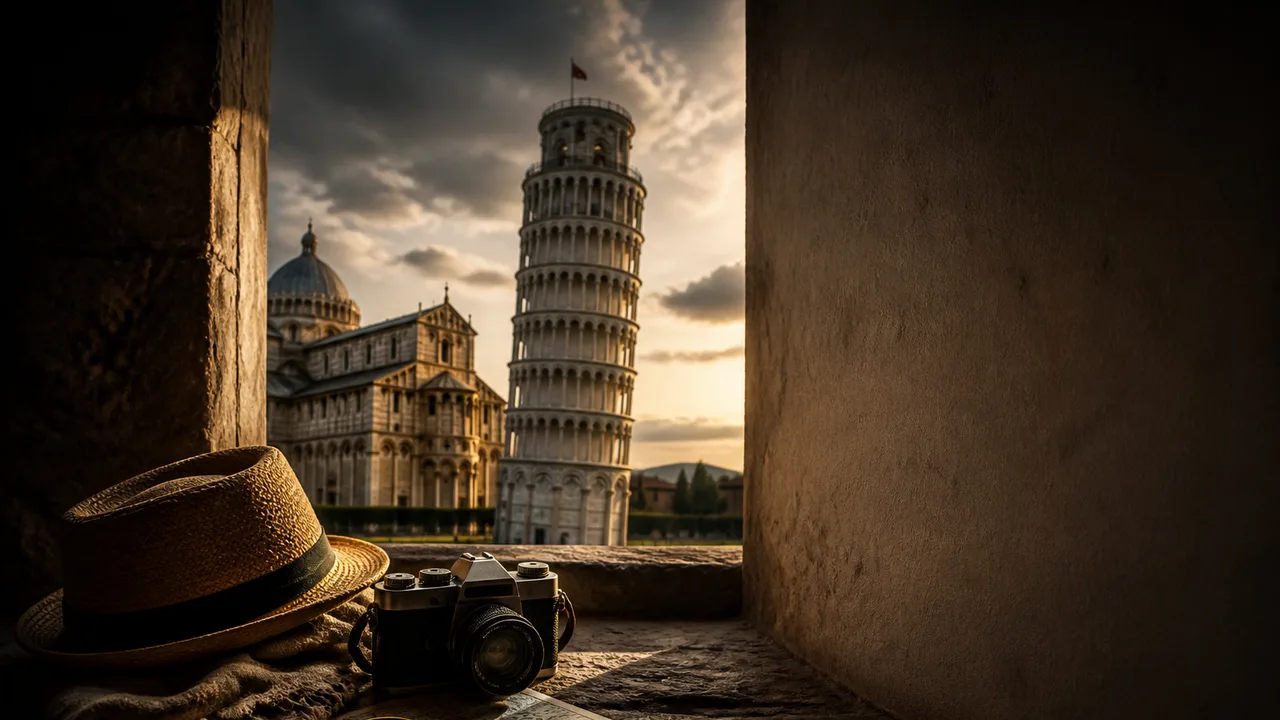
Photo: AI. Liora Goldstein
Pisa spent several centuries as one of the Mediterranean's dominant maritime republics, controlling trade routes, funding monumental architecture, and competing with Genoa and Venice for commercial supremacy. The Piazza dei Miracoli, where tourists now line up to photograph the tower, was not an accident of medieval whimsy. It was a deliberate display of civic and ecclesiastical wealth, built at a moment when Pisa had the resources and ambition to make an argument in stone. The Università di Pisa is one of Italy's oldest universities, and the Piazza dei Cavalieri, now flanked by academic buildings, was the seat of the city's governing council. Most visitors arrive knowing none of this, and the tourism infrastructure around the tower does nothing to change that.
Mark Wolters, whose Wolters World video on visiting Pisa covers the practical landscape well, opens with the clearest possible reframe: "Don't think that Pisa is just the Leaning Tower, cuz there's so much more here." He's right, and the gap between what Pisa offers and what most visitors actually absorb is the central problem the city's tourism economy has never solved.
The tower is the entry point, not the destination
Book your tower climb in advance. This is not negotiable advice dressed up as a tip. Ticket availability on the day can run out, and the queue for same-day entry during summer eats a full afternoon. The Piazza dei Miracoli operates a tiered ticketing system: entry to the cathedral is free but still requires a ticket; the baptistery, the Camposanto, and the tower each carry separate charges. Plan the combination you want before you arrive, not at the ticket window.
The baptistery deserves more attention than it typically receives. Its exterior is one of the more formally accomplished pieces of Romanesque architecture in Tuscany, and the interior acoustics, shaped by the dome's geometry, produce an effect that surprises most people who step inside. The Camposanto, the monumental cemetery adjacent to the cathedral, holds 14th-century frescoes on its interior walls, including a graphic Last Judgment cycle that reflects precisely how seriously medieval Pisans took their mortality. These are not secondary attractions. They are the reason the piazza was called the Field of Miracles.
Leave your luggage at the cloakroom near the ticket office before climbing the tower. Large bags and backpacks are not permitted on the ascent.
The food problem has a straightforward solution
Restaurants with direct sightlines to the tower charge accordingly and, in Wolters' blunt summary, tend to underdeliver. He tested this personally: "We actually ate pizza here in Pisa where you can see the leaning tower. And it was literally the worst pizza I've ever had in Italy." The comparison he draws to Venice is apt. When tourist volume is high enough that a restaurant fills regardless of quality, quality stops being the competitive variable.
Pisa's actual food culture runs toward the sea. The city sits close enough to the Ligurian and Tyrrhenian coasts that seafood has always been central to the local table. Risotto ai frutti di mare and spaghetti alle vongole are the dishes to look for. The chickpea flatbread, cecina, appears throughout Tuscany but is common here. Stockfish stew reflects the older maritime trading history, when preserved cod was both cargo and sustenance. For dessert, cantuccini with vin santo is the standard Tuscan close: the almond cookies are dry by design and the sweet wine is the mechanism, not an optional pairing.
The practical rule is simple: walk two streets away from the piazza before sitting down.
Beyond the Piazza dei Miracoli
The walk from Pisa Centrale along Corso Italia is the most direct route to the Arno, and it passes through the part of the city where Pisans actually shop. City Unscripted notes that authentic Pisan daily life sits away from the tourist zones, and Corso Italia is the clearest example: pharmacies, clothing stores, the mundane commerce of a functioning city. It's also where you avoid the density of vendors that concentrates around the tower.
The Palazzo Blu on the Arno embankment hosts rotating exhibitions and is one of the more professionally curated spaces in the city. The Museo di San Matteo, further along the river, holds a collection of medieval Pisan sculpture and painting that most visitors never reach. Santa Maria della Spina, a small Gothic oratory on the Arno's edge, stops people mid-stride: intricately carved, almost improbably detailed for its scale.
The Piazza dei Cavalieri rewards the detour. The Palazzo della Carovana, now part of the Scuola Normale Superiore, covers its facade in sgraffito decoration that takes a few minutes to read properly. The square itself has the proportions of a room, enclosed on all sides by buildings of consistent height and ambition. It is, for my money, the best piazza in Pisa that most visitors never find.
The practical realities of a day trip
Pisa works well as a day trip from Florence. Frequent regional trains connect the two cities, and the journey time is under an hour. GlobeTrove's assessment that Pisa doesn't justify a dedicated flight from abroad but rewards visitors already in the region is a fair read of the situation. A focused visitor who pre-books the tower, enters the baptistery and cathedral, walks the Arno, and has a proper lunch away from the piazza can do all of that in a well-structured day. Someone who wants the Camposanto, the Palazzo Blu, and the Piazza dei Cavalieri on top of that should consider staying overnight.
Wolters flags pickpockets as a genuine summer concern, and the logic is straightforward: day-trippers carry everything with them, which makes the calculation favorable for thieves. Vendor pressure around the tower is persistent. A direct "no, thank you" and continued walking is the complete strategy.
Pisa Centrale has luggage storage, so dropping bags before heading to the piazza is an option. Check current hours and fees directly with the station, as these change by operator and season.
The tower leans because of unstable subsoil. Engineers undertook a stabilization project completed in 2001 that reduced the tilt slightly and is expected to keep the structure safe for several centuries. The lean is now maintained at a calculated angle, which is, when you consider it, a fairly Pisan solution to the problem: don't fix it, manage it, and let it keep earning its keep.
More Like This

What American Tourists Wear in Europe (And Why It Matters)
From athleisure to baseball caps, Mark Wolters breaks down the clothing choices that signal "tourist" across Europe—and the practical reasons to reconsider them.
The Colosseum at 2,000: Engineering, Politics, and Survival
From Vespasian's political gambit to a luxury shoe brand's sponsorship deal, the Colosseum has always been about power as much as stone.
Everyday Prices in Poland: What Tourists Should Know
A look at everyday goods prices in Poland compared to the US, what Krakow's costs reveal, and what travelers miss when they budget by hotel rates alone.
La Grande-Motte's Pyramid Architecture Finds New Admirers
La Grande-Motte's futurist pyramids, once mocked, are now drawing architourists to the Languedoc coast. Here's what's driving the revival—and what it costs.
How to Travel More Like a Local, Practically
Mark Wolters of Wolters World breaks down what "living like a local" actually means—and the practical habits that separate tourists from travelers.

Transylvania's Wild Side Beyond the Vampire Myth
Transylvania offers far more than Dracula lore—its Carpathian peaks, bear sanctuaries, and ancient caves make it a serious destination for adventure travelers.
Where Pickpockets Thrive in Europe's Busiest Cities
From Barcelona's La Rambla to Lisbon's metro, here's a clear-eyed look at where pickpockets operate in Europe and how tourist crowds make it possible.
Gaiman, Argentina: A Welsh Town Deep in Patagonia
Gaiman in Argentine Patagonia preserves a Welsh settler heritage unlike anywhere else on earth. Here's what the town actually offers curious travelers.