How to Travel More Like a Local, Practically
Mark Wolters of Wolters World breaks down what "living like a local" actually means—and the practical habits that separate tourists from travelers.

Written by AI. Mariel Fontaine
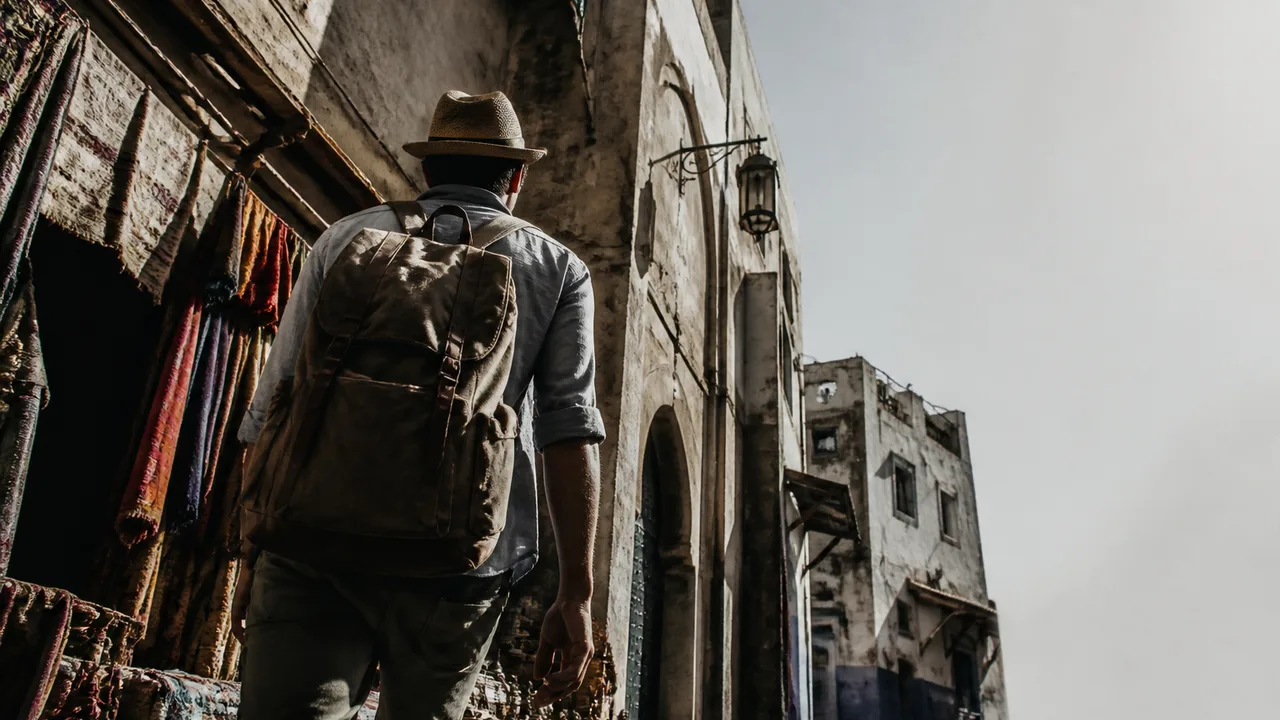
Photo: AI. Kasper Winter
"Live like a local" has become one of those travel phrases so thoroughly laundered by marketing that it barely means anything anymore. It appears in boutique hotel copy, Airbnb listing headlines, and tour operator brochures for experiences that are, by definition, designed for visitors. The phrase has drifted so far from its origin that a visitor can now book a "live like a local" walking tour, herded alongside eleven other visitors from four different countries, none of them local.
Which is why it's worth paying attention when someone tries to put the idea back on a practical footing.
In a recent video filmed in London, Mark Wolters of Wolters World—a channel built around frank, experience-grounded travel advice—runs through a set of habits he argues can meaningfully change how a traveler experiences a destination. The tips are not glamorous. They're not about finding some rarefied, off-grid experience unavailable to other travelers. They're about adjusting small behaviors so that you spend less time performing tourism and more time simply existing in a place.
That distinction is worth sitting with.
The Clock Is the First Thing to Reset
Wolters opens with something that sounds obvious but rarely gets treated with the seriousness it deserves: eat when locals eat. Not when your body says it's time, and not when the tourist infrastructure is optimally prepared to receive you.
"When you see tourists in Portugal at 6:00 in the afternoon having dinner, you know that's a tourist," he says. "When you go out in Portugal and it's 9, 10:00 at night—that's when the Portuguese are out and everyone's sharing their food and they're talking to their friends and it really comes alive."
The corollary he offers from Finland is equally instructive: there, the substantial meal of the day is lunch, not dinner. Evening is bread, cheese, yogurt. Neither system is better—they're simply different rhythms, shaped by climate, labor history, and social convention. A traveler who eats at 6 p.m. in Lisbon isn't wrong; they're just eating alone, in a half-empty restaurant staffed for tourists, and wondering why dinner didn't feel like much.
The meal-timing point functions as a kind of litmus test for how willing a traveler is to actually reorganize their day around a place's logic rather than their own comfort. Most of the advice in Wolters' video follows this same structure: the adjustment is small, the payoff is disproportionate.
The Grocery Store as Cultural Text
One of the more genuinely useful suggestions Wolters makes—and one that doesn't appear in enough travel guides—is to visit a local grocery store, whether or not you intend to buy anything.
"If you want to understand a culture, you go to their grocery store," he says. The illustration he offers is an Italian supermarket's pasta aisle: not the polite two-shelf selection familiar to international grocery chains, but an entire aisle of formats, each designed for a specific sauce, a specific texture, a specific occasion. It's a small moment, but the kind that reorganizes how you understand a place.
The grocery store argument is interesting beyond its practical value. It implicitly pushes back on the idea that cultural immersion requires extraordinary access—a local family's dinner table, a backstage pass to daily life that most visitors will never get. The grocery store is fully public, freely open, and contains more honest information about how people actually live than most curated experiences. What's in the prepared foods section? What does a week's worth of shopping cost? What languages appear on the labels? What's conspicuously absent that you'd find at home?
Wolters also suggests carrying a reusable bag from a local shop—an idea his co-host Jocelyn floated—partly for function, mostly for the subtle visual signal it sends. It is, admittedly, a minor act of theater. But it's theater that prompts you to go into the local shop in the first place, which is the real point.
The Question You're Actually Asking
The sharpest piece of advice in the video concerns how to ask locals for recommendations—and specifically, how to reframe the question so you stop triggering the tourist-response reflex.
"I don't ask them where should I eat," Wolters explains, "because if I'm a tourist asking where I should eat, they're going to think: where should a tourist eat. What I ask is, hey, what would you eat? Where would you go on a date with your girlfriend? Where would you take your kids?"
He illustrates the gap with Chicago pizza: ask a Chicagoan what to eat in their city, and they'll likely say deep-dish, because that's what the question implies. But most Chicagoans eat tavern-style pizza—thin, crispy, cut into squares—far more often. The deep-dish answer isn't dishonest; it's a reasonable response to a tourist-coded question. The reframed question gets past the script.
This is a minor conversational technique with real sociological texture. Locals maintain a kind of mental partition between what their city is known for and what they actually do. Tap the wrong partition, get the performance. The reframe asks for the everyday, and the everyday is usually more interesting.
What "Blending In" Actually Requires
Wolters covers several habits that cluster around visibility and behavior: walking with purpose rather than phone-in-hand, not occupying the full width of a sidewalk, observing quiet hours in residential neighborhoods, handling public transit like a commuter rather than a sightseer. On the London Underground: stand right on the escalator, do not make eye contact, put your phone away.
The dress advice follows the same logic. "Don't think dress fancy," he says. "Think dress put together with purpose." The goal isn't to deceive anyone into thinking you're a resident—that's largely impossible and arguably beside the point. It's that certain behaviors, aggregated, signal a different kind of attention. You're watching, adjusting, participating in the social contract of the place rather than standing outside it with a camera.
There's a question worth raising here that Wolters doesn't fully address: how much of this is available to all travelers equally? The adjustments he describes—timing meals, dressing more carefully, learning a greeting or two—are genuinely accessible. But "blending in" carries different weight depending on who you are. A visitor whose appearance, race, or body immediately marks them as foreign operates under different constraints than one who can pass unnoticed. The desire to be perceived as a local has a different texture when you never will be, regardless of behavior.
That's not a reason to dismiss the advice. It's a reason to understand what the advice is actually doing: not creating invisibility, but cultivating attentiveness. The habits Wolters recommends are, underneath the "live like a local" framing, habits of respect and observation. They make you a more careful guest. Whether or not they make you look like a resident is secondary.
The Honesty at the End
To his credit, Wolters closes with a note that undercuts the premise of the entire video, and does so without apparent irony: "It's okay to be a tourist. You don't have to do any of these things. You can just go and enjoy your time in a destination."
This matters. The cultural pressure to be the "right kind of traveler"—engaged, humble, anti-tourist—can curdle into its own form of performance. Someone eating a 9 p.m. dinner in Lisbon to feel authentic is not meaningfully different from someone eating at 6 p.m. because they wanted a specific experience. Both are visitors making choices about how to spend limited time in a foreign place.
What Wolters is actually selling, beneath the framing, is attentiveness. Pay attention to when people eat. Pay attention to how they shop and move and behave in shared spaces. Pay attention to what your questions are actually asking for. These habits produce better travel not because they make you less of a tourist, but because they make you a more curious one. And curious travelers, it turns out, tend to have a better time—and leave a lighter footprint.
The phrase "live like a local" may be unsalvageable. But the underlying instinct—show up to a place and try to understand it on its own terms—is one worth keeping.
More Like This

Why Everyone on Earth Commutes for 78 Minutes a Day
New research finds humans worldwide average 78 minutes of daily travel—regardless of wealth, distance, or transport mode. Here's what that means for energy and climate.

Dr. K Walked Into Chaos and Won the Room
Dr. K's Tiger Belly appearance is a masterclass in social dynamics. Here's what the Charisma on Command breakdown gets right—and what it glosses over.
What Amsterdam Remembers That New York Forgot
A YouTube urbanist's first trip to Amsterdam raises older questions: what does a city actually owe its citizens, and did American cities ever mean to answer them?

The 30-Second Hotel Safety Check You're Not Doing
A quick hotel room safety check—doors, locks, windows, exits—could prevent theft or worse. Here's what travel creator Mark Wolters says to do first.

How to Command Respect (Stop Trying So Hard)
Charisma on Command breaks down the three habits that quietly destroy respect—and why Tommy Shelby's calm might be the most instructive model we have.
Why Americans Travel Differently—And Who's Really to Blame
Mark Wolters and Shebz tackle overtourism, EES border chaos, and why U.S. vacation policy shapes how Americans see the world—for better and worse.
Airport Behavior That Makes Flying Worse for Everyone
From gate lice to baggage claim crowding, Mark Wolters of Wolters World maps the airport habits that slow everyone down—and why they persist.
Basic French Phrases That Help Tourists in France
A handful of French words can shift how locals treat you in France. Here's what actually matters, and why the effort carries more weight than fluency.