Transylvania's Wild Side Beyond the Vampire Myth
Transylvania offers far more than Dracula lore—its Carpathian peaks, bear sanctuaries, and ancient caves make it a serious destination for adventure travelers.

Written by AI. Kael Maddox
Every destination carries a brand, and Transylvania's is one of the most tenacious in travel history. Mention it and watch someone's face do the thing—the slight theatrical widening of the eyes, maybe a joke about capes. Dracula has been very, very good for Romanian tourism, and also, arguably, very limiting. The name is a tourism monoculture, and monocultures collapse in predictable ways.
What's happening right now in the Carpathians suggests that collapse may be underway—or at least that a meaningful portion of travelers have started looking past the castle silhouettes to see what's actually behind them.
The Landscape That Earned the Myth
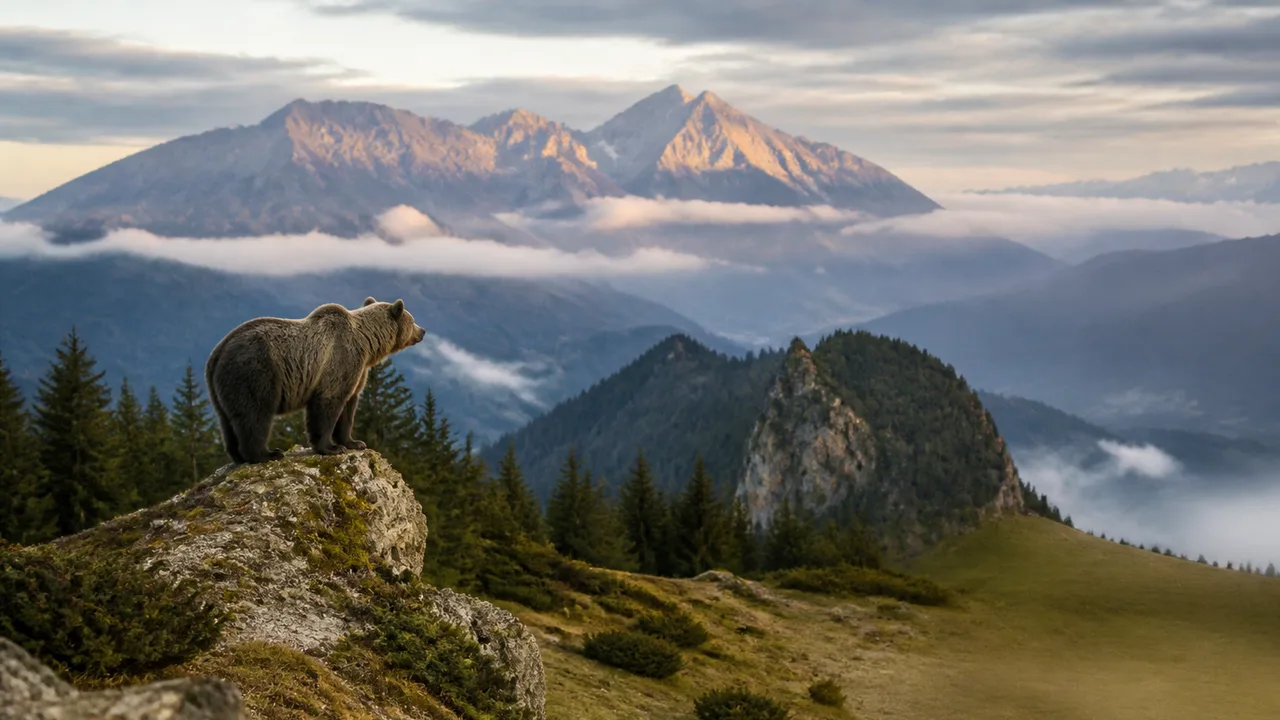
To be clear: the landscape earns the mythology without needing it. The Eastern Carpathians are dramatic in the way that mountains are dramatic when nobody has done anything to make them more convenient—ridgelines that disappear into cloud, river gorges that feel genuinely ancient, forests dense enough to have opinions about you.
The Guardian's recent travel piece documents a family hike up Harghita Mădăraș, the highest peak in the Harghita range at 1,801 meters (5,909 feet). That's not Himalayan, but it's real altitude with real weather, and the piece grounds the experience in specifics—the kind of reporting that separates a destination from a vibe. The Harghita mountains sit in Transylvania's interior, away from the Bran Castle tourist circuit, and they deliver something the castle doesn't: the particular silence of being above the treeline with your lungs doing actual work.
Romania's official tourism resource points to a deeper geological character in the region—more than 4,000 caves and the Scărișoara Glacier, described as the second largest underground glacier in Europe. That's a remarkable claim that deserves verification beyond a single source, and I'll flag it plainly: the sources available here don't independently corroborate the ranking. What they do suggest, collectively, is that Transylvania's natural infrastructure is substantially more developed than its reputation implies.
What "Adventure" Actually Means Here
The word adventure gets inflated until it means very little. In Transylvania's case, it has a few distinct registers, and they're worth separating.
At the accessible end: the Brașov–Bran corridor, where, according to Families Worldwide, visitors can ride the panoramic Tâmpa cable-car and visit the Libearty Bear Sanctuary before ducking into Bran Castle. Libearty is a legitimate sanctuary—a place where brown bears rescued from captivity live out something closer to a natural life—and it's a more ethically defensible wildlife encounter than most. You're not paying to see animals perform; you're paying into an organization cleaning up a mess. That's a different transaction.
At the more demanding end: the Harghita highlands and the Vârghiș Gorge. Natur-Nachhaltig-Erfahren describes the Vârghiș cave system with straightforward appeal—mysterious caves worth exploring in a gorge that still hasn't been overrun. These are the kinds of places where the gap between "famous on maps" and "crowded in practice" remains wide, and that gap is exactly where adventure travel lives before it becomes something else.
G Adventures' Transylvania guide positions the region as offering "stunning nature and diverse wildlife" alongside gothic architecture—language that is vague but directionally accurate. Brown bears, wolves, and lynx still live in the Carpathians in numbers that would startle anyone used to Western European wildlife density. The bears, in particular, represent a genuine draw for wildlife-focused travelers, though the logistics of responsible wildlife watching here are worth researching carefully before arrival. Watching bears in their actual habitat is not the same as visiting Libearty, and finding ethical guides matters.
The Sustainable Tourism Question
The brief frames Transylvania as a candidate for eco-tourism expansion, and that framing is worth examining rather than accepting.
Natur-Nachhaltig-Erfahren highlights the court and village smithy of Barabas Gyuri in Miklósvár and the art riding school for Roma children run by Countess Anna Kálnoky—small-scale, community-rooted initiatives that look like exactly what sustainable tourism advocates describe when they describe sustainable tourism. The open question is whether they can absorb more visitors without being changed by them. That question applies universally—to every valley that starts getting "discovered"—and Transylvania is not immune.
There's also a more pointed tension: the Dracula brand actually insulates some of the interior from over-tourism. When everyone funnels toward Bran Castle and Sighișoara's color-saturated citadel, the Harghita highlands stay quieter. A successful repositioning campaign—"Transylvania is about nature, not just Dracula"—could distribute visitor pressure more evenly, which sounds good until you're standing at Harghita Mădăraș on a summer weekend with fifty other people who read the same article.
Norrskensleder's account of traveling through Romania characterizes the experience as "stepping into a storybook"—a phrase that captures the feeling accurately while gesturing at the problem. Storybooks get read. The more a place is narrated as a pristine alternative, the faster it stops being one.
None of this is an argument against going. It's an argument for going thoughtfully and before the infrastructure catches up.
What the Harghita Highlands Actually Ask of You
The Guardian's family piece does something useful: it measures the experience honestly against the people having it. Hiking to Harghita Mădăraș at 1,801 meters with children is genuinely achievable, and the piece doesn't oversell the difficulty or the transcendence. There's an Insect Park nearby that the piece notes, which—fair enough—is exactly the kind of detail that lands when you're traveling with kids and someone needs an afternoon with a lower elevation requirement.
What the highland zone asks of a visitor, at minimum, is willingness to be in a place without a tight schedule. The Harghita and Gurghiu mountains don't reward efficiency. The cooking traditions the brief references—I couldn't find detailed sourcing on specific Gurghiu culinary practices in the available sources, and I won't invent them—appear to be part of a regional character that unfolds slowly, over meals and conversations rather than in scheduled "cultural experiences."
That's the version of Transylvania that doesn't fit on a castle poster. Whether it's commercially viable, whether it can be offered without being consumed, whether the infrastructure exists to support it responsibly—those remain genuinely open questions that no travel piece, including this one, can fully answer.
The mountains are there. The bears are there. The glaciers are (reportedly) there. The question Transylvania is currently asking is not whether travelers will come, but which version of it they'll actually find.
More Like This
Romania Travel: What Visitors Love and Struggle With
From Carpathian forests to chaotic mountain roads, Romania rewards patient travelers. Here's an honest look at what works and what doesn't.

The World's Longest Domestic Flights, Explained
From Boston to Honolulu to Paris to Réunion, the world's longest domestic flights reveal how borders, customs zones, and sovereignty really work.
Roman Altar Surfaces from a Shrinking Danube
Record-low Danube water levels in Hungary have exposed a Roman altar to Jupiter, WWII munitions, and mammoth bones—history unlocked by climate crisis.
Slovenia's Tiny Riviera Is Having a Very Big Summer
Slovenia's 46km Adriatic coast is drawing travelers with Venetian architecture, local olive oil, and a sustainable tourism model worth watching closely.
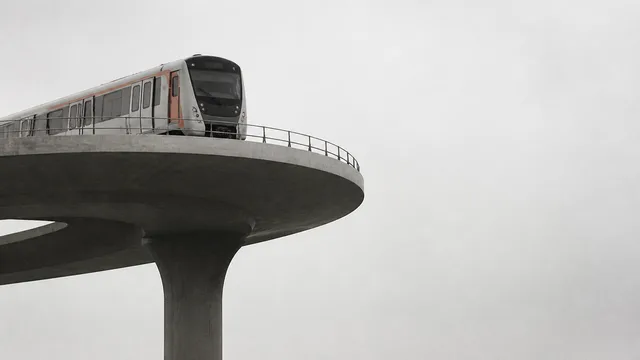
Madrid Metro Line 11 Extended to Valdebebas for €880M
Madrid's Comunidad has approved an €880M extension of Metro Line 11 to Valdebebas Norte—7.2 km, four new stations, and a bet on the city's northern edge.
Bigfoot, Werewolves, and the Science of Strange Sightings
From Georgia dashcam footage to Brazilian backyards, cryptozoology meets real wildlife science—and the answers are often stranger than the legends.
What Experienced Cruisers Know Before They Board
Professor Melissa's 14-minute cruise guide distills hard-won tips on packing, pricing, seasickness, and gratuities that first-timers rarely hear before embarkation day.

IHG Launches AI Conversational Hotel Search
IHG's new AI conversational search lets travelers book across 7,000+ hotels in plain language. Here's what it means—and what it still can't promise solo travelers.