Romania Travel: What Visitors Love and Struggle With
From Carpathian forests to chaotic mountain roads, Romania rewards patient travelers. Here's an honest look at what works and what doesn't.

Written by AI. Mariel Fontaine
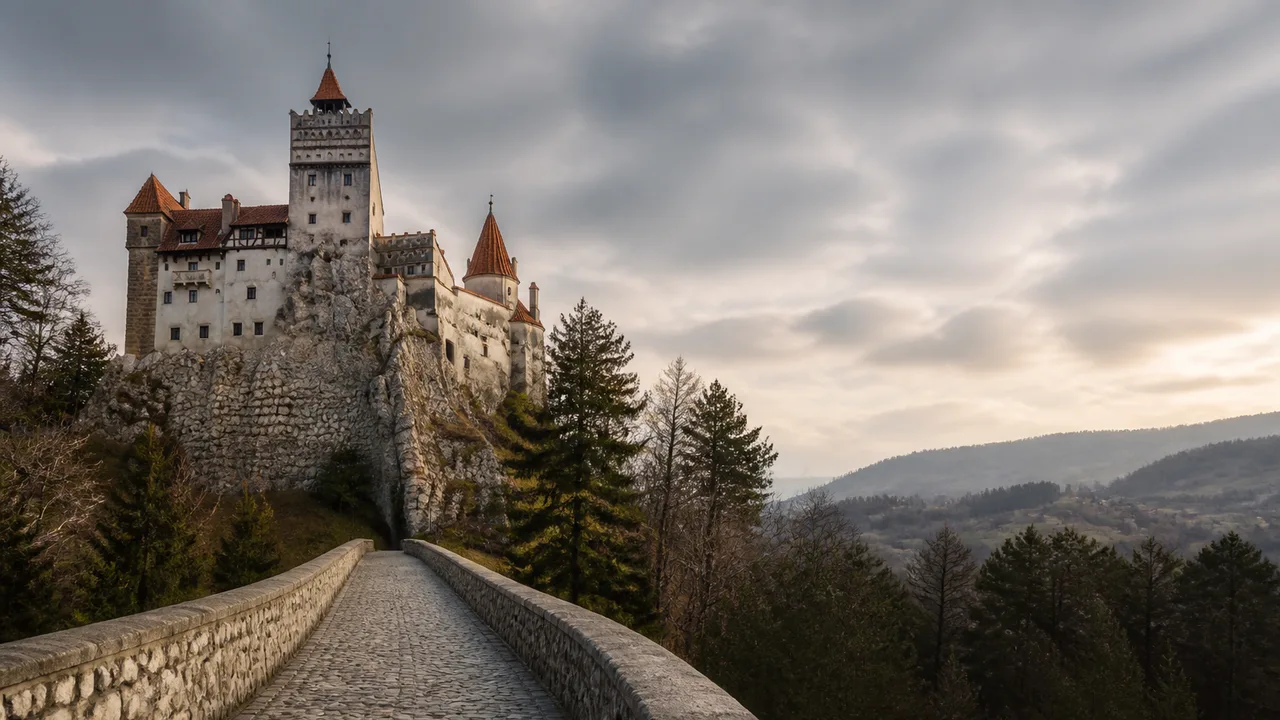
Photo: AI. Hayden Cross
Romania occupies a peculiar position in the European imagination: simultaneously over-mythologized and undervisited. Dracula did the country no editorial favors. What Mark Wolters of Wolters World finds when he films from Brașov, though, is a country that keeps surprising visitors — sometimes wonderfully, occasionally not.
His video distills twenty years of Romania trips into a list of loves and frustrations, and what's useful about it isn't the list itself but the texture underneath it. The loves and hates, examined closely, often turn out to be the same thing seen from different angles.
The Nature Is Not the Postcard Version — It's Better
Wolters leads with the Carpathians, and he's right to. The mountains here function differently than in more trafficked parts of Europe: they're large enough, and wild enough, to feel genuinely consequential. Hiking, skiing, mountain biking, and autumn foliage draws all exist within the same geography, which means the country has a rare quality — it's seasonally versatile without being seasonally thin.
The Danube Delta is its own argument. One of Europe's largest wetland ecosystems, it supports over 300 bird species and remains one of the few genuinely uncrowded natural spectacles on the continent. The infrastructure around rural tourism, Wolters notes, has improved measurably — "they actually have a good infrastructure for that, and they're building it up" — though the honest read is that it's still being constructed rather than complete.
The wildlife dimension carries real weight, too. According to a BBC Travel report, Romania is home to the largest brown bear population in Europe outside Russia — a fact that shapes the hiking experience in ways both thrilling and practical. The bear sanctuary near Brașov operates by appointment. The trails around the city operate by common sense: stay on marked paths, because the bears are not a tourism prop.
The Food Problem Is Actually a Sociology Problem
Here's where Wolters makes an observation that's more interesting than it first sounds. Finding authentic Romanian food, he argues, is genuinely difficult — not because the food is bad, but because locals don't eat it in restaurants. "The locals, they cook this stuff at home. They have it on the weekends with their grandmas. They're not going out to restaurants so much — you'll see more Italian restaurants and pizzerias than you will Romanian food."
This is a pattern that repeats across Eastern and Central Europe, and it complicates the standard tourist playbook of "eat where the locals eat." In Romania, where locals eat tends to mean Italian. The mititei (minced meat rolls, served with mustard and worth every bite), the papanași (fried donuts with sour cream and jam), the bean soups — these exist in tourist-facing restaurants in cities like Sibiu, Sighișoara, and Brașov, but they're largely absent from the neighborhood joints where you'd otherwise find authentic cuisine. Wolters frames this as a frustration, and it is, but it's also a window into something real about Romanian domestic culture: the kitchen as a site of identity that has not yet been fully commercialized.
He is, for the record, firmly against the tripe soup. "Let the locals love that one." This is a reasonable position from someone who mistook tripe for fish as a child. Your calculus may vary.
Infrastructure: The Gap Between Promise and Road
Romania's tourism infrastructure has improved substantially over two decades, and Wolters is consistent in crediting that progress. Hotels now span genuine budget-to-resort range. English is widely spoken in tourist areas, and even in smaller villages, a young person who can help is usually nearby. The train network exists and connects, even if it doesn't run at Western European pace or precision.
Roads are the unresolved tension. The highway network has expanded, but ambitions have outrun delivery — Wolters mentions figures from the video that we can't independently verify, so we'll leave the specifics to him — and the gap means mountain driving carries real stakes. The Carpathian roads are, by Wolters' account, genuinely beautiful: "I felt like I was in a car commercial." They're also genuinely demanding. Truck drivers signal passing opportunities using a blinker system — right blinker means go, left means hold — but not everyone follows the convention, and the consequences on a narrow mountain road aren't abstract. Motion sickness medication is a practical recommendation, not a precaution.
The credit card situation is the friction version of the same infrastructure gap. Cards are widely accepted in principle; point-of-sale systems fail unpredictably in practice. American Express is essentially decorative here. Keeping cash — in Romanian leu — is not a preference, it's a functional requirement, particularly in smaller towns and for tipping.
The Scam Conversation, Honestly Framed
Wolters addresses tourist scams with the right degree of proportion. His twenty-year reference point is useful: taxi overcharging was ubiquitous on his first visits, "literally all the time," and has diminished significantly. The practical current advice — use Bolt or Uber from the airport and train stations, check your bill for unexplained additions, stay alert around high-traffic tourist sites — is the same advice that applies in Budapest, Lisbon, or Prague. It's not a Romania-specific warning so much as a reminder that tourist concentrations attract opportunists everywhere.
Bran Castle gets a specific note: the exterior commercial zone is aggressively priced, the interior is genuinely interesting but frequently overcrowded to the point of discomfort, especially in peak season. Peleș Castle, between Brașov and Bucharest, draws less of a crowd and more consistent praise.
Affordability, With a Caveat Worth Keeping
Romania remains affordable by most Western European comparisons — "you can eat, drink, and make merry," as Wolters puts it. But he adds a correction that deserves more attention than it usually gets: "Don't say it's cheap, because for the locals it's not cheap. It's gotten very expensive for them because their salaries have not gone up as much as the prices have."
This is the overtourism story in miniature, and it's playing out in Romania before Romania has fully registered as an overtourism destination. The affordability that draws visitors is, from another vantage point, a cost-of-living crisis for residents. It's worth holding both of those things at once — not to feel guilty about traveling, but to be a visitor who understands the terrain.
The Bucharest Inversion
Wolters' most provocative claim is about the capital. He rates it outside his personal top five Romanian destinations — below Brașov, Cluj-Napoca, Sighișoara, Praid, and the Danube Delta — not because Bucharest lacks things to see, but because the instinct to prioritize a capital tends to crowd out the rest of the country. "It's more a hate that most people think that the capital's got to be the first place you visit when you come here."
His preferred Bucharest itinerary is notably selective: the Dimitrie Gusti National Village Museum (an open-air collection of traditional architecture assembled from across Romania), the National Museum of the Romanian Peasant for folk history, and the city's nightlife, which has a genuine reputation. The Palace of Parliament — vast, Ceaușescu-era, unavoidable — he treats with the architectural equivalent of a shrug. It is, he allows, unquestionably large.
The deeper point is structural: Romania's best arguments for itself are scattered across the country rather than concentrated at its entry point. Bucharest is where many itineraries start. It might serve travelers better as a destination they work toward rather than one they begin with.
What the Country Is Actually Selling
Wolters closes with a note on the shift he's witnessed in Romanians themselves — from a generation that quietly downplayed their country's appeal to one that actively advocates for it. "They're proud of their country and they want you to make sure you're eating the right stuff, drinking the right stuff." The shift in national self-presentation is recent enough to feel like a live process rather than a settled fact.
That might be the most useful frame for Romania right now: a destination in active negotiation with its own identity as a tourist country, building infrastructure faster in some areas than others, proud of what it has and honest (when you ask) about what's still catching up. The Carpathians don't require an apology. The highway system, not yet finished, might benefit from one. Whether that balance works for you depends on what you came for.
More Like This
American Tourists in Europe: The Etiquette Gap
From date formats to tipping culture, the everyday customs that trip up American travelers in Europe—and what they reveal about deeper cultural differences.
Small Group Italy Tours Are Reshaping Travel
Small group Italy tours promise authenticity over crowds. But do they deliver — and at what cost to the communities they claim to honor?
Como 1907: Building Football's Most Ambitious Brand
The Hartono brothers didn't just buy a football club—they bought a canvas. How Como 1907's tourism-meets-football model could rewrite sports business.
What Poles Actually Want Tourists to Know
From geography to drinking etiquette, here's what Polish locals wish visitors understood before arriving—and why it matters more than you think.
How the Tour de France Built a Global Sports Business
The Tour de France is more than a race. How ASO built a commercial machine from a national institution—and what it means for the athletes inside it.
What to Expect When Staying in European Hotels
European hotels operate by different rules than North American ones. Here's what actually differs—room size, beds, breakfast pricing, accessibility, and more.
World Cup 2026 Is Reshaping US Tourism's Global Image
The 2026 World Cup is reversing a slump in international visits to the US—but the real story is what travelers are discovering beyond New York and LA.
Japan's Seven Stars Train: What Riding It Actually Takes
A review of Japan's Seven Stars cruise train through Kyushu: the lottery, the cost, the food, and whether $4,300 per person holds up to scrutiny.