George Washington: The Man Behind the Monument
From battlefield defeats to a death made worse by his own doctors, Washington's life is more complicated than the marble monument version suggests.

Written by AI. Margaret "Maggie" Holloway
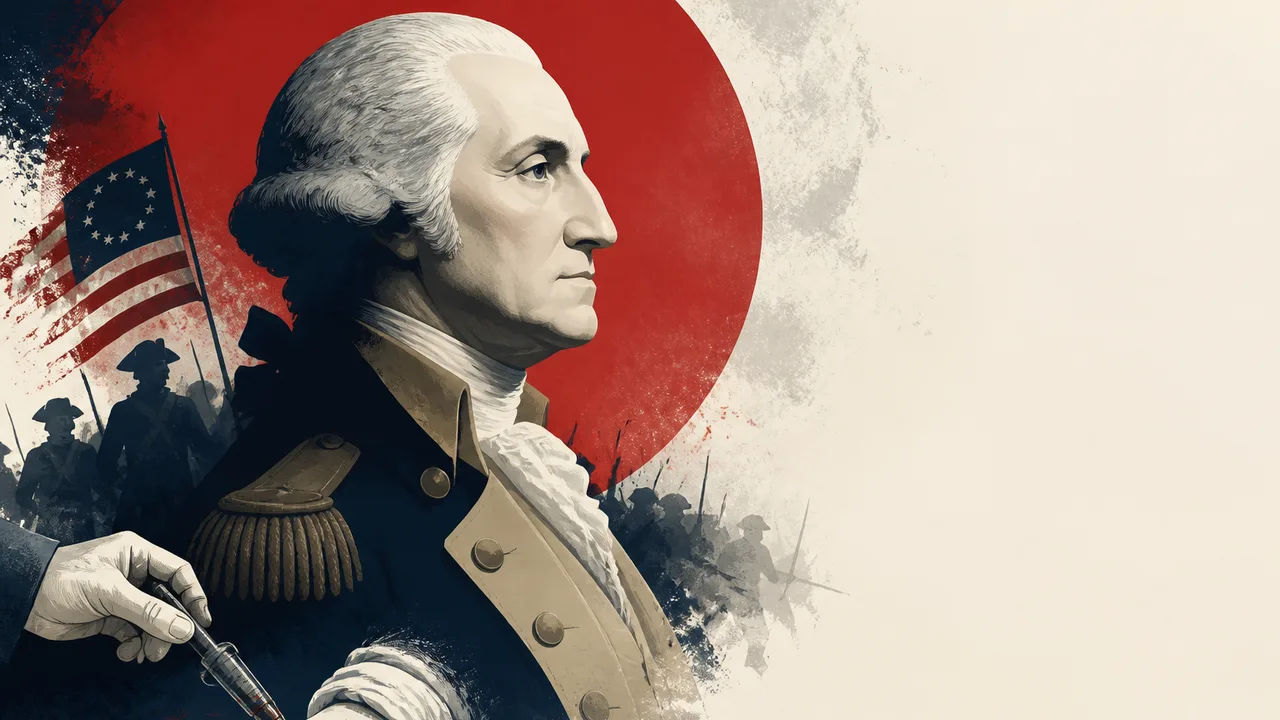
Photo: AI. Mika Sørensen
There is a particular kind of American story that goes like this: a man is born, rises through adversity, wins the big war, leads the young nation wisely, and dies at peace. It is a clean arc. Statues are built on clean arcs.
George Washington's actual life is messier, more interesting, and — in its final hours — considerably more disturbing than the marble version suggests. History Exposé's recent video on Washington covers the span of that life with brisk, engaging pace, and its central tension is worth sitting with: how do you hold together the genuine greatness of a man and the genuine failures, without collapsing into either hagiography or takedown?
That is the real challenge Washington poses to anyone who looks closely enough.
The Education of a Young Man Who Kept Losing
Washington did not arrive at greatness on a straight line. He arrived through a series of setbacks that would have ended a lesser ambition.
At Fort Necessity in 1754, his force of around 300 men was besieged by a French regiment nearly three times that size. He surrendered. The regiment was dissolved. When the Virginia regiment was eventually reconstituted, Washington had been stripped of his colonelcy — he could have re-enlisted at the rank of captain, but he refused. As History Exposé puts it, he "refused the humiliation of a demotion." He waited. The regiment reformed. He got his rank back.
This pattern — stubborn patience in the face of institutional indignity — turns out to be one of the defining features of his character. It is not glamorous. It does not make for dramatic cinema. But it is, arguably, more instructive than the famous portrait of him crossing the Delaware.
By 1758, having marched to capture Fort Duquesne (present-day Pittsburgh), he arrived to find the French had already abandoned it. The mission was over before it started. Washington, after one disappointment too many, resigned his commission. He went home, married the wealthy widow Martha Custis, and spent the next decade and a half becoming a Virginia planter and a colonial politician.
It is a quieter chapter, but it matters. The marriage made him one of Virginia's wealthiest men — he acquired, through Martha, the lands she had inherited from her first husband. He also acquired something harder to quantify: a stake in the colonial grievances that were building toward open conflict. The British undertaxed their own gentry and overtaxed the colonies. They underpaid colonial officers while favoring their own. Washington, who had lived this inequality through his military career, was not abstractly outraged. He had experienced it specifically and personally.
Commander, Spy Chief, Survivor
When the Continental Army was created in 1775, Washington's appointment as its commander was not accidental sentimentality. His record, his Virginia connections, and his particular ability to project authority in a room of fractious men all made him the practical choice.
The military history that followed is well-trodden ground, but the video highlights one episode that deserves more attention than it typically gets: Washington ran one of the most sophisticated intelligence networks of the revolutionary era. The Culper Ring — which the video references without naming — fed him information that, according to most accounts, helped prevent several critical British operations. Washington understood, early and clearly, that the revolution could not be won by battlefield bravery alone.
The collapse of that understanding is what makes Benedict Arnold so significant. Arnold was not simply a traitor; he was one of Washington's most valued intelligence assets, a man who had spent years providing genuine, actionable information. When Arnold defected to the British, the shock was personal as much as operational. The capture of British spymaster John André revealed the betrayal — Arnold himself escaped to New York — and Washington was left to assess how thoroughly his inner circle had been compromised.
The campaign that ended the war, at Yorktown in 1781, required a force of nearly 20,000 men and the close coordination of French naval power in the Chesapeake Bay. Washington fired the first shot himself. The British surrendered on October 19th — though as the video notes, full independence would not be legally secured until the Treaty of Paris two years later.
Building a Country From Scratch, Without a Blueprint
The transition from military commander to constitutional head of state is one of history's more genuinely unusual passages. Most generals who win revolutions become rulers. Washington did something rarer: he created an office, handed it constraints, and then — twice — tried to leave it.
His unanimous election in 1789 was not merely popular; it was, in a structural sense, necessary. The new republic had no precedent, no inherited legitimacy, and no tested institutions. Washington's personal credibility was, functionally, the collateral.
He was acutely aware of this. He declined titles like "His Highness" and "Majesty," choosing instead to be addressed as "Mr. President" — a choice that looks small in retrospect and was enormous at the time. As History Exposé observes, he was "very conscious of his place and power and very determined not to be seen as a king."
The presidency was not easy, and Washington was not always right. The Jay Treaty of 1794 — which opened trade with Britain, allowed repayment of pre-war debts to British creditors, and granted Britain "most favored nation status in trade" — was deeply unpopular and arguably necessary, depending on which historian you read. Jefferson opposed it fiercely, believing it would inflame France. Washington signed it. Historians still argue about whether it was shrewd pragmatism or a betrayal of revolutionary solidarity.
His neutrality during the French Revolution carries the same ambiguity. Having depended on French alliance to win his own war, Washington declined to offer aid to either the French monarchy or the revolutionary forces that toppled it. The United States would stay out. Whether this was principled restraint or cold self-interest is a question the sources do not cleanly settle.
What is clear is that his opponents were no longer a fringe by the end of his second term. Some called him greedy. Some called him ineffective. He was ready to go.
Six Pints
The ending of Washington's life is where the video lands its most unsettling material, and it earns the attention.
In December 1799, having spent several hours inspecting his Mount Vernon plantation in freezing rain, Washington developed what was almost certainly acute bacterial epiglottitis — a severe throat infection that can rapidly close the airway. His physicians treated him with what was then standard practice: bloodletting.
First, nearly a pint. Then, when that produced no improvement, five more pints were extracted over the course of the treatment. Six pints total. The average adult human body contains roughly ten.
History Exposé calls this "something so shocking that it would not even be considered today," which is fair as far as it goes — though it is worth adding that bloodletting was not quackery in any dismissive sense. Physicians of the late 18th century operated within a coherent, internally consistent theoretical framework: the humoral model, which had governed Western medicine for two thousand years. Bleeding was the standard of care. Washington's doctors were not negligent by the standards of their day. They were competent practitioners of a system that happened to be catastrophically wrong.
Washington, sensing what was happening, ordered his staff not to bury him for three days after his death — a precaution against premature burial that was, at the time, a not entirely irrational fear. He died on December 14th, 1799.
The Complication That Doesn't Go Away
History Exposé closes with a note that deserves more than closing-note status: Washington owned a plantation worked by enslaved people. The video does not linger, but it does not omit it either.
This is where the clean-arc story of Washington most decisively breaks down. The man who refused to be called a king, who stepped down voluntarily and set the two-term precedent that would hold for 150 years, who crossed the Delaware in a blizzard and held a Continental Army together through Valley Forge — that same man held other human beings as property and profited from their labor every day of his adult life.
Washington did express private discomfort with slavery and made provisions to free his enslaved workers upon Martha's death — though legal complications around the enslaved people who had belonged to the Custis estate meant that provision only partially applied. He never used his enormous public platform to act against the institution while he had the power to do so.
The question of how to weigh that failure against the rest of the record is not one that history has resolved, and probably shouldn't be resolved too quickly. Monuments flatten. The actual person — ambitious, stubborn, capable, limited, consequential — is far more worth the study.
More Like This
Jackie Kennedy and Lee Radziwill's Bitter Lifelong Feud
The feud between Jackie Kennedy and her sister Lee ran deeper than jealousy. A look at the betrayals—plural—that made it permanent.
Anne Frank: The Life, the Diary, and the Record
Anne Frank's diary survived the Holocaust when she didn't. A close look at her life in hiding, her death, and what the record still can't tell us.
Sitting Bull: Warrior, Mystic, and Military Strategist
From Hunkpapa war chief to victor at Little Bighorn—the life of Sitting Bull reveals a leader whose complexity American history has rarely done justice.
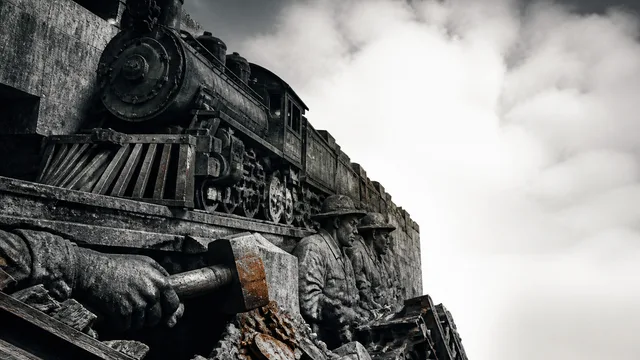
The Transcontinental Railroad's Forgotten Price Tag
The golden spike ceremony hid a messier truth: fraud, erasure, and collapse. Here's the full accounting of what America's railroad actually cost.
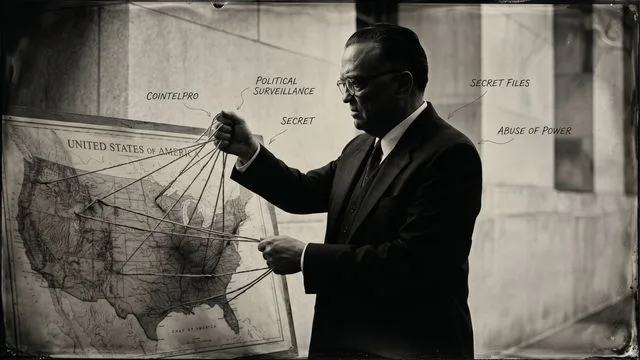
J. Edgar Hoover: How the FBI's First Director Held America Hostage
For 48 years, J. Edgar Hoover ran the FBI as his personal empire. His story is a masterclass in what unchecked institutional power actually looks like.
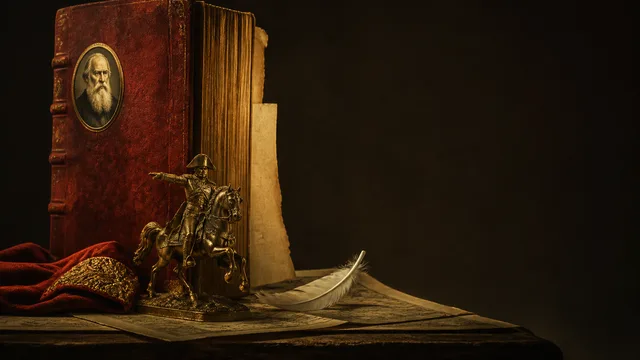
What Tolstoy Knew About Over-Processing
Tolstoy's War and Peace argues that every system kills the thing it tries to preserve. An audio engineer reads that and feels it in their bones.
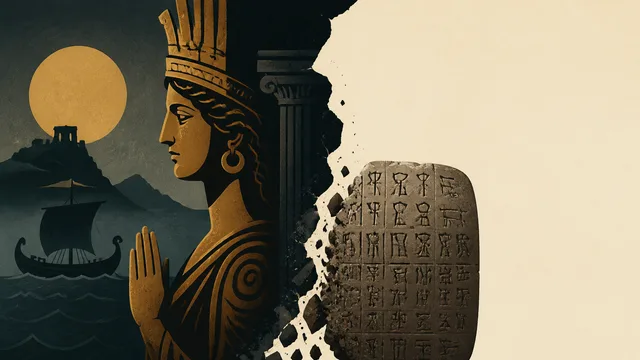
Homer's Odyssey and Mycenaean Religion: Fact vs. Myth
Homer set the Odyssey in the Bronze Age but wrote it 500 years later. How accurate is his religion? Linear B tablets reveal a startling gap.

Ten Scientific Discoveries Nobody Saw Coming
From Fleming's contaminated petri dish to Hubble's blurry mirror, accidental observations have repeatedly reshaped what we know about life and the cosmos.