Rome vs. Carthage: The Punic Wars Unveiled
Explore how Rome's conflicts with Carthage shaped ancient empires through strategic innovations and legendary leaders like Hannibal and Scipio.

Written by AI. Margaret "Maggie" Holloway
Rome vs. Carthage: The Punic Wars Unveiled
In the ancient world, few conflicts have left as indelible a mark on history as the Punic Wars between Rome and Carthage. These wars not only defined the trajectory of two powerful civilizations but also laid the groundwork for the Roman Empire's rise. But how did a small republic like Rome manage to overcome the opulent and powerful Carthage?
A Tale of Two Cities
The story of Rome and Carthage is one of contrasts and conflicts. Carthage, a wealthy Phoenician metropolis located in modern-day Tunisia, was once a dominant seafaring power. Its influence and naval prowess were nearly unmatched, and it boasted a formidable military led by the likes of Hamilcar Barca and his son Hannibal. On the other hand, Rome was a burgeoning republic with ambitions that belied its modest origins.
The spark that ignited the Punic Wars was the plight of the Mamertines of Messina, who sought aid from both Carthage and Rome against Hierro II of Syracuse. This seemingly small incident set the stage for a series of conflicts that would span over a century, with Rome and Carthage vying for supremacy over the Mediterranean.
The First Punic War: Sea Power and Overconfidence
The First Punic War (264-241 BCE) began as a struggle for control over Sicily. Carthage, confident in its naval supremacy, underestimated Rome's tenacity and innovative spirit. "Carthage went into the first Punic War almost certain of its victory," notes History Exposé, highlighting the overconfidence that would prove costly.
Rome, lacking a navy, quickly built a fleet of 330 ships and introduced the Corvus, a device that allowed them to turn naval engagements into infantry battles. This innovation, combined with their relentless determination, shifted the tide in Rome's favor. The war culminated in Rome's victory, forcing Carthage to cede Sicily and pay a hefty indemnity.
Hannibal's Campaign: A Masterclass in Military Strategy
The Second Punic War (218-201 BCE) is often remembered for Hannibal's audacious crossing of the Alps with an army that included war elephants, a feat that remains legendary. Hannibal's strategy was to disrupt Roman alliances and weaken their power from within, a tactic that initially proved successful.
Hannibal's victories, particularly at the Battle of Cannae in 216 BCE, were stunning. "Hannibal won every single battle that he fought against Roman troops," the video emphasizes. Yet, despite his military genius, Hannibal faced a critical drawback: Carthage's failure to provide reinforcements, echoing the complacency that had plagued them in the First Punic War.
Rome's Resilience and the Fall of Carthage
Rome's response to Hannibal's campaign was marked by strategic resilience. Quintus Fabius Maximus adopted a strategy of attrition, avoiding direct confrontation and focusing on cutting off Hannibal's supply lines. This approach, though initially criticized, eventually wore down Hannibal's forces.
The decisive moment came with the Battle of Zama in 202 BCE, where Roman general Scipio Africanus employed tactics learned from Hannibal himself to secure victory. "Scipio unleashed everything he had," leading to Carthage's defeat and the end of the Second Punic War.
The Last Stand: Carthage's Final Defeat
Despite its defeat, Carthage remained a thorn in Rome's side, leading to the Third Punic War (149-146 BCE). Rome's demands were uncompromising, insisting that Carthage dismantle its city and move inland. Carthage's refusal led to its ultimate destruction. "Rome sent Scipio Amelianis to attack Carthage," and within three years, the city was razed, marking the end of an era.
Carthage Fell, Rome Was Never the Same
The Punic Wars were not merely a series of battles; they were a transformative period that redefined the ancient world. For Rome, these conflicts were a crucible, forging an empire that would dominate the Mediterranean for centuries. For Carthage, they were a tragic tale of potential unrealized, a reminder of the perils of overconfidence and complacency.
The story of Rome and Carthage continues to captivate historians and enthusiasts alike, serving as a testament to the enduring power struggles that shape civilizations. As we reflect on this pivotal chapter in history, we are reminded that the past is never truly past—it lives on in the legacy of those who dared to shape it.
More Like This

Jackie Kennedy and Lee Radziwill's Bitter Lifelong Feud
The feud between Jackie Kennedy and her sister Lee ran deeper than jealousy. A look at the betrayals—plural—that made it permanent.
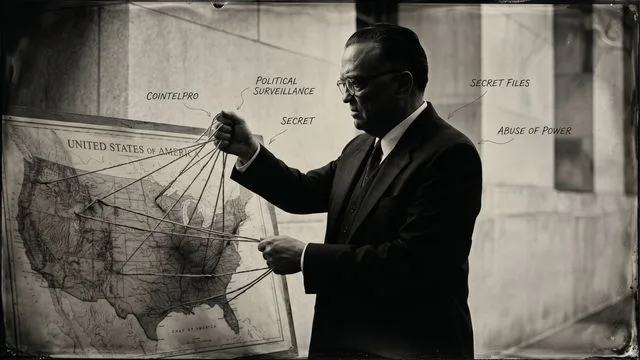
J. Edgar Hoover: How the FBI's First Director Held America Hostage
For 48 years, J. Edgar Hoover ran the FBI as his personal empire. His story is a masterclass in what unchecked institutional power actually looks like.

Exploring Mont Orgueil: A Fortress of Secrets
Discover the hidden history and strategic significance of Mont Orgueil Castle in Jersey, unearthed by Time Team's archaeological investigation.

Galileo's Legacy: Science vs. Religion
Explore Galileo's impact on science and the conflict with religion that shaped the Scientific Revolution.

Elizabeth of York: The Tudor Matriarch's Legacy
Explore Elizabeth of York's pivotal role in uniting the Houses of York and Lancaster and founding the Tudor dynasty.

Explosive Celebration: Fireworks, Labor, and Culture
A record-breaking fireworks display reveals deeper cultural and political layers.

The Invisible Inventions That Built Modern Life
From flush toilets to undersea fiber cables, the inventions that most shaped modern civilization are the ones we've stopped noticing entirely.
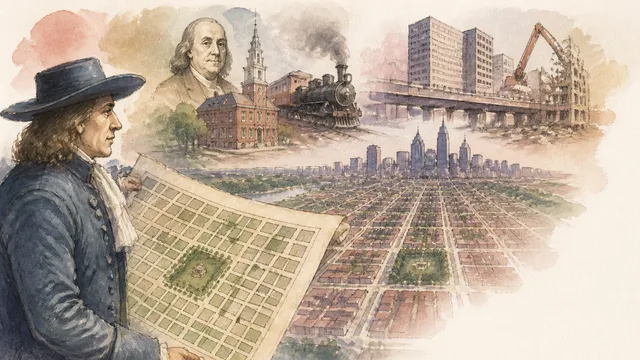
How William Penn's 1682 Grid Still Shapes Philadelphia
From Penn's Quaker grid to Ed Bacon's urban renewal, Daniel Steiner's video traces how Philadelphia's original plan survived — and who it cost along the way.