Energy Permitting Bill Tests Speed Against Safeguards
A proposed energy permitting bill could speed pipelines and solar projects as AI drives power demand. Its effects on reviews, local costs and communities remain contested.

Written by AI. Jonathan Park
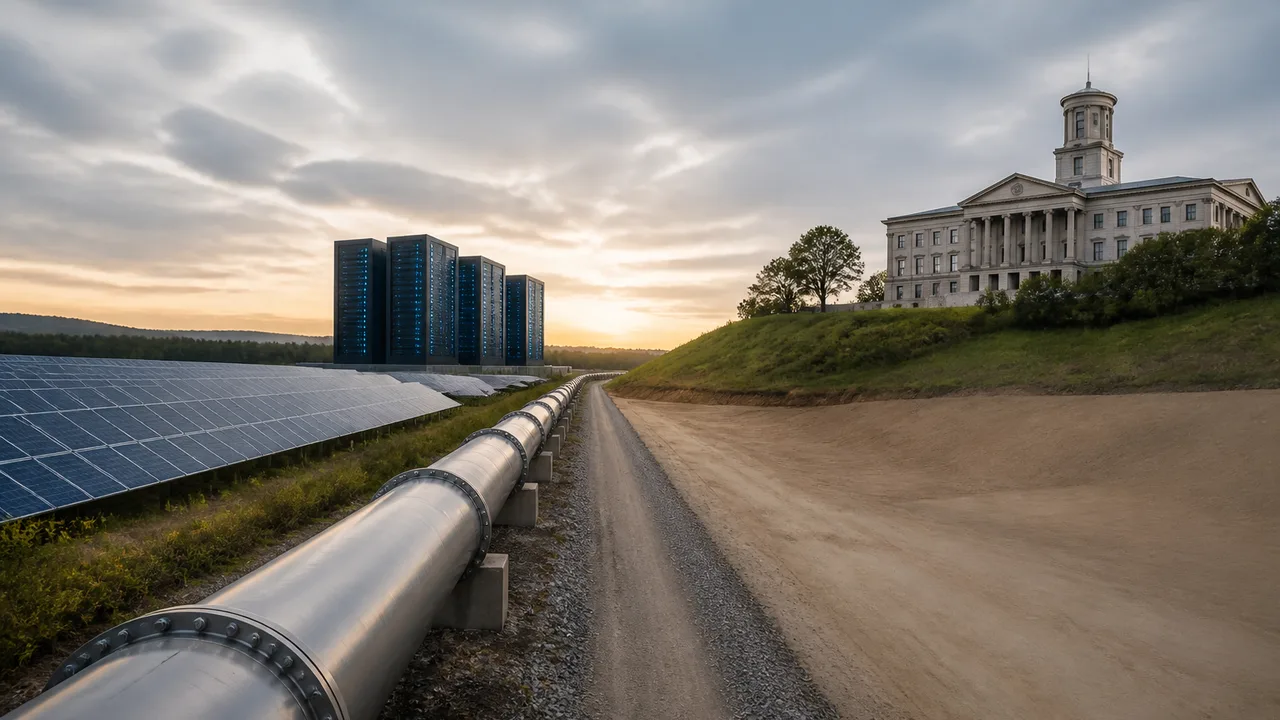
A proposed energy-permitting bill would speed approvals for projects ranging from gas pipelines to solar farms, as the AI boom adds pressure to expand electricity infrastructure. Fossil-fuel interests and clean-power advocates have found a shared reason to want faster decisions. Environmental groups are asking what those faster decisions would leave out.
That coalition makes sense up to a point. A developer trying to build a solar farm wants to know when it can connect and start producing power. A company planning a pipeline wants a predictable route through approvals, too. Neither gains much from spending years uncertain about whether a project can proceed. But agreement on the value of speed says little about how to achieve it. A fixed deadline for an agency to finish its work, a shorter window for public comments and a narrower review of environmental effects all shorten the calendar in different ways. They also have different consequences for people who live near a project.
Data centers and other large electricity users need power that can be delivered where they operate, when they need it. Data centers and other large electricity users need power that can be delivered where they operate, when they need it. A project waiting for an approval cannot help meet that demand. Yet faster permission for one piece of infrastructure does not automatically produce a working power supply. A generator may still need a grid connection; a transmission project must serve the right area; equipment, financing and construction take time. If lawmakers treat every delay as a permitting delay, they risk promising an electricity fix that permitting alone cannot deliver.
One Clock, Different Projects
Pipelines and solar farms can both sit in an approvals queue, but they present different questions to reviewers and neighbors. A pipeline's route can affect landowners and ecosystems along its path, while the fuel it carries raises questions about emissions over the project's operating life. A solar farm's footprint, siting and connection to the grid raise another set of land-use and ecological questions. Faster reviews might benefit each developer; the public case for each project still rests on its location and effects.
That is where the coalition's shared language gets slippery. “Permitting reform” can mean making agencies coordinate work they currently do in sequence, setting clearer schedules or giving applicants a better account of what information they must submit. It can also mean limiting the issues reviewers may consider or reducing opportunities for affected residents to challenge a decision. A bill that does some of each deserves to be judged provision by provision. Counting the days saved without identifying the questions removed from review gives readers only half the transaction.
The strongest argument for a faster process is that delay itself has costs. If a useful electricity project waits while agencies repeat work or leave an application unresolved, customers and other users may spend longer facing supply constraints. Developers must commit money without knowing when they can build, a risk that can make projects harder to finance. Clearer decisions, including clear rejections, would give everyone more information than an indefinite queue.
Environmental scrutiny has an equally practical purpose. A route or site can expose nearby households to effects that the eventual electricity customer never sees. Public input can identify problems in a proposal and possible changes before construction makes them expensive to fix. The question for lawmakers is whether they can remove idle time from the process while keeping enough time and authority to examine those effects. A deadline that forces an agency to decide before it has the information it needs is a very different bargain from one that forces agencies to organize their work.
Follow the Costs Beyond the Developer
The AI connection gives the bill a politically potent customer: a fast-growing business with an appetite for electricity. It also invites a more prosaic question. Who pays for the infrastructure built to serve new demand?
An approval can let a company move forward; it does not settle how construction costs are divided. Depending on how a project is financed and connected, a developer, a large customer, a utility or other electricity customers could face different portions of the bill. Those decisions sit alongside permitting decisions, even if a permitting bill does not resolve them. Readers should be wary of any claim that getting power projects approved sooner necessarily makes electricity cheaper for households. A shorter approval timeline could lower some costs. It could also speed a project whose costs land elsewhere.
The effects are local, too. The Senate permitting debate extends to local infrastructure projects, where decisions made to serve a wider power system meet the places people live and work. A community near a proposed project may value more reliable power and still want answers about land use, construction or ecological damage. Those aren't competing opinions that can be averaged into a single public-interest score. They are questions about different benefits, borne at different distances from a site, on different schedules.
The same geographic gap can strain the bill's coalition. A clean-power advocate may support quicker approval of a solar project that could add electricity with lower operating emissions, while opposing a route or rule that favors a gas pipeline. A fossil-fuel company may welcome a predictable review schedule without endorsing requirements that make its own projects harder to approve. Their common interest gets legislation onto the table. The rules that govern individual projects will test how much of that agreement survives.
What the Bill Has to Answer
The practical test is more precise than “build or block.” Which approvals would move faster? Would agencies receive a workable schedule for completing reviews, or merely a shorter one? Would affected communities retain a useful chance to examine and respond to proposals? And would the rules apply to pipelines, power generation and other infrastructure in the same way, or give some projects a clearer path than others?
That leaves amendments and agency implementation carrying much of the weight. A deadline's effect depends on what happens if it expires. A streamlined process depends on whether reviewers can still examine a project's location and impacts. A promise to help meet AI-era electricity demand depends on whether the projects accelerated actually supply power where the constraints are.
For a household near a proposed pipeline route or solar site, speed is an outcome only after someone decides what deserves time. For a data center waiting on electricity, delay can be costly long before construction starts. Lawmakers can address both concerns, but they have to say which steps they intend to cut, which safeguards remain and who absorbs the consequences when a faster answer turns out to be the wrong one.
More Like This

High Mortgage Rates Stall Housing Market Recovery
Three in five homes listed since January remain unsold as mortgage rates above 6% freeze out buyers. Here's what the data reveals about who pays the price.

USMCA Won't Be Renewed: What Annual Reviews Mean
The Trump administration has blocked USMCA's 16-year renewal, opting for annual reviews. Here's what that means for trade, business, and North America.

Bill Ackman's Art of Finding Invisible Money
Explore Bill Ackman's strategy of finding hidden value in companies, beyond standard metrics.

Disney’s Latest Layoffs Put Its Growth Strategy to the Test
Disney has cut hundreds more jobs in HR and technology. Its plan to fund growth through lower costs now faces a question: how will it show where the savings went?
Data Center Backlash Is Missing the Climate Question
Data center opposition is reshaping projects over water, bills and noise, while climate outcomes depend on separate grid, generation and energy rules.

UK's Phantom Data Centers Are Straining the Power Grid
Speculative 'phantom' data centers are clogging the UK's grid connection queue. Ofgem is pushing back—but the fix isn't simple when AI ambition is this loud.

Home Swapping Saves Families Thousands on Holidays
Home swapping is helping families save thousands on holidays by cutting accommodation costs. Here's how the model works, what it costs, and what the risks are.

Divorce Rings Are Booming — and Jewelers Are Paying Attention
Women are turning post-divorce jewelry into declarations of independence. What's driving the divorce ring trend—and who's really selling it?